
Purple is one of those colors that can look completely different depending on its shade. Some purple tones feel soft and dreamy, while others appear bold, mysterious, or luxurious. From delicate lavender and lilac to deep plum and royal purple, every variation has its own personality.
If you’re searching for purple names, you’ve come to the right place. This guide features more than 145 purple color names, including popular shades, rare color variations, aesthetic tones, and five additional shades. You’ll also find HEX, RGB, and CMYK values for the shades covered in the color reference.
Whether you’re choosing a color for a website, creating artwork, planning a room makeover, or building a graphic design palette, this list will help you find a purple that fits.
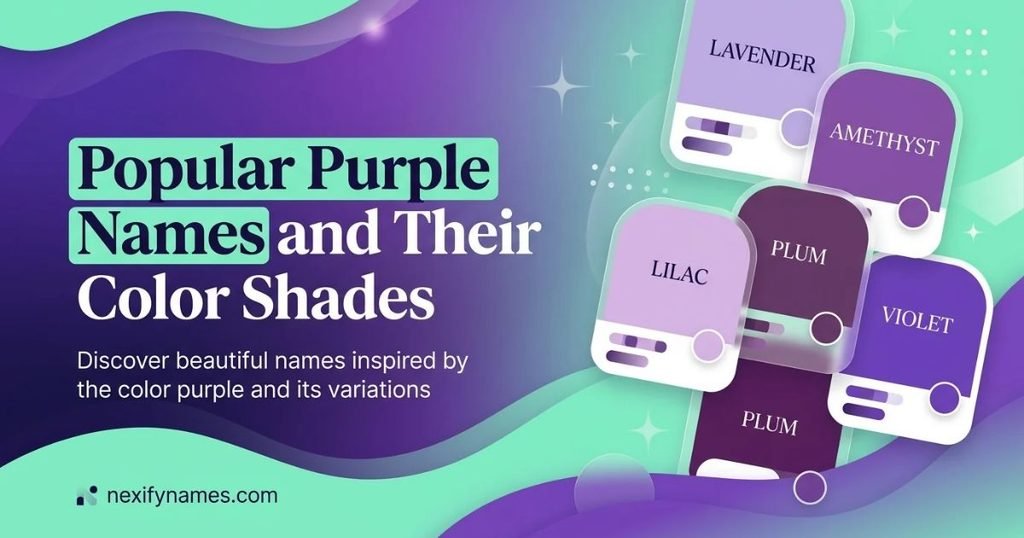
Popular Purple Names and Their Color Shades
Purple comes in countless variations, ranging from pale pinkish-lavender tones to rich, blue-based hues. Some shades are familiar, while others have unusual names and distinctive appearances.
Here are some popular purple names to start with:
- True Purple: A classic, balanced purple with a rich appearance.
- Thistle: A soft, pale purple inspired by the thistle plant.
- Plum: A light reddish-purple with a gentle, floral feel.
- Violet: A vivid purple that leans toward blue.
- Orchid: A bright, lively purple inspired by orchid flowers.
- Fuchsia: A striking pink-purple shade with strong red undertones.
- Medium Orchid: A saturated purple that balances red and blue.
- Medium Purple: A bright, slightly cool purple.
- Blue Violet: A blue-leaning purple with a vivid finish.
- Dark Violet: A deep purple that retains a noticeable violet glow.
These shades are useful starting points when building a purple color palette. You can use lighter options for backgrounds and stronger tones for buttons, headings, artwork, or decorative accents.
Light Purple Names and Soft Pastel Shades
Light purple shades are gentle, airy, and easy on the eyes. They often contain more white or gray, which gives them a softer appearance than saturated purple tones. These colors work especially well for bedrooms, invitations, beauty branding, stationery, and calm website backgrounds.
If you want a delicate purple color palette, consider these names:
- Thistle: A muted, pale purple with a subtle floral character.
- Pale Purple: A light purple with a slightly pinkish appearance.
- Lavender Blush: An almost-white shade with a faint pink-purple tint.
- Languid Lavender: A quiet, grayish lavender that feels soft and relaxed.
- Heather: A gentle purple inspired by the color of heather blossoms.
- Lilac: A light floral purple that feels fresh and cheerful.
- Periwinkle Purple: A dreamy shade between pale blue and purple.
- Fairy Tale: A delicate pinkish shade with a lavender influence.
- Little Princess: A very pale cream tone with a hint of purple.
- Lavender Gray: A cool, misty blend of lavender and gray.
- Brilliant Purple: A light, lively purple with an amethyst-like quality.
- Good Tax: A pale, pastel-like purple with a cool appearance.
- Early Bird: A soft, periwinkle-like shade with a little extra blue.
- Mountain’s Majesty: A peaceful purple that sits between periwinkle blue and purple.
- Pale Purple (Muted): A subdued lilac-like shade that works well with neutral colors.
These light purple shades are particularly useful when you want color without overwhelming a design. Pair them with white, cream, pale gray, or soft green for a balanced look.
Dark Purple Names and Deep Purple Color Shades
Dark purple shades create a dramatic, confident, and luxurious appearance. They often contain deeper blue, red, or black undertones, making them useful for bold designs and elegant color schemes.
Here are some dark purple names worth considering:
- Dark Purple: A deep shade that can look almost black.
- Eggplant: A dark, rich purple inspired by eggplant skin.
- English Violet: A nearly black purple with a subtle red undertone.
- Russian Violet: A very dark, blue-leaning purple.
- Wine: A deep reddish-purple with a dramatic finish.
- Raisin: A dark brownish-purple that works well with lighter colors.
- Sangria: A deep red-purple with a warm appearance.
- Byzantium: A rich, dark purple with a regal character.
- Dark Byzantium: A deeper, more subdued version of Byzantium.
- Murasaki Purple: A dark purple with a muted, earthy quality.
- Blackish Purple: An extremely dark purple that sits close to black.
- Matte Purple: An inky purple with a subdued appearance.
- Deep Purple: A dark, blue-leaning purple.
- Rustic Purple: A weathered, slightly muted dark purple.
- Embassy Purple: A near-black purple that can serve as an alternative to black.
- Baltimore Ravens Purple: A very deep purple associated with the team’s color identity.
- Tyrian Purple: A historic reddish-purple associated with an ancient natural dye.
- Imperial Purple: A deep, rich purple with noticeable blue undertones.
- Regalia Purple: A dark, elegant purple that pairs beautifully with gold.
- Kalamata: A dark, muted purple with brownish undertones.
Dark purple works beautifully for headings, dramatic backgrounds, packaging, fashion accents, and premium-looking brand designs. For better readability, combine it with white, pale lavender, or warm cream.
Beautiful and Unique Purple Color Names
Some purple shades stand out because of their unusual names, distinctive undertones, or interesting visual character. They can make a color palette feel more personal and memorable.
Here are more beautiful and unique purple color names from the reference list:
- African Violet: A soft purple inspired by African violet flowers.
- Amethyst: A balanced violet shade inspired by the gemstone.
- Chinese Violet: A subdued, moderately deep purple.
- Fandango: A vivid reddish-purple between pink and purple.
- French Mauve: A bright mauve with a floral association.
- Affair: A deeper lavender-like purple with bold character.
- Iris: A balanced, vibrant purple inspired by the iris flower.
- Long Distance: A quiet, grayish purple with a muted appearance.
- Prince Charming: A dark, bluish purple with a regal feel.
- Lipstick Stain: A rich purple with a noticeable magenta influence.
- Pompadour: A deep reddish-purple with a bold personality.
- Grape Color: A cool, grape-inspired purple with blue undertones.
- Pizza Edge: A vivid shade between fuchsia and royal purple.
- Ultra Violet: A calm, blue-based purple.
- Studio: A creative purple with a lilac-like quality.
- Mauveine: A vivid purple associated with an early synthetic dye.
- Blue Lilac: A cool lilac shade with more blue than red.
- Luxury Purple: A rich purple with an elegant appearance.
- Aztech Purple: An electric-looking purple that leans toward blue.
- Sunset Purple: A soft, slightly bold purple inspired by evening skies.
- Artist’s Purple: A strong, magenta-leaning purple.
- Dull Purple: A medium purple with a deeper, subdued appearance.
- Traffic Purple: A warm, reddish medium purple.
- Ocean Purple: A cool, watery purple with a calm character.
- Shiny Purple: A bright, eye-catching purple.
- Autumn Purple: A muted reddish-purple that suits autumn palettes.
Purple Names Inspired by Flowers, Nature, and Gemstones
Nature offers plenty of inspiration for purple color names. Flowers, fruits, gemstones, and natural pigments have all influenced the way people describe purple shades.
- Orchid: A bright purple inspired by orchid flowers.
- Violet: A vivid floral color that leans toward blue.
- Lavender: A familiar, soft purple associated with lavender flowers.
- Lilac: A gentle purple inspired by lilac blooms.
- Iris: A lively purple named after the iris flower.
- African Violet: A gentle purple inspired by the African violet plant.
- Heather: A soft shade inspired by heather blossoms.
- Thistle: A pale purple connected with the thistle plant.
- Amethyst: A gemstone-inspired purple with a balanced appearance.
- Mulberry: A reddish-purple inspired by mulberry fruit.
- Plum: A light reddish-purple named after the fruit.
- Grape Color: A cool, deep shade inspired by grapes.
- Black Currant: A dark reddish-purple inspired by black currants.
- Ripe Plum: A deep purple with a bold, fruit-inspired name.
- Hopbush: A pinkish-purple inspired by hopbush fruit.
- Kingfisher Daisy: A quiet purple named after a flowering plant.
- Amaranth Purple: A deep reddish-purple connected with purple amaranth.
- Eggplant: A dark purple inspired by the vegetable’s skin.
Nature-inspired purple names are useful when you want a palette to feel organic, romantic, or seasonal. They also make attractive choices for beauty brands, floral graphics, and creative projects.
Bright Purple Names and Electric Purple Shades
Bright purple shades are energetic, expressive, and difficult to ignore. Many have strong magenta or blue undertones, making them useful for bold artwork, digital graphics, and colorful branding.
- Fuchsia: A vivid pink-purple with strong red influence.
- Heliotrope: A bright pinkish-purple inspired by a flower.
- Phlox: An intense, fluorescent-looking purple.
- Purple Pizzazz: A highly vibrant purple-pink shade.
- Veronica: A bright purple named after a flowering plant.
- Electric Purple: A bold, energetic purple.
- Hot Purple: A neon-like shade that catches attention.
- Shiny Purple: A bright purple with an almost glowing appearance.
- Shiny Purple: A vivid option for high-impact accents.
- Deep Magenta: A strong magenta-based purple.
- Magenta Purple: A lively medium purple with strong magenta influence.
- Munsell Purple: A vivid purple associated with the Munsell color system.
- Purple 4: A bold blue-based purple.
- Vivid Reddish Purple: A warm purple with a strong red influence.
- Lovely Purple: A bright, blue-leaning purple.
- Aztech Purple: An electric purple with a strong blue character.
Bright purple can work well for call-to-action buttons, social media graphics, event posters, and creative brand accents. Use it carefully alongside neutral backgrounds so the design remains easy to read.
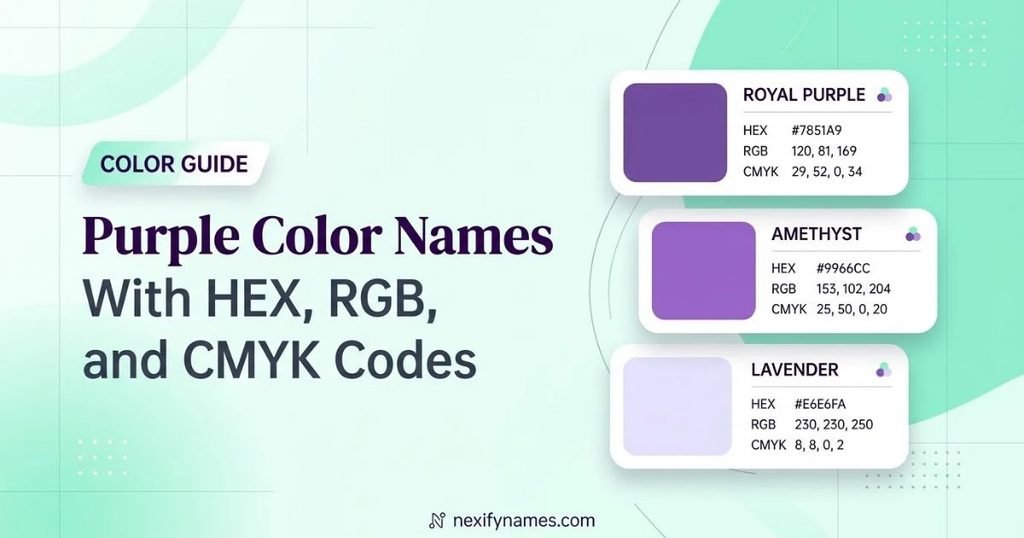
Purple Color Names With HEX, RGB, and CMYK Codes
Color codes help you use the same purple shade across different digital and print projects. HEX codes are common in web design, RGB values describe screen colors, and CMYK values are used for print workflows.
Here are several useful purple shades and their reference values:
- True Purple: HEX #6A0DAD · RGB 106, 13, 173 · CMYK 39, 92, 0, 32
- Thistle: HEX #D8BFD8 · RGB 216, 191, 216 · CMYK 0, 12, 0, 15
- Plum: HEX #DDA0DD · RGB 221, 160, 221 · CMYK 0, 28, 0, 13
- Violet: HEX #8F00FF · RGB 143, 0, 255 · CMYK 44, 100, 0, 0
- Orchid: HEX #DA70D6 · RGB 218, 112, 214 · CMYK 0, 49, 2, 15
- Fuchsia: HEX #FF00FF · RGB 255, 0, 255 · CMYK 0, 100, 0, 0
- Medium Orchid: HEX #BA55D3 · RGB 186, 85, 211 · CMYK 12, 60, 0, 17
- Medium Purple: HEX #9370DB · RGB 147, 112, 219 · CMYK 33, 49, 0, 14
- Blue Violet: HEX #8A2BE2 · RGB 138, 43, 226 · CMYK 39, 81, 0, 11
- Dark Violet: HEX #9400D3 · RGB 148, 0, 211 · CMYK 30, 100, 0, 17
- Dark Orchid: HEX #9932CC · RGB 153, 50, 204 · CMYK 25, 75, 0, 20
- Dark Magenta: HEX #8B008B · RGB 139, 0, 139 · CMYK 0, 100, 0, 45
- Indigo: HEX #4B0082 · RGB 75, 0, 130 · CMYK 42, 100, 0, 49
- Veronica: HEX #A020F0 · RGB 160, 32, 240 · CMYK 33, 87, 0, 6
- Pale Purple: HEX #FAE6FA · RGB 250, 230, 250 · CMYK 0, 8, 0, 2
- Mauve: HEX #E0B0FF · RGB 224, 176, 255 · CMYK 12, 31, 0, 0
- Heliotrope: HEX #DF73FF · RGB 223, 115, 255 · CMYK 13, 55, 0, 0
- Phlox: HEX #DF00FF · RGB 223, 0, 255 · CMYK 13, 100, 0, 0
- Purple Pizzazz: HEX #FE4EDA · RGB 254, 78, 218 · CMYK 0, 69, 14, 0
- Mulberry: HEX #C54B8C · RGB 197, 75, 140 · CMYK 0, 62, 29, 23
- Amethyst: HEX #9966CC · RGB 153, 102, 204 · CMYK 25, 50, 0, 20
- Byzantium: HEX #702963 · RGB 112, 41, 99 · CMYK 0, 63, 12, 56
- African Violet: HEX #B284BE · RGB 178, 132, 190 · CMYK 6, 31, 0, 25
- Eggplant: HEX #311432 · RGB 49, 20, 50 · CMYK 2, 60, 0, 80
- Electric Purple: HEX #BF00FF · RGB 191, 0, 255 · CMYK 25, 100, 0, 0
- Periwinkle Purple: HEX #BE93E4 · RGB 190, 147, 228 · CMYK 17, 36, 0, 11
- Rebecca Purple: HEX #663399 · RGB 102, 51, 153 · CMYK 33, 67, 0, 40
- Lilac: HEX #B65FCF · RGB 182, 95, 207 · CMYK 12, 54, 0, 19
- Lavender Blush: HEX #FFF0F5 · RGB 255, 240, 245 · CMYK 0, 6, 4, 0
- Purple Heart: HEX #7442C8 · RGB 116, 66, 200 · CMYK 42, 67, 0, 22
The codes above are reference values from the supplied color list. Screen appearance can vary with display settings, color profiles, and software. For print work, confirm the final result with your printer or design software.
Five Additional Creative Purple Names
Beyond established color names, you can also use creative names when building a personal palette, mood board, or design collection. These five suggestions are original descriptive names, not standardized color specifications.
- Velvet Lavender: A soft, elegant purple with a luxurious mood.
- Cosmic Amethyst: A deep, imaginative purple suited to futuristic artwork.
- Moonlit Lilac: A delicate, cool-toned name for a pale purple.
- Royal Orchid: A rich floral-inspired name with a regal feel.
- Twilight Plum: A dusky, dramatic name for a deep reddish-purple.
These creative names can help give your own palette a recognizable identity. If you use them in a professional project, choose and record the exact HEX values separately.
Light, Dark, and Pastel Shades of Purple: What’s the Difference?
Purple shades are often grouped by how light, dark, or muted they appear. Understanding these differences makes it easier to choose a suitable tone for your project.
- Light purple shades contain more white or have a higher overall brightness. Lavender Blush, Thistle, and pale lilac-like colors are common examples.
- Dark purple shades appear deeper and more dramatic. Eggplant, Russian Violet, and Dark Purple are useful examples.
- Pastel purple shades are soft and less saturated. They often create a gentle, relaxed look.
- Bright purple shades have stronger saturation. Fuchsia, Phlox, and Electric Purple can add energy to a design.
- Muted purple tones contain grayish or subdued qualities. Old Lavender and Faded Purple are examples.
A simple way to choose is to think about the mood you want. Light shades feel gentle, dark shades feel dramatic, and bright shades attract attention.
Best Purple Color Combinations for Websites, Fashion, and Interior Design
Purple pairs well with many colors, but the right combination depends on the shade and the mood you want to create. A pale lavender will look different beside cream than it will beside black.
Here are some combinations worth trying:
- Purple and Gold: A classic pairing that gives designs a luxurious, regal appearance.
- Purple and White: A clean combination that makes purple feel fresh and noticeable.
- Purple and Black: A dramatic palette that works well with deep purple shades.
- Purple and Yellow: A high-contrast combination that creates energy and visual interest.
- Purple and Green: A nature-inspired pairing that can feel balanced and refreshing.
- Purple and Gray: A subtle combination suited to modern websites and interiors.
- Purple and Pink: A playful, romantic palette that works well with lighter purple tones.
- Purple and Blue: A cool-toned combination that creates a calm, cohesive look.
- Purple and Cream: A softer alternative to white, especially with muted or dusty purple.
- Purple and Silver: A polished pairing for elegant graphics and event designs.
For websites, use a darker purple for headings or buttons and a pale shade for larger background areas. In fashion, combine purple with neutrals when you want the color to stand out. For interiors, test paint samples in different lighting before choosing a final shade.
Understanding Purple Color Shades
Purple is a color family rather than one single shade. Its appearance changes depending on the balance of red and blue, along with brightness and saturation.
A purple with more red may look warmer or pinker. A purple with more blue often appears cooler and can move closer to violet or indigo. Adding white creates a lighter tint, while adding black makes the color deeper.
What Is the Difference Between Violet and Purple?
Purple and violet are closely related, but they are not exactly the same in traditional color theory. Violet is associated with a specific region of the visible light spectrum, while purple is commonly described as a color created by combining red and blue light or pigments.
In everyday language, people often use the names interchangeably. However, violet usually suggests a cooler, bluer shade, while purple can cover a wider range of reddish and bluish tones.
How Do You Create Different Shades of Purple With Paint?
You can create purple paint by mixing red and blue. The exact result depends on the pigments you choose and the proportions you use.
Try these simple adjustments:
- For a lighter purple: Mix your purple with white gradually.
- For a darker purple: Add a small amount of black or a deeper blue.
- For a warmer purple: Add a little more red.
- For a cooler purple: Add a little more blue.
- For a muted purple: Mix in a tiny amount of a suitable neutral or complementary color.
- For a pastel purple: Combine purple with enough white to soften its intensity.
Start with small amounts and test each mixture on a separate surface. Different paint brands and pigments can produce different results, so there is no single formula for every shade.
Which Colors Go Well With Purple?
Purple works with both contrasting and closely related colors. Yellow offers strong contrast, while blue and pink create a more coordinated palette.
For a softer look, try lavender with cream, pale gray, or sage green. For a dramatic style, combine deep purple with black, gold, or emerald green. If you are designing a website, make sure text and background colors have enough contrast to remain readable.
More Purple Color Names to Add to Your Palette
The following names provide even more variety, from reddish purples to blue-based and muted tones. They are useful when you need a broader selection for a mood board, artwork, or color collection.
- Pearly Purple: A medium purple with noticeable red undertones.
- Purpureus: A vivid, traditional-looking purple.
- Northwestern Purple: A deep, blue-leaning institutional purple.
- KSU Purple: A dark violet shade associated with Kansas State University.
- Pomp and Power: A muted purple with a regal appearance.
- Mardi Gras: A deep purple with a bold decorative feel.
- Eminence: A rich medium-dark purple.
- Pansy Purple: A deep shade inspired by the pansy flower.
- Palatinate: A strong purple associated with British academic color traditions.
- Russian Violet: A very deep purple with cool blue undertones.
- Mountbatten Pink: A muted pink-purple shade.
- Fuchsia Blue: A medium purple that combines pink and blue qualities.
- Jam: A warm, deep reddish-purple.
- Ripe Plum: A dark purple with a fruit-inspired character.
- Magenta Purple: A lively medium purple with a strong magenta influence.
- Old Lavender: A subdued purple with grayish undertones.
- Razzmic Berry Purple: A playful purple-pink shade.
- Wine Dregs Purple: A muted purple with both red and gray qualities.
- Traditional Purple: A balanced, familiar-looking purple.
- Spanish Violet Purple: A deep violet shade with a cool appearance.
- Japanese Violet Purple: A dark, muted violet.
- Munsell Purple: A vivid purple associated with a formal color system.
- Deep Ruby Purple: A reddish-purple with a dusky finish.
- Purple Taupe: A muted, neutral-looking purple.
- Cyber Grape Purple: A cool, dark purple with blue undertones.
- Seance: A mysterious, deep purple.
- Tacao: A cool purple with a fresh appearance.
- Murasaki Purple: A deep, earthy purple.
- Carolina Plum: A dusty, grayish purple.
- Kalamata: A dark, muted purple with earthy undertones.
- Black Currant: A dark reddish-purple.
- Strong Purple: A medium purple with balanced red and blue qualities.
- Middle Purple: A medium-light purple that leans toward pink.
- Cardinal: A deep, reddish purple.
- Lakers Purple: A bold purple associated with the Los Angeles Lakers.
- Purple Navy: A dark shade between blue and purple.
- Smyrna Purple: A soft purple that leans toward pink.
- Aesthetic Purple: A deep, elegant blue-based purple.
- Kikyo-iru: A muted purple with balanced undertones.
- Metallic Purple: A deep purple that works well with metallic accents.
- Mythical Purple: A rich, versatile purple with a calm appearance.
- Purple CMYK: A standard-style purple used as a printing reference.
- Purple Violet: A deep purple with muted brown undertones.
- Purple 4: A strong blue-based purple.
- Medium Purple 3: A cool, saturated purple.
- East Carolina University Purple: A dark, blue-leaning institutional shade.
- FedEx Purple: A recognizable brand-associated purple.
- University of Central Arkansas Purple: A deep purple used in university identity.
- Lovely Purple: A bright purple that leans toward blue.
- Vulgar Purple (Grape Jelly): A deep purple also known by its more familiar grape-jelly name.
This extended selection includes familiar colors, unusual names, and shades connected with flowers, brands, institutions, and color systems. Some names refer to specific organizations or established color references, so their exact appearance should be checked against the relevant brand or color guide before commercial use.

Want to Save These Purple Color Shades?
Keep your favorite purple names and color codes together so you can find them whenever you need them. A simple palette document or design-library folder can save time on future projects.
You can also create a small collection of light, dark, bright, and muted purple tones. Save the HEX values alongside each name, then test the colors in your preferred design software. This makes it easier to maintain a consistent look across graphics, websites, and printed materials.
Make Something Colorful
Purple gives you plenty of room to experiment. You can build a soft pastel palette, create a dramatic dark theme, or combine bright purple tones with contrasting colors.
Start with a shade you like, then add two or three supporting colors. Test the combination in your actual project before settling on it. The best purple palette is the one that fits your purpose and feels right to you.
Frequently Asked Questions About Purple Names
1. What are the most popular purple color names?
Some popular purple names include lavender, lilac, violet, plum, orchid, amethyst, mauve, indigo, and royal purple.
2. What is the prettiest shade of purple?
Lavender, lilac, and amethyst are popular choices because they offer soft, elegant appearances without feeling overly bright.
3. What are some rare purple color names?
Unusual purple names include Purpureus, Byzantium, Heliotrope, Mauveine, Palatinate, and Kikyo-iru.
4. What is the difference between lavender and lilac?
Lavender usually appears cooler and more muted, while lilac often looks slightly pinker and brighter.
5. Which purple shades are best for website design?
Medium Purple, Rebecca Purple, and lavender tones can work well, depending on contrast, accessibility, and your website’s overall palette.
6. How can I make purple darker?
Add a small amount of dark blue or black to purple paint, mixing gradually until you reach the desired depth.
7. What colors look best with dark purple?
Dark purple pairs beautifully with gold, cream, white, silver, pale lavender, and selected shades of green.
Final Thoughts on Purple Names and Beautiful Color Shades
Purple offers a beautiful mix of soft, bold, mysterious, and elegant shades. From lavender and lilac to deep plum, violet, and royal purple, every color has its own personality. Whether you prefer light pastel tones or rich, dramatic hues, there are plenty of purple names to match your style.
Use this collection of purple color names, descriptions, and HEX codes to find the right shade for your next creative project. Experiment with different purple color combinations, compare warm and cool undertones, and build a palette that reflects your vision. The perfect purple might be a popular classic or a unique shade you haven’t tried before. Save your favorite shades and let your creativity bring them to life!