Drow names sound different from anything else in fantasy. They’re sharp. They’re strange. And once you hear one, you don’t forget it.
Maybe you’re building a character. Maybe you run a D&D table. Either way, picking the right drow name matters more than you’d think. A good drow name tells a story before you say a single word of dialogue. It hints at power, danger, or secrets.
This guide breaks down everything about drow names. We’ll cover where they come from. We’ll show you real examples. You’ll learn how to build your own drow name step by step. No fluff. No filler. Just clear, simple tips you can use right away.
Cool Drow Names
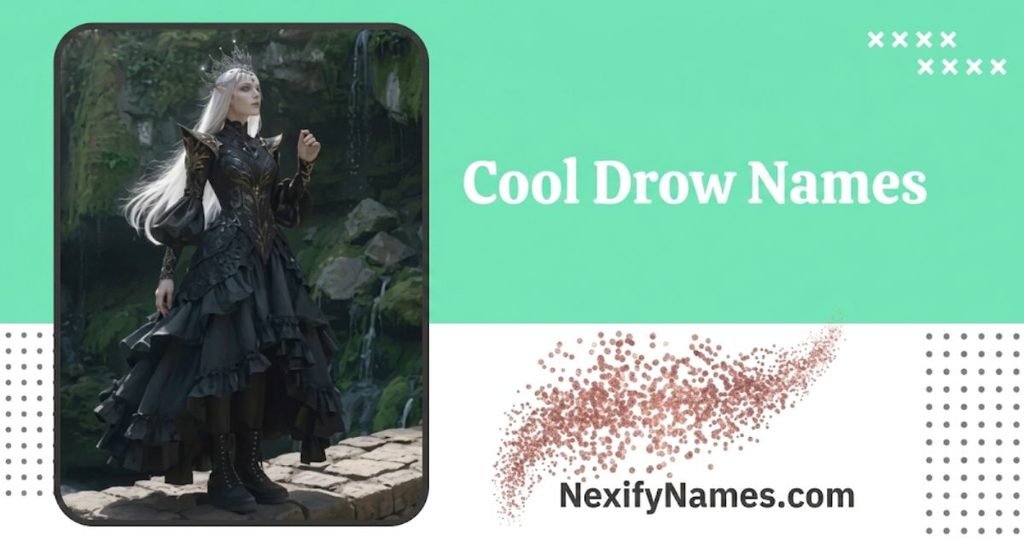
Cool drow names blend danger with charm, giving your character instant edge. They sound bold and sharp, with just a hint of menace. Perfect for rogues, spies, or any drow who thrives on mystery and quiet, controlled power in every scene.
- Zevrik – “Sharp-tongued one”
- Kaelthorn – “Thorn of night”
- Ravyx – “Dark omen”
- Silthara – “Silent blade”
- Draconis Vex – “Serpent’s wrath”
- Nyxvane – “Vein of shadow”
- Korrathis – “Bone of dusk”
- Velisara – “Grace of venom”
- Ashkarion – “Ember of ruin”
- Threxor – “Breaker of chains”
- Ilvaronis – “Whisper of steel”
- Zandreth – “Wanderer of night”
- Malrikos – “Cruel wit”
- Sethrayne – “Serpent’s grace”
- Corvinael – “Raven’s kin”
- Vhalkyra – “Fury of shadow”
- Drasketh – “Drake of dusk”
- Nymalor – “Night’s edge”
- Karvethis – “Blade of blood”
- Zerinox – “Cold precision”
- Ashendral – “Cinder of night”
- Voltharis – “Storm’s whisper”
- Rhaegothis – “Shadow’s roar”
- Sylkarune – “Rune of silence”
- Drevanthis – “Dread walker”
- Ithalrune – “Mark of secrets”
- Kraelis – “Sharp fate”
- Ombrivex – “Weight of gloom”
- Zephrion – “Swift shade”
- Malveris – “Dark grace”
- Nocturis – “Child of midnight”
- Vethronax – “Grim serpent”
- Ashvellyn – “Ash and steel”
- Draventhis – “Dread flame”
- Sorinvael – “Shadow’s son”
- Krythos – “Silent judge”
- Ilmaraxis – “Star of ruin”
- Zandravyx – “Wrath unseen”
- Halveron – “Cold justice”
- Nyssarien – “Night’s daughter”
- Vrakthos – “Iron shadow”
- Selvaneth – “Grace of dusk”
These cool drow names carry weight and style in equal measure. Pair one with a house title or clan mark, and you’ve got a character that feels sharp, memorable, and ready for any campaign table.
Cute Drow Names
Cute drow names bring a softer, playful twist to typical dark elf naming. They still carry a hint of shadow, but sound gentler and more endearing. Great for younger characters, companions, or drow with a lighter, more charming personality.
- Mira – “Little light”
- Vesha – “Gentle whisper”
- Nima – “Soft shadow”
- Tavi – “Small spark”
- Lyssa – “Sweet dusk”
- Fenna – “Tiny flame”
- Ashka – “Little ember”
- Sela – “Quiet moon”
- Vinna – “Small grace”
- Kira – “Bright shade”
- Nyla – “Soft night”
- Pella – “Gentle star”
- Sira – “Little dawn”
- Thala – “Sweet shadow”
- Vixa – “Playful spark”
- Ella-vyn – “Little moonbeam”
- Rosalyn Vex – “Gentle rose of night”
- Tilla – “Small whisper”
- Nessa – “Soft dusk”
- Wynla – “Little wonder”
- Zaya – “Sweet shade”
- Mira-lyn – “Bright little one”
- Sova – “Tiny owl-kin”
- Kessa – “Gentle spark”
- Vela – “Little star”
- Ninka – “Soft glimmer”
- Talia Vex – “Sweet shadow-child”
- Bree-nyx – “Little breeze of night”
- Sasha-vyn – “Small charm”
- Riven-lil – “Tiny river”
- Neela – “Soft dark blue”
- Yuna-vex – “Gentle moon spirit”
- Tessy – “Little quiet one”
- Wisp – “Small and light”
- Fael – “Little fae spark”
- Lumi – “Small light”
- Ondine Vex – “Gentle water spirit”
- Nixie – “Tiny sprite”
- Cordi – “Sweet little heart”
- Bellyn – “Small beauty”
- Sable-lyn – “Soft dark charm”
- Wrenna – “Little songbird”
These cute drow names soften the usual dark elf edge without losing their charm. Perfect for a younger character, a beloved companion, or any drow whose personality shines brighter than their shadowy roots.
Funny Drow Names
Funny drow names poke fun at the usual dark, brooding style. They mix Underdark themes with silly wordplay, giving your character a light-hearted twist. Great for comic relief characters, parody campaigns, or just a laugh at the table.
- Sir Pokes-a-Lot – “Jokes about his rapier skills”
- Web Slinger Steve – “Confused for a spider hero”
- Grumbleweb – “Always complaining underground”
- Sir Trips-a-Lot – “Clumsy in tight tunnels”
- Moldy Cloak – “Never washes his robes”
- Bat Snack Bob – “Feeds bats a bit too often”
- Sir Sneezes-in-Dark – “Allergic to cave dust”
- Puddle Jumper – “Loves the Underdark’s damp floors”
- Grim McGrumpy – “Perpetually in a bad mood”
- Fungusfoot – “Stepped in one too many mushrooms”
- Sir Loses-Keys – “Can’t find his own house”
- Wobblecane – “Walks funny after cave-ins”
- Snoozing Spider – “Falls asleep during ambushes”
- Captain Overdramatic – “Turns every fight into theater”
- Lord Butterfingers – “Drops his weapon constantly”
- Sir Echoes-a-Lot – “Talks to himself in tunnels”
- Gassy Gremlin – “Blames the bats for the smell”
- Wanders-Off Wendell – “Gets lost every single quest”
- Sir Snacks-Too-Much – “Always eating mushroom stew”
- Grouchy Gloomtoe – “Hates everything, including shoes”
- Bumblesnout – “Terrible sense of direction”
- Sir Trips-on-Webs – “Can’t avoid spider silk”
- Chatty Chasm – “Never stops talking mid-battle”
- Muddy Boots McGee – “Tracks mud through the whole lair”
- Sir Naps-a-Ton – “Sleeps through every ambush”
- Wiggling Widget – “Fidgets nervously in negotiations”
- Grumpy Gravelbeard – “Complains about cave gravel constantly”
- Sir Overpacks – “Brings way too much gear”
- Snorty McSnortface – “Laughs at his own jokes loudly”
- Bumbling Bogsworth – “Falls into every underground puddle”
- Sir Yawns-a-Lot – “Bored during every heist”
- Wobbly Webfoot – “Terrible at climbing webs”
- Captain Overthinks – “Plans too much, acts too little”
- Sir Forgets-Names – “Can’t remember his own party”
- Grumbling Gnasher – “Chews loudly during meetings”
- Sneezy Shadowfoot – “Allergic to his own cloak dust”
- Sir Loses-Direction – “Walks in circles underground”
- Clumsy Cobweb – “Trips over his own traps”
- Sir Talks-Too-Loud – “Ruins every stealth mission”
- Wandering Wartclaw – “Gets distracted by shiny rocks”
- Sir Drops-Everything – “Butterfingers in every encounter”
- Grumpy Glowworm – “Hates the dark, ironically”
These funny drow names bring humor to a usually serious race. They work great for comic-relief NPCs or a party member who breaks the tension with a laugh at just the right moment.
Creative Drow Names
Creative drow names step outside typical patterns, mixing sounds and meanings in fresh, unexpected ways. They stand out from common naming templates, giving your character a truly original feel that fits any imaginative campaign or story world.
- Zhevaris – “Weaver of fate”
- Ondrikael – “Echo of dusk”
- Sylvarune – “Rune of the forest deep”
- Kaelthys – “Flame beneath stone”
- Verashi – “Bloom of shadow”
- Nythera – “Song of the void”
- Drakonis Vel – “Serpent’s dream”
- Ithralen – “Thread of starlight”
- Corvaneth – “Wing of silence”
- Malvorin – “Bearer of riddles”
- Xanthyra – “Gold-touched dark”
- Threnvael – “Sorrow’s grace”
- Obrisken – “Stone that dreams”
- Vylathis – “Wanderer between worlds”
- Aelunor – “Light lost to shadow”
- Kryssandel – “Crystal of night”
- Fenmorwick – “Marsh of forgotten names”
- Zaphiron – “Spirit of the deep”
- Belquorath – “Voice beneath the earth”
- Nirethys – “Whisper of ash”
- Draumveth – “Dreamer of ruin”
- Ilvashara – “Grace unbound”
- Torvenith – “Root of the abyss”
- Selkarune – “Rune of quiet storms”
- Morvithien – “Child of twilight silence”
- Ashendrel – “Ember reborn”
- Quyllara – “Star sealed in stone”
- Vandreth Kai – “Wanderer’s second name”
- Rhaevonis – “Roar turned to song”
- Ombrathis – “Shadow given form”
- Zynethral – “Twin echoes”
- Kestivael – “Keeper of forgotten paths”
- Wynshadow – “Dream stitched in dark”
- Halvorik Zen – “Cold made gentle”
- Prisemeth – “Jewel of the hollow”
- Draveska – “Flame that doesn’t burn”
- Ulyrathen – “First voice of the deep”
- Skarvenoth – “Bone song”
- Neyvaris – “Night’s own architect”
- Cindralore – “Story written in ash”
- Vherathis – “Truth beneath silence”
- Solmavyx – “Sun that never rose”
These creative drow names break away from the usual mold, blending poetic meaning with unusual sound combinations. Use them when you want a character whose name feels like a story all on its own.
Origins Of Drow Names
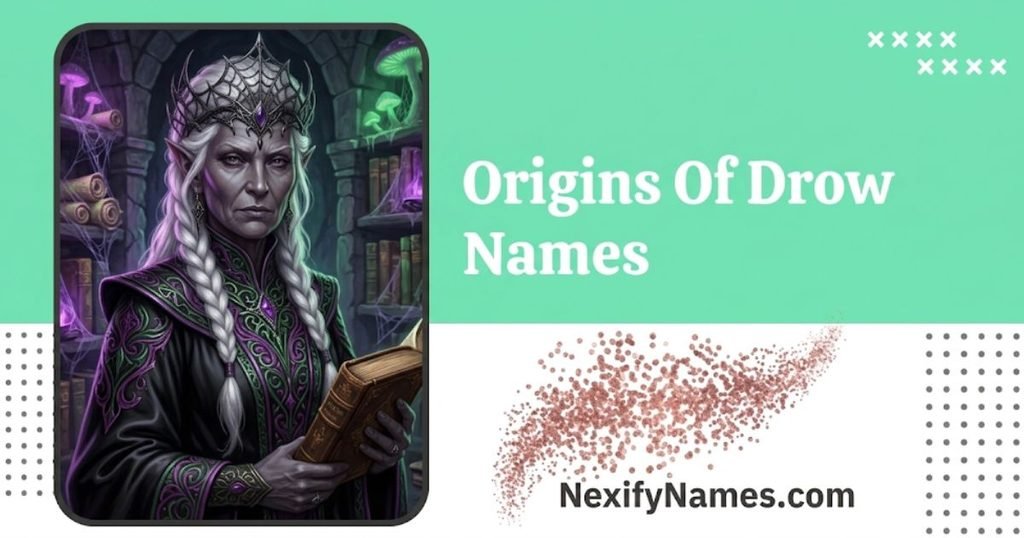
Drow names didn’t just appear out of nowhere. They grew out of a much older elvish tongue, one shared by every elf race before the drow ever existed as a separate people. When the drow broke away and settled deep in the Underdark, their language broke away too. It hardened. It lost its softer edges.
Think about how any isolated group starts sounding different after a few generations. Accents shift. Words shorten. New slang takes root and never leaves. That’s roughly what happened to drow speech, except it happened across centuries in near-total darkness, cut off from the surface world entirely. The result? A tongue built for whispering in tunnels, not singing under open skies.
Culture played a huge role too. Drow society runs on hierarchy, distrust, and constant maneuvering for power. Names had to reflect that. A soft, flowing elvish name wouldn’t survive long in a world where every syllable might signal weakness. So drow names picked up harder consonants, sharper endings, and a clipped rhythm that mirrors the danger baked into everyday drow life.
Religion left its mark as well. Lolth, the spider queen worshipped across most drow society, shaped naming trends in subtle ways. Many names carry hidden nods to spiders, webs, poison, or shadow, even when the connection isn’t obvious at first glance. A name might sound simply “cool” on the surface, but dig into its roots, and you’ll often find a quiet nod to the goddess who rules over drow faith and fear alike.
House structure changed things even further. Unlike surface elves, where a family name might just be decorative, a drow’s house name carries real weight. It signals rank, alliances, and sometimes outright danger to anyone who hears it. Say the wrong house name in the wrong tunnel, and you might find yourself in a fight you didn’t ask for.
Put it all together, and you get a naming system shaped by isolation, hierarchy, faith, and survival. That’s why drow names sound the way they do. They’re not random. They’re the product of an entire culture rebuilding itself in the dark, one harsh syllable at a time.
Drow Names In Fantasy Lore
Drow names owe a huge debt to Dungeons and Dragons, the game that basically invented the modern version of dark elves as we know them. Before D&D popularized the drow, “dark elves” existed here and there in mythology and folklore, but nothing quite like the Underdark-dwelling, spider-worshipping society that became a genre staple.
No name carries more weight in drow lore than Drizzt Do’Urden. His story broke the mold entirely. Here’s a drow who rejected his own culture’s cruelty, and his name reflects that split. It sounds softer than most drow names, almost gentle by comparison, which fits a character who never fit in with Menzoberranzan’s brutal politics in the first place.
Speaking of Menzoberranzan, that city sits at the center of most drow lore. It’s the largest, most infamous drow settlement in the Forgotten Realms setting, ruled by powerful matron mothers and constant house warfare. Names tied to Menzoberranzan’s ruling houses, like Baenre or Xorlarrin, carry instant recognition among fans of the setting. Drop one of those names at a gaming table, and everyone knows exactly what kind of trouble just walked in.
Video games picked up the torch too. Baldur’s Gate leaned hard into established drow naming conventions, giving players characters and NPCs that felt right at home next to decades of tabletop lore. That consistency matters. It means a name you invent today can slot right into a world built from thirty years of stories, without feeling out of place.
Beyond the big names, fantasy lore expanded drow culture into something much bigger than one city or one rogue hero. Countless novels, games, and homebrew campaigns have added their own houses, characters, and naming quirks over the years. Yet the core still holds: sharp sounds, house-based identity, and a naming tradition built for a world where trust is rare and power always comes with a price.
Male Drow Names
Male drow names lean hard into strength and edge, often sounding blunt or forceful. They reflect a culture where power matters more than charm. These names suit warriors, rogues, or any male character carving out a place in the Underdark’s brutal hierarchy.
- Zaknar – “Blade beneath stone”
- Vondrek – “Iron will”
- Kelthanis – “Wolf of shadow”
- Threxal – “Breaker of oaths”
- Draveth – “Serpent’s grip”
- Korrigan – “Bone crusher”
- Ashvarik – “Ember of ruin”
- Nymvorn – “Night’s fury”
- Ravendrik – “Wing of dusk”
- Sethrion – “Grace of the blade”
- Malrik – “Cruel judge”
- Corvanis – “Watcher unseen”
- Belgrathis – “Fate’s cruelty”
- Ildrek – “Ancient wrath”
- Zynthos – “Twin fangs”
- Voltharion – “Storm born”
- Krathis – “Sharp resolve”
- Ombrathan – “Weight of gloom”
- Sorvekar – “Shadow’s son”
- Halveron Vek – “Cold justice-bearer”
- Drakonis Thane – “Serpent lord”
- Nightharen – “Fierce guardian”
- Vrakthorn – “Iron thorn”
- Zephrikar – “Swift blade”
- Malgorath – “Dark ruler”
- Kaelrik – “Flame beneath dark”
- Thornevex – “Sharp vengeance”
- Grendarik – “Death’s echo”
- Silthanis – “Silent hunter”
- Verakor – “Bloom of ruin”
- Ashendrik – “Ash born”
- Draelvor – “Dusk-forged”
- Ilvanor – “Steel whisper”
- Karvethis Zar – “Blood judge”
- Nocturith – “Child of midnight”
- Vethronar – “Grim serpent-kin”
- Ravethorn – “Raven’s blade”
- Xanthorik – “Gold-touched dark”
- Bregathis – “Stone-breaker’s heir”
- Zerinox Kael – “Cold precision, given voice”
- Thalendor – “Shadowed lord”
Male drow names like these carry weight and menace in equal measure. Pair one with a house name or title, and you’ll have a character built for command, combat, or quiet, calculated cruelty.
Female Drow Names
Female drow names often carry elegance alongside menace, reflecting a society where women hold real power. These names suit priestesses, matron mothers, or any female character commanding respect and fear in equal measure across the Underdark.
- Zarithra Vex – “Daughter of shadow”
- Halsyra – “Grace of night”
- Quendrala – “Voice of the deep”
- Sosallyn – “Keeper of secrets”
- Minolara – “Silver whisper”
- Ardulyss – “Web of fate”
- Zeerithal – “Fierce grace”
- Yasraevyn – “Cold beauty”
- Trielara – “Ruler’s daughter”
- Malithra – “Bitter judge”
- Nyssavel – “Night’s own child”
- Ilvashyn – “Steel elegance”
- Corvanyss – “Raven’s grace”
- Vhaelith – “Fury given form”
- Sethralyn – “Serpent’s daughter”
- Draconyss – “Dragon-touched shadow”
- Kryssenna – “Crystal of dusk”
- Ashendra Vel – “Ember reborn”
- Threnalis – “Sorrow’s grace”
- Obriskael – “Stone that dreams”
- Vylathyss – “Wanderer’s grace”
- Zynethyra – “Twin echoes, daughter”
- Morvithien Zar – “Twilight’s own voice”
- Ombravyn – “Shadow given breath”
- Selkarune Vex – “Rune of quiet storms”
- Wynshadra – “Dream stitched dark”
- Prisemelle – “Jewel of the hollow”
- Draveska Nyx – “Flame that doesn’t burn”
- Neyvarielle – “Night’s architect”
- Cindralyn – “Story in ash”
- Vherathyss – “Truth beneath silence”
- Solmavelle – “Sun that never rose”
- Aelunyra – “Light lost to shadow”
- Ithralara – “Thread of starlight”
- Xanthyrelle – “Gold-touched dark, gentle”
- Malvorielle – “Bearer of riddles”
- Verashyra – “Bloom of shadow”
- Nytheralis – “Song of the void”
- Sylvarenna – “Rune of the deep forest”
- Kaelthyssa – “Flame beneath stone, hers”
- Belquoressa – “Voice beneath the earth”
Female drow names like these blend beauty with authority, fitting characters who lead, judge, or command from the shadows. Pair one with a house title, and you’ll capture the full weight of drow matriarchal power.
Drow Family And House Names
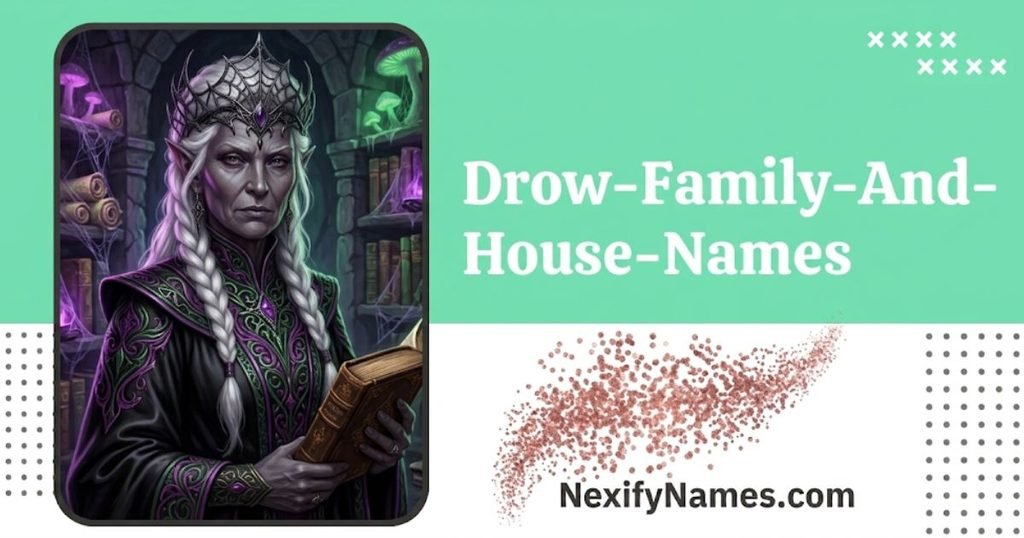
Drow house names carry more weight than any personal name. They signal rank, alliances, and history within the Underdark’s brutal social ladder. A strong house name can shape how other drow treat a character before a single word gets spoken.
- House Do’Vrenn – “Lineage of the deep blade”
- House Xarvain – “Bearers of the black web”
- House Kelmorath – “Iron-forged bloodline”
- House Threndyl – “Weavers of shadow”
- House Malgrun – “Cursed heirs”
- House Vexallar – “Vengeance-bound family”
- House Ashkarune – “Ember-marked kin”
- House Nyssavein – “Children of the void”
- House Corvethis – “Watchers of the deep”
- House Sethrian – “Serpent’s own house”
- House Zynethral – “Twin-echo bloodline”
- House Ombrathis – “Shadow-born family”
- House Draveska – “Flame that never dies”
- House Ilvandor – “Steel and silence”
- House Krathisar – “Sharp resolve, ancient line”
- House Voltharion – “Storm-forged heirs”
- House Belquorath – “Voice of the deep house”
- House Zarithane – “Shadow-daughters’ line”
- House Kaelvorn – “Flame beneath the house”
- House Ravendris – “Wing of dusk kin”
- House Morvithien – “Twilight’s silent house”
- House Thalendor – “Shadowed lordship”
- House Vylathis – “Wanderers turned rulers”
- House Xanthorune – “Gold-touched darkness”
- House Grendarik – “Death’s echo family”
- House Selkarune – “Storm-rune bloodline”
- House Prisemeth – “Jewel-hollow heirs”
- House Neyvaris – “Architects of night”
- House Aelunor – “Fallen-light lineage”
- House Ulyrathen – “First voice of the deep”
- House Cindralore – “Ash-written history”
- House Vherathis – “Truth-beneath-silence kin”
- House Solmavyx – “Unrisen-sun family”
- House Draconyss – “Dragon-shadow bloodline”
- House Kryssandel – “Crystal-night house”
- House Ithralen – “Starlight thread lineage”
- House Obrisken – “Dreaming-stone kin”
- House Zephrikar – “Swift-blade family”
- House Halveron – “Cold-justice house”
- House Malrothis – “Cursed-will bloodline”
- House Nirethys – “Ash-whisper kin”
Drow house names like these give a character instant context within the Underdark’s power struggles. A strong house name hints at old rivalries, hidden alliances, and a legacy that shapes how the story unfolds.
Drow Names For Fantasy Games
Fantasy games need names that feel authentic yet easy to say at the table. These drow names strike that balance, working well for tabletop RPGs, video games, or any world where players need a quick, memorable dark elf identity.
- Zarkiel – “Sharp resolve”
- Vondrasi – “Iron path”
- Kelmara – “Wolf’s grace”
- Threxis – “Oath breaker”
- Draventh – “Serpent’s hold”
- Korrigath Vex – “Bone crusher’s heir”
- Ashvarin – “Ember’s ruin”
- Nymora – “Night’s daughter”
- Ravendrel – “Dusk wing”
- Sethravyn – “Blade’s grace”
- Malrikan – “Cruel judge’s son”
- Corvanel – “Silent watcher”
- Belgrathyn – “Fate’s cruelty, born”
- Ildrekai – “Ancient wrath’s echo”
- Zynthara Vel – “Twin fang’s daughter”
- Voltharis Kai – “Storm-born wanderer”
- Krathisel – “Sharp resolve, kin”
- Ombravek – “Weight of gloom”
- Sorvekan – “Shadow’s second son”
- Halveryn – “Cold justice’s grace”
- Drakonel – “Serpent lord’s kin”
- Nightharyn – “Fierce guardian’s blood”
- Vrakthara – “Iron thorn’s daughter”
- Zephrikael – “Swift blade’s voice”
- Malgorel – “Dark ruler’s heir”
- Kaelrikan – “Flame beneath, reborn”
- Thornevexa – “Sharp vengeance’s kin”
- Grendarel – “Death’s own echo”
- Silthanor – “Silent hunter’s line”
- Verakael – “Bloom of ruin’s voice”
- Ashendrys – “Ash-born wanderer”
- Draelvorn – “Dusk-forged blade”
- Ilvanora – “Steel whisper’s daughter”
- Karvethyss – “Blood judge’s kin”
- Nocturael – “Midnight’s second child”
- Vethronel – “Grim serpent’s own”
- Ravethara – “Raven blade’s grace”
- Xanthorel – “Gold-dark heir”
- Bregathyn – “Stone-breaker’s line”
- Zerinoxel – “Cold precision’s voice”
- Thalendris – “Shadowed lord’s kin”
Drow names for fantasy games like these load easily into any campaign or story, whether you’re rolling dice at a table or building an NPC roster for a video game world. Pick one, add a house name, and you’re set.
Unique Drow Names
Unique drow names step far outside the common patterns, mixing rare sounds and unexpected meanings. They fit characters who stand apart from typical Underdark society, whether as outcasts, rebels, or drow who simply refuse to blend in.
- Quillistrae – “Voice that refuses silence”
- Obsidithren – “Stone that remembers”
- Vylkanessa – “Fire beneath ice”
- Thessaline Vor – “Wanderer of forbidden paths”
- Karnethyss – “Blood that speaks truth”
- Ombrisel – “Shadow unbound”
- Frenavethis – “First to break tradition”
- Silquorath – “Silence given a name”
- Zephyndra – “Wind that carries secrets”
- Malkithrae – “Curse turned blessing”
- Ithrelvyx – “Star that fell alone”
- Draumessa – “Dream that never fades”
- Norvakiel – “North star of the deep”
- Vensharoth – “Bearer of forgotten oaths”
- Kryndalith – “Crystal grown in darkness”
- Aelrivenna – “Light that chose shadow”
- Threnokai – “Sorrow turned to song”
- Zylmarune – “Rune with no origin”
- Obravethyn – “Weight that lifts itself”
- Nightmerrow – “Sorrow wrapped in calm”
- Halkithrae – “Cold that warms nothing”
- Vandreliss – “Wanderer who never rests”
- Sorvanithe – “Second voice of the house”
- Ashkellara – “Ember that refuses to die”
- Krenathis Vel – “Judge who spares none”
- Wynderoth – “Dream that walks alone”
& Prismavien – “Jewel with no reflection” - Neyvorathis – “Architect of quiet ruin”
- Cindrathelle – “Ash that still burns”
- Vherakonis – “Truth no one asked for”
- Solmerith – “Sun that chose the deep”
- Ilthranova – “Star born in the Underdark”
- Draconyssara – “Dragon’s forgotten daughter”
- Xanthevoril – “Gold hidden in ash”
- Malvorethyn – “Riddle with no answer”
- Verashkiel – “Bloom that never wilts”
- Nytheraveth – “Song no one remembers”
- Sylvakorune – “Rune of the last forest”
- Kaelthyveth – “Flame with no source”
- Belqundralis – “Voice beneath the silence beneath”
- Thalendorix – “Lord of the space between”
Unique drow names like these give a character an identity that feels genuinely one-of-a-kind. Use them for outliers, rebels, or any drow whose story breaks away from the usual Underdark script.
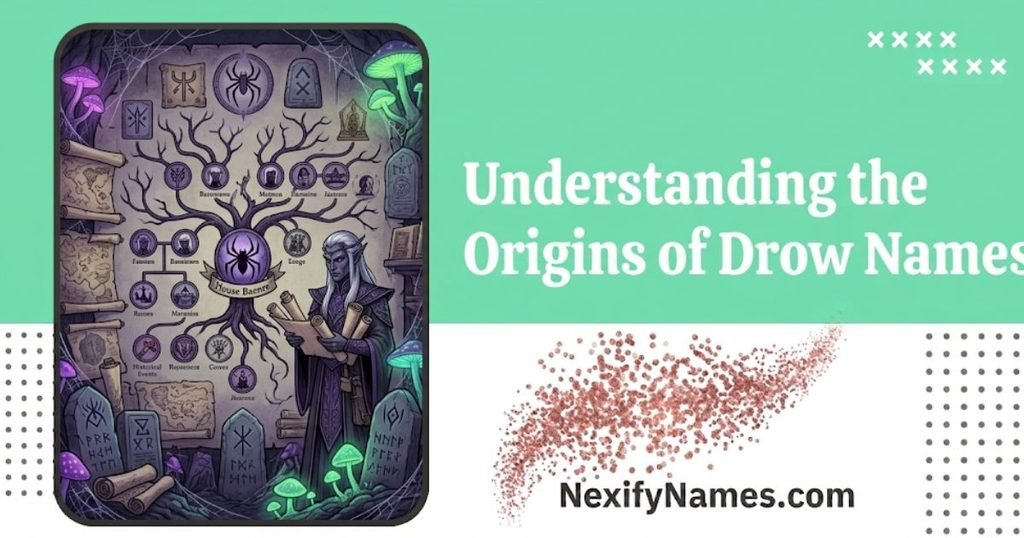
Understanding the Origins of Drow Names
Every drow name carries a piece of history you might not notice at first glance. Long before drow society split off into its own dark, spider-worshipping culture, they spoke the same elvish tongue as their surface kin. Names sounded soft, flowing, almost musical, much like the elven languages you’d find in any surface kingdom.
Then came the split. Whether you follow the lore of a fallen angel-turned-goddess or simple political betrayal, the outcome stayed the same: an entire people forced underground, cut off from sunlight and surface culture for generations. Language doesn’t survive that kind of isolation unchanged. Vowels shortened. Rhythms sharpened. The gentle elvish base twisted into something harder, colder, built for whispering through stone tunnels rather than singing beneath open sky.
Survival shaped the sound just as much as isolation did. Drow society runs on distrust, ambition, and constant jockeying for power. A name that sounded weak or soft simply didn’t fit that world anymore. Harder consonants crept in. Names got shorter, punchier, easier to spit out during a threat or a challenge. Over time, that shift became the standard, not the exception.
Faith played its part too. Most drow worship a spider goddess, and that influence bled into naming patterns in ways that aren’t always obvious. Words tied to webs, venom, and shadow show up again and again, sometimes disguised inside names that sound unrelated on the surface. Dig into the meaning, though, and the connection usually reveals itself.
House structure added yet another layer. Where surface elves might treat a family name as a nice-to-have, drow society treats house names as almost sacred. They carry rank, history, and warning all at once. Say the wrong house name in the wrong tunnel, and you might learn exactly how much weight that name still holds.
Put together, drow names reflect a people who rebuilt their entire identity in the dark. Isolation shaped the sound. Culture shaped the meaning. And faith gave it all a quiet undercurrent that still echoes through every name spoken in the Underdark today.
Drow Names: A Guide to Dark Elf Naming Conventions
Drow names follow a pattern once you know what to look for. They’re not random strings of syllables — there’s a rhythm baked into the culture, and once you spot it, you’ll start noticing it everywhere from tabletop campaigns to video game NPC lists.
Start with length. Most drow names stick to two or three syllables. Anything longer starts to feel clunky when you’re shouting it across a battlefield or introducing yourself in a den of rivals. Short names carry punch. They sound like something you’d snap out through gritted teeth, not something you’d sing at a festival.
Sound matters just as much as length. Drow names lean hard on hard consonants — K, Z, V, X, and Th sounds show up constantly. Compare that to typical surface-elf names, which favor softer L, S, and vowel-heavy combinations. That contrast isn’t accidental. It reflects two cultures that split apart centuries ago and never really reconciled.
Apostrophes show up a lot too, and they’re not just decoration. In most naming conventions, that little mark signals a quick pause or breath between two sound clusters, giving names like Zak’nafein their distinct clipped rhythm. It’s a small detail, but it’s part of what makes drow names instantly recognizable.
Then there’s the split between personal name and house name. A drow’s first name says something about them as an individual, but the house name often matters more. It signals rank, alliance, and sometimes outright danger. Some characters lean on their house name constantly to intimidate. Others drop it entirely, especially if they’re hiding from their own past.
Titles and honorifics add one more wrinkle. Priestesses, matron mothers, and high-ranking house members often carry formal titles tied to status or divine favor. These get attached to a name almost like a badge, telling everyone within earshot exactly how much respect — or fear — that person commands.
Put those pieces together, and you’ve got a naming system built for a society obsessed with status, survival, and quiet menace. Short syllables, hard sounds, meaningful pauses, and a name-plus-house structure — that’s the blueprint behind nearly every drow name you’ll come across.
Popular Drow Names for Male Characters
Popular male drow names blend recognizable fantasy sounds with the sharp, clipped style unique to dark elf culture. These names work well for warriors, spellcasters, or any male character who needs to command respect the moment he’s introduced.
- Zaskiel – “Blade of judgment”
- Vonrothis – “Iron-willed wanderer”
- Kelvrik – “Wolf beneath stone”
- Threnvor – “Oath of shadow”
- Draxenor – “Serpent’s own son”
- Korveth – “Bone-forged heir”
- Ashkarel – “Ember’s second son”
- Nymrothis – “Night’s chosen blade”
- Ravendris Kael – “Wing of the deep”
- Sethravor – “Grace beneath the blade”
- Malrikael – “Cruel judge’s kin”
- Corvenoth – “Silent watcher’s line”
- Belgrathorn – “Fate-forged thorn”
- Ildrekar – “Wrath of the ancients”
- Zynthoril – “Twin fang’s son”
- Voltharen – “Storm-born blade”
- Krathiseth – “Sharp resolve, sworn”
- Ombravorn – “Weight beneath shadow”
- Sorvekarel – “Second shadow’s son”
- Halveronix – “Cold justice, unbowed”
- Drakonithe – “Serpent lord’s echo”
- Nightharon – “Fierce guardian’s blood-kin”
- Vrakthanis – “Iron thorn’s heir”
- Zephrikel – “Swift blade’s voice”
- Malgorithen – “Dark ruler’s son”
- Kaelrikthos – “Flame reborn, sworn”
- Thornevexor – “Vengeance given form”
- Grendarion – “Death’s own kin”
- Silthanoren – “Silent hunter’s line”
- Verakoril – “Ruin’s voice”
- Ashendrys Kael – “Ash-born, second son”
- Draelvorik – “Dusk-forged blade’s kin”
- Ilvanoren – “Steel whisper’s son”
- Karvethanis – “Blood judge’s heir”
- Nocturael Vex – “Midnight’s blade-kin”
- Vethronorik – “Grim serpent’s own son”
- Ravetharon – “Raven blade’s grace, sworn”
- Xanthorix – “Gold-dark blade”
- Bregathoren – “Stone-breaker’s kin”
- Zerinoxar – “Cold precision’s heir”
- Thalendrix – “Shadowed lord’s blade”
- Vandreliss Kael – “Wanderer’s second blade”
These popular male drow names carry the kind of edge that fits warriors, rogues, and rulers alike. Add a house name to any of these, and you’ve got a character ready to command a room the moment he speaks.
Elegant Drow Names for Female Characters
Elegant drow names combine grace with quiet menace, reflecting a culture where beauty and power often walk hand in hand. These names suit priestesses, matron mothers, or any female character whose presence commands a room without raising her voice.
- Zarithessa – “Grace born of shadow”
- Halsyvara – “Elegance of the deep night”
- Quendralyss – “Voice woven in silk”
- Sosallyria – “Keeper of quiet secrets”
- Minolvyn – “Silver grace”
- Ardulyssara – “Fate’s gentle weaver”
- Zeerithavel – “Fierce and refined”
- Yasraevora – “Beauty touched by cold”
- Trielessa – “Ruler’s graceful daughter”
- Malithrienne – “Judge with a soft hand”
- Nyssavelora – “Night’s own elegance”
- Ilvashyndra – “Steel wrapped in silk”
- Corvanyssia – “Raven’s quiet grace”
- Vhaelithra – “Fury dressed in beauty”
- Sethralyvane – “Serpent’s graceful daughter”
- Draconyssara – “Dragon’s elegant shadow”
- Kryssennavel – “Crystal grace of dusk”
- Ashendravyn – “Ember reborn, refined”
- Threnalisse – “Sorrow’s gentle grace”
- Obriskaelith – “Stone dreaming softly”
- Vylathyssara – “Wanderer’s quiet elegance”
- Zynethyravel – “Twin grace, echoed”
- Morvithienne – “Twilight’s soft voice”
- Ombravynara – “Shadow given gentle breath”
- Selkarunessa – “Storm’s quiet rune”
- Wynshadravel – “Dream stitched in silk”
- Prisemellara – “Jewel wrapped in shadow”
- Draveskavyn – “Flame that whispers”
- Neyvarielora – “Night’s graceful architect”
- Cindralynessa – “Story written softly in ash”
- Vherathyssara – “Truth spoken gently”
- Solmavellora – “Sun that chose the quiet dark”
- Aelunyravel – “Light lost softly to shadow”
- Ithralarissa – “Thread of gentle starlight”
- Xanthyrellora – “Gold touched by grace”
- Malvorielessa – “Riddle told softly”
- Verashyravel – “Bloom of quiet shadow”
- Nytheralissa – “Song of the gentle void”
- Sylvarennavel – “Rune of the deep, refined forest”
- Kaelthyssavara – “Flame beneath stone, hers alone”
- Belquoressavel – “Voice beneath the earth, gentled”
- Thalendrielle – “Shadowed lady of grace”
Elegant drow names like these strike a balance between softness and strength, fitting characters who lead through presence rather than force. Pair one with a house title, and you’ve got a female drow built for quiet, commanding authority.
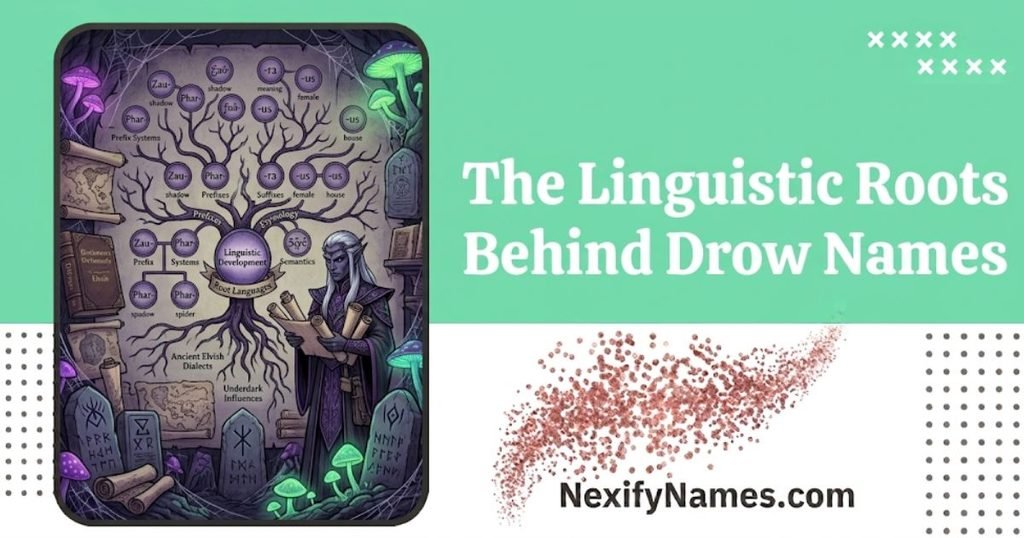
The Linguistic Roots Behind Drow Names
Every drow name traces back to a single ancestor language: the shared elvish tongue spoken before any of the elf races split apart. That original language sounded soft and flowing, built around long vowels and gentle consonant pairings. You can still hear traces of it in modern elvish names, which lean toward musical, lyrical sounds even today.
Drow speech broke away from that root once the split happened and isolation took hold. Cut off from the surface world for generations, drow language evolved on its own timeline, shaped by darkness, distrust, and constant survival pressure. Vowels that once stretched out got clipped short. Consonant clusters that used to flow together started clashing instead, giving drow words a harder, more guttural texture than their elvish ancestors.
Linguists studying constructed fantasy languages often point to this kind of shift as realistic. Real-world languages do something similar when populations separate and stop communicating regularly. Accents diverge. Grammar simplifies in some spots and complicates in others. Give it a few centuries, and two groups who once spoke the same tongue can end up nearly unintelligible to each other. Drow language mirrors that pattern almost exactly, just compressed into a fictional timeline for storytelling purposes.
Pronunciation shifted alongside vocabulary. Where surface elvish favors a light, front-of-mouth delivery, drow speech pulls sounds further back, toward the throat. That’s part of why so many drow names use K, V, X, and hard G sounds. Try saying a name like “Vrakthos” versus a typical elvish name like “Aelindra,” and you’ll feel the difference in your own mouth. One glides. The other lands with weight.
Apostrophes deserve a mention too, since they show up constantly in drow naming and confuse a lot of newcomers. They’re not silent, and they’re not just stylistic flair. Most naming conventions treat that mark as a brief glottal pause, a quick catch of breath between two sound clusters. It’s a small linguistic fingerprint, but it’s one of the clearest signals that you’re looking at a drow name rather than a generic fantasy one.
Put together, the linguistic roots behind drow names tell a story of separation. Same starting point, wildly different destination. That’s what makes the language feel authentic instead of just “elvish with extra apostrophes” — it’s built on a real linguistic logic, even if the world itself is entirely invented.
Drow Names Inspired by House and Clan Traditions
House and clan traditions shape drow identity more than almost anything else. A personal name might tell you something about a character’s individual nature, but the house name tells you where they actually stand in the Underdark’s brutal social order. Rank, alliances, old rivalries — it’s all baked into that second name.
Most drow society structures itself around noble houses competing for territory, resources, and favor with the goddess most drow worship. Each house carries its own reputation, built over centuries of political maneuvering, betrayal, and outright war. A character bearing a well-known house name walks into a room with instant context attached, whether that context helps or hurts them depends entirely on who’s listening.
Clan traditions often dictate more than just the name itself. Many houses pass down specific naming patterns across generations, favoring certain sounds, prefixes, or themes tied to their history or patron deity. A house built around military conquest might favor harsh, blade-like syllables. A house known for scholarship or magic might lean toward names with a more mysterious, layered feel.
Some traditions also dictate how names get used day to day. In more powerful houses, dropping the house name entirely would be almost unthinkable — it’s a built-in flex, a constant reminder of standing. In smaller or disgraced houses, characters sometimes downplay their house name on purpose, either out of shame or strategic necessity, especially if their house has fallen out of favor.
House names also carry weight beyond individual identity. They represent alliances, marriages, and political debts stretching back generations. Two characters with seemingly unrelated personal names might share deep house ties, obligations neither one asked for but both have to honor. That’s part of what makes drow society so tense: everyone’s carrying baggage tied to a name they didn’t choose.
Put together, house and clan traditions turn a simple naming system into a full social map. Learn to read drow house names, and you’re not just naming a character. You’re placing them inside centuries of rivalry, loyalty, and quiet, calculated power.
How Drow Names Reflect Personality and Status
A drow name rarely stays neutral. It almost always hints at something deeper — rank, reputation, or a personality trait the character either earned or inherited. Pay attention to how a name gets used, and you’ll pick up on social cues before a single line of dialogue gets spoken.
Titles do a lot of that heavy lifting. High priestesses, matron mothers, and house leaders often carry formal titles tied directly to their role or their standing with the goddess most drow worship. These titles get attached almost like a badge of honor, announcing status the second someone’s introduced. Drop a title in front of a name, and everyone in the room adjusts their behavior accordingly.
Nicknames tell a different story entirely. A drow operating on the fringes, an exile, a spy, or someone hiding from their own house, often sheds their formal name for something shorter and less traceable. That shift isn’t random. It’s a survival tactic. A nickname strips away the baggage a full name and house title carry, letting a character move through the world without immediately signaling who they are or where they came from.
Sound itself carries meaning too. A name built from harsh, clipped syllables often belongs to someone who leans into intimidation, someone comfortable using fear as a tool. A name with slightly softer, more elegant phrasing might belong to a character who wields influence through charm, manipulation, or political skill instead of brute force. Neither approach is “better” in drow society. They’re just different tools for the same goal: staying on top.
Family ties layer on even more meaning. A character using their full house name loudly and often is usually flexing, reminding everyone exactly whose protection or wrath stands behind them. A character avoiding their house name might be hiding shame, distancing themselves from a fallen house, or simply trying to build a reputation on their own terms instead of riding a family name into every room.
Put all of that together, and a single drow name can carry rank, personality, and history all at once. It’s not just a label. It’s a quick, unspoken introduction that tells the rest of the Underdark exactly how to react before a word gets said.
Crafting the Perfect Drow Name for Your Character
Building a solid drow name doesn’t require a linguistics background. It just takes a bit of structure and a feel for the sounds that make these names click. Start with a short root, add the right ending, and you’re most of the way there.
Pick a root first. Two or three letters usually does the trick — something like Zar, Vel, Nym, or Kes. Keep it simple. Drow names rarely start with soft, drawn-out sounds, so lean toward something with a bit of bite right from the first syllable.
Next, add a suffix that carries weight. Endings like -eth, -ryn, -ax, or -orn give a name that clipped, purposeful feel drow culture demands. Combine your root and suffix, and you’ve already got something usable: Zar-eth, Vel-ryn, Kes-ax. Simple, but effective.
Apostrophes can add extra flavor if you want that classic Underdark look. Just remember they’re not decoration — in most naming logic, they mark a quick breath or pause between two sound clusters. Something like “Zar’eth” reads naturally once you know that rule, instead of looking like a random punctuation mark dropped in for style points.
Don’t forget the house name. This part matters just as much as the personal name, sometimes more. Decide early whether your character leans on their house name constantly, drops it entirely, or uses it selectively depending on the situation. That single choice says a lot about their personality before you’ve written a single line of backstory.
Match the sound to the role, too. A blunt, harsh-sounding name suits a warrior or enforcer. Something slightly softer, with more flowing syllables, fits a priestess, diplomat, or schemer working through influence instead of force. The name should feel like it belongs to the character, not just to the race.
Finally, say it out loud. Seriously. If a name looks cool on paper but trips up your tongue every time you try to say it at the table, simplify it. A name you can say quickly and confidently will always outperform something clunky, no matter how clever it looks written down.
Follow those steps, and you’ll end up with a drow name that feels authentic, fits your character’s role, and doesn’t require a pronunciation guide taped to your character sheet.
Drow Names in Popular Fantasy Settings and Games
Dungeons and Dragons deserves most of the credit for turning drow into a genre staple. Before D&D built out the Underdark and its spider-worshipping society, dark elves existed only as scattered folklore references. D&D gave the concept structure, culture, and most importantly, a naming system players could actually build characters around.
Menzoberranzan sits at the heart of it all. As the most famous drow city in the Forgotten Realms setting, it’s home to constant house warfare, ruthless matron mothers, and political schemes that never really stop. Names tied to Menzoberranzan’s ruling houses carry instant recognition among longtime fans, and dropping one at the table usually gets a reaction.
Then there’s Drizzt Do’Urden, easily the most recognized drow name in fantasy fiction. His story flipped the usual drow narrative on its head, following a character who rejected his own culture’s cruelty entirely. His name reflects that difference too. It’s slightly softer than typical drow naming conventions, which fits a character who never quite belonged in the world he was born into.
Video games picked up the baton and ran with it. Baldur’s Gate leaned hard into established naming conventions from decades of tabletop lore, giving players NPCs and companions who felt instantly familiar to anyone who’d read the novels or played the tabletop game. That consistency matters more than it might seem. It means new players can jump into a game world already dense with history, without needing a lore dump to understand why a name sounds the way it does.
Beyond the big, recognizable names, countless other games, novels, and homebrew settings have added their own spin on drow culture. Some lean into the classic Underdark aesthetic. Others experiment, softening certain naming conventions or blending in new cultural influences entirely. The core structure survives regardless: sharp sounds, house-based identity, and a naming tradition built for a world where trust runs thin and power always comes at a cost.
Whether you’re pulling names straight from established lore or inventing your own for a homebrew campaign, drow naming conventions give you a flexible, recognizable framework. It’s part of why the race has stayed a genre favorite for decades, across tabletop games, video games, and shelves full of fantasy fiction.
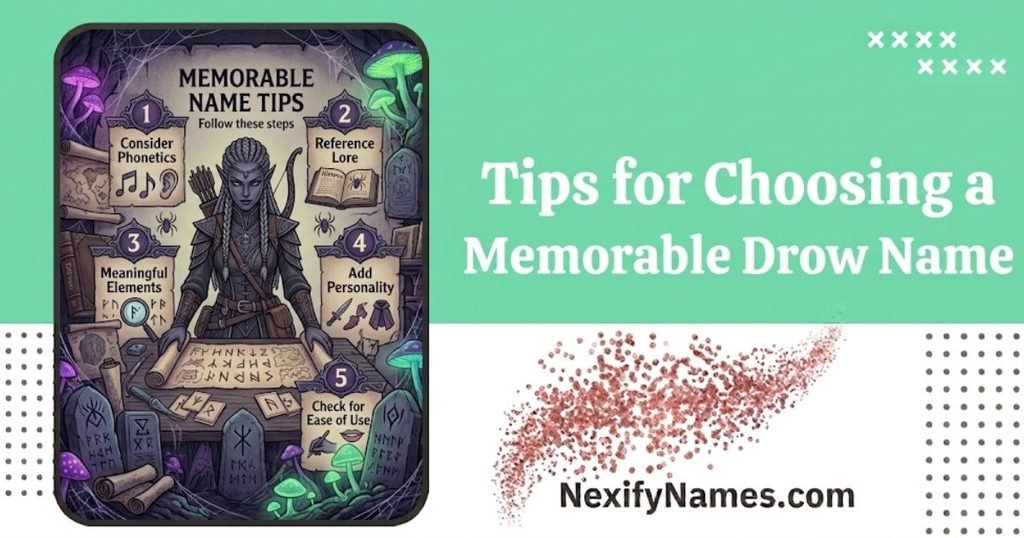
Tips for Choosing a Memorable Drow Name
Picking the right drow name comes down to more than just grabbing something that sounds cool. A memorable name sticks with players and readers long after the story ends, and a few simple habits can push a decent name into genuinely great territory.
Start with pronunciation. A name that looks striking on paper but stumbles out of your mouth every single time will wear thin fast, especially at a gaming table where you’ll say it dozens of times. Read it out loud before committing. If it flows naturally, you’re on the right track. If you trip over it twice in a row, simplify.
Match the name to the role. A blunt, harsh-sounding name fits a warrior or enforcer perfectly, but it might feel off for a quiet strategist working behind the scenes. Think about how your character operates before locking in a name. The sound should hint at their personality, not fight against it.
Look into meaning, even if you’re inventing the name yourself. Drow culture ties heavily into themes of shadow, spiders, venom, and quiet menace. A name that nods to one of those themes, even subtly, feels more grounded in the culture than something picked purely for sound. It doesn’t need to be obvious. A hidden meaning works just as well as an obvious one.
Consider the house name carefully too. This decision affects more than flavor. It shapes how other characters react, what alliances or rivalries come pre-loaded into your backstory, and how much weight your character carries just by walking into a room. A strong house name can do half the storytelling work for you.
Don’t be afraid to tweak existing names for inspiration. Browsing a list of established drow names and adjusting a syllable or two often produces something that feels authentic without being a direct copy. It’s a quick way to land on something original while still staying true to the naming conventions that make drow names recognizable in the first place.
Finally, trust your gut. If a name feels right the moment you say it, that instinct usually means something. The best drow names carry a little weight the second they’re spoken, and that feeling is often the clearest sign you’ve found the right one.
Frequently Asked Question
Where do dark elf naming traditions actually come from?
Drow names grew from an older elvish language, reshaped by isolation and Underdark culture over many generations.
What makes these names sound so different from regular elf names?
Drow names use harder consonants and shorter syllables, giving them a sharper, more aggressive tone than typical elvish names.
Do these names carry any hidden meaning?
Yes, many drow names reference shadow, spiders, or venom, tying back to core themes within drow religion and culture.
How important is a family name in this culture?
House names matter as much as personal names, often signaling rank, alliances, and reputation across Underdark society.
Can I create my own version instead of using existing ones?
Absolutely, building custom drow names is easy once you understand the sound patterns and structure behind the naming style.
Are there different styles for male and female characters?
Yes, male drow names often sound blunt and forceful, while female drow names lean toward elegance mixed with quiet menace.
Where can I find inspiration for naming my character?
Popular fantasy settings, tabletop games, and novels offer countless examples of drow names you can adapt or reimagine.
Conclusion
Choosing the right drow names takes more than luck. It takes a feel for sound, meaning, and culture. Every drow name on this list carries a bit of that dark, sharp energy that makes drow characters stand out.
Whether you picked a bold male name, an elegant female one, or something entirely your own, you now have the tools to build a drow name that fits. Remember the basics. Keep it short. Keep it sharp. Add a house name if it fits your story.
Drow names aren’t just labels. They tell a story before a single word gets spoken. So go ahead. Pick your favorite drow name from this list, or use these tips to build your own. Either way, your character just got a whole lot more memorable.
Pingback: 530+ Hobbit Names: Male, Female, Fantasy, LOTR & D&D Ideas With Meanings
Pingback: 300+ Unique Last Names That Mean Death, Darkness, and Doom
Pingback: 200+ Japanese Horse Names With Meanings: Beautiful, Strong & Unique Ideas
Pingback: 500+ Victoria Nicknames: Cute, Funny, Cool & Unique Ideas
Pingback: 650+ Forest Magical, Enchanted & Nature-Inspired Ideas