
Choosing the perfect goddess name can add a little magic, power, and mystery to any character. Whether you’re naming a fantasy heroine, creating a gaming persona, or simply love mythology, the right name can tell a fascinating story. Some names feel soft and beautiful, while others carry strength, wisdom, or ancient power.
In this guide, you’ll find goddess names inspired by Greek, Roman, Norse, Egyptian, Celtic, and Hindu mythology. We’ve included beautiful female goddess names, fierce warrior names, and unique choices with meaningful origins. If you’re searching for female god names or goddess names for female characters, you’ll find plenty of ideas to spark your imagination.
From moon goddesses to powerful divine figures, there’s something here for every style. Explore the names of goddesses associated with love, nature, war, and wisdom. Whether you prefer rare women goddess names or familiar favorites, these ideas will help you find a name that feels truly special.
Beautiful Goddess Names for Divine and Magical Characters
Beautiful goddess names often evoke grace, light, love, and celestial wonder. Some come from ancient religious traditions, while others are inspired by nature or fantasy storytelling. These names work well for elegant heroines, magical queens, and characters with a gentle but memorable presence.
If you want a name that sounds graceful without feeling ordinary, consider these options.
- Aphrodite
- Athena
- Artemis
- Freya
- Hera
- Isis
- Selene
- Aurora
- Gaia
- Diana
- Rhea
- Iris
- Persephone
- Demeter
- Brigid
- Lakshmi
- Saraswati
- Parvati
- Amaterasu
- Inanna
- Astarte
- Bastet
- Hathor
- Nephthys
- Frigg
- Skadi
- Eir
- Sif
- Morrigan
- Danu
- Cerridwen
- Aine
- Tiamat
- Nut
- Ma’at
- Anuket
- Neith
- Yemaya
- Oshun
- Pele
- Eos
- Hebe
- Harmonia
- Tyche
- Idunn
- Rhiannon
- Epona
- Vesta
- Flora
- Juno
- Asteria
- Calypso
- Thalia
- Clio
- Elpis
Powerful Goddess Names That Symbolize Strength and Authority
Powerful goddess names suit characters who lead kingdoms, protect their people, command armies, or shape entire worlds. Many mythological goddesses represent sovereignty, justice, creation, and destruction. Their stories can help you choose a name that feels strong and meaningful.
For a commanding character, consider a name associated with a warrior, ruler, or divine protector.
- Sekhmet
- Durga
- Kali
- Morrigan
- Athena
- Hera
- Freya
- Isis
- Inanna
- Ishtar
- Nemesis
- Nike
- Bellona
- Neith
- Anat
- Ereshkigal
- Hecate
- Skadi
- Hel
- Ran
- Themis
- Dike
- Amaterasu
- Pele
- Cybele
- Rhea
- Coatlicue
- Ixchel
- Oya
- Tiamat
- Andraste
- Macha
- Badb
- Nemain
- Victoria
- Minerva
- Alecto
- Megaera
- Tisiphone
- Satis
- Mut
- Wadjet
- Nekhbet
- Chandi
- Bhavani
- Shakti
- Bhuvaneshwari
- Kamakhya
- Tefnut
- Medb
Greek Goddess Names and Their Meanings
Greek mythology offers an enormous collection of names associated with wisdom, beauty, hunting, love, the sea, and the underworld. These divine figures appear in ancient poems, legends, and stories that continue to inspire modern fiction.
When choosing Greek goddess names, consider both the sound and the character’s traditional role. Athena, for example, is associated with wisdom and strategic warfare, while Aphrodite represents love and beauty.
- Athena
- Aphrodite
- Artemis
- Hera
- Demeter
- Persephone
- Hestia
- Gaia
- Rhea
- Nyx
- Themis
- Nemesis
- Nike
- Iris
- Selene
- Eos
- Hecate
- Leto
- Metis
- Dione
- Amphitrite
- Tethys
- Mnemosyne
- Hebe
- Eris
- Harmonia
- Tyche
- Ananke
- Asteria
- Phoebe
- Theia
- Clio
- Calliope
- Thalia
- Urania
- Melpomene
- Polyhymnia
- Terpsichore
- Euterpe
- Eleos
- Enyo
- Eileithyia
- Pasithea
- Peitho
- Nemertea
- Adrasteia
- Alecto
- Tisiphone
- Megaera
- Perse
- Circe
- Calypso
- Leucothea
- Psyche
- Aegina
- Ceto
- Styx
- Derceto
- Eudora
- Galatea
Roman Goddess Names and Their Meanings
Roman mythology features divine figures connected with love, agriculture, wisdom, victory, prosperity, and household life. Some Roman goddesses share similarities with Greek deities, although their identities and religious roles developed within Roman culture.
These names can suit historical fiction, regal characters, and fantasy heroines inspired by classical civilizations.
- Venus
- Minerva
- Diana
- Juno
- Ceres
- Vesta
- Proserpina
- Fortuna
- Victoria
- Bellona
- Flora
- Luna
- Aurora
- Tellus
- Ops
- Pomona
- Libertas
- Concordia
- Pax
- Felicitas
- Spes
- Fides
- Justitia
- Juventas
- Juturna
- Mater Matuta
- Carmenta
- Bona Dea
- Angerona
- Feronia
- Lucina
- Maia
- Salacia
- Venilia
- Voluptas
- Cloacina
- Dea Dia
- Egeria
- Anna Perenna
- Acca Larentia
- Tacita
- Mefitis
- Nortia
- Nona
- Decima
- Morta
- Levana
- Cardea
- Rumina
- Postverta
Norse Goddess Names Inspired by Ancient Legends
Norse mythology features powerful female figures associated with love, fertility, magic, healing, death, and destiny. Their names often sound bold and ancient, making them appealing choices for fantasy novels, adventure stories, and role-playing games.
Some are widely recognized, while others come from lesser-known figures in Old Norse literature. Their surviving stories can differ across historical sources.
- Freya
- Frigg
- Skadi
- Hel
- Sif
- Idunn
- Eir
- Gefjon
- Ran
- Sigyn
- Nanna
- Angrboda
- Jord
- Sol
- Syn
- Var
- Vor
- Fulla
- Gna
- Sjofn
- Lofn
- Hlin
- Saga
- Snotra
- Thrud
- Skuld
- Verdandi
- Urd
- Gullveig
- Grid
- Gerdr
- Eirny
- Hnoss
- Gersemi
- Bil
- Eir
- Hyrrokkin
- Ilmr
- Lofn
- Nott
- Rindr
- Thorgerdr
- Skogul
- Gondul
- Mist
- Herfjotur
- Geirdriful
- Randgrid
- Reginleif
- Hervor
Egyptian Goddess Names With Powerful Meanings
Ancient Egyptian mythology includes goddesses associated with protection, motherhood, magic, the sky, healing, and cosmic order. Their names offer a distinctive sense of history and mystery.
These choices work particularly well for characters connected with temples, royal dynasties, ancient magic, or desert kingdoms. Researching each figure’s original role can add depth to your character.
- Isis
- Bastet
- Sekhmet
- Hathor
- Nephthys
- Nut
- Ma’at
- Neith
- Mut
- Tefnut
- Wadjet
- Nekhbet
- Seshat
- Taweret
- Anuket
- Satet
- Menhit
- Pakhet
- Serqet
- Mafdet
- Renenutet
- Meretseger
- Qetesh
- Amentet
- Anat
- Astarte
- Wosret
- Iusaaset
- Heqet
- Shesmetet
- Meskhenet
- Kebechet
- Renpet
- Menhit
- Bat
- Mehet-Weret
- Sothis
- Weret-Hekau
- Tjenenet
- Nebethetepet
- Nehemetawy
- Hesat
- Menkeret
- Meretseger
- Anput
- Imentet
- Menhit
- Tutu
- Renenutet
- Khebit
Celtic Goddess Names Rooted in Myth and Folklore
Celtic mythology and folklore include divine figures linked with poetry, healing, sovereignty, rivers, fertility, and warfare. Many names have lyrical sounds that suit enchanted forests, ancient kingdoms, and folklore-inspired stories.
If you’re building a fantasy setting, Celtic-inspired names can help create a connection with nature and old legends. Some figures have stronger historical documentation than others, so their stories and associations may vary.
- Brigid
- Morrigan
- Danu
- Aine
- Cerridwen
- Rhiannon
- Epona
- Macha
- Badb
- Nemain
- Boann
- Cliodhna
- Flidais
- Airmid
- Modron
- Olwen
- Blodeuwedd
- Coventina
- Sulis
- Brigantia
- Andraste
- Medb
- Tailtiu
- Etain
- Anu
- Bébinn
- Cailleach
- Scathach
- Niamh
- Fand
- Gráinne
- Ériu
- Banba
- Fódla
- Clíodhna
- Mór Muman
- Grian
- Aibell
- Lí Ban
- Bo Find
- Bé Chuille
- Dian Cecht’s daughter Airmed
- Étaín
- Elen
- Creiddylad
- Arianrhod
- Ceridwen
- Don
- Branwen
- Blodeuwedd
Hindu Goddess Names Inspired by Divine Feminine Energy
Hindu traditions include many revered goddesses, each with distinct stories, qualities, and forms. Names can be associated with wisdom, prosperity, devotion, motherhood, courage, and divine power.
These names may carry deep spiritual significance for people who practice Hinduism. If you’re choosing one for a character or creative project, take time to understand its cultural and religious context.
- Lakshmi
- Saraswati
- Parvati
- Durga
- Kali
- Gauri
- Sita
- Radha
- Devi
- Shakti
- Uma
- Annapurna
- Lalita
- Tripura Sundari
- Chandi
- Bhavani
- Kamala
- Tara
- Bhuvaneshwari
- Matangi
- Dhumavati
- Bagalamukhi
- Kamakhya
- Gayatri
- Ganga
- Yamuna
- Aditi
- Prithvi
- Rati
- Shitala
- Manasa
- Santoshi
- Renuka
- Savitri
- Sati
- Rukmini
- Andal
- Meenakshi
- Akhilandeshwari
- Varahi
- Chamunda
- Maheshwari
- Kaushiki
- Brahmacharini
- Chandraghanta
- Kushmanda
- Skandamata
- Katyayani
- Mahagauri
- Siddhidatri

Goddess Names From World Mythology and Ancient Legends
Looking beyond one tradition opens up an extraordinary range of divine names. Mythologies around the world feature goddesses connected with creation, oceans, the moon, fertility, wisdom, death, and renewal.
The following collection includes figures from Mesopotamian, Japanese, Chinese, Yoruba, Aztec, Inca, and other traditions. These names can inspire richly layered characters, especially when their cultural origins inform the story.
- Amaterasu
- Inanna
- Ishtar
- Tiamat
- Ereshkigal
- Pele
- Oshun
- Yemaya
- Oya
- Ixchel
- Coatlicue
- Pachamama
- Chang’e
- Nuwa
- Mazu
- Guanyin
- Benzaiten
- Izanami
- Konohanasakuya-hime
- Ame-no-Uzume
- Marici
- Saraswati
- Durga
- Parvati
- Freya
- Skadi
- Hecate
- Nyx
- Selene
- Arianrhod
- Mama Quilla
- Chalchiuhtlicue
- Xochiquetzal
- Cihuacoatl
- Tlazolteotl
- Atabey
- Mawu
- Ala
- Ngame
- Asase Yaa
- Aja
- Yemoja
- Oṣun
- Nana Buluku
- Sedna
- Pinga
- Sila
- Amaru
- Nüwa
- Xi Wangmu
Warrior Goddess Names for Fierce Female Characters
Warrior goddess names are ideal for fearless heroines, battle queens, guardians, and characters who never back down from a challenge. Some divine figures represent combat directly, while others symbolize courage, strategy, or protection.
Think about your character’s fighting style and personality before choosing. A tactical leader might suit Athena, while a fierce supernatural warrior might suit Sekhmet or Morrigan.
- Athena
- Sekhmet
- Durga
- Kali
- Morrigan
- Bellona
- Freya
- Artemis
- Neith
- Anat
- Ishtar
- Inanna
- Skadi
- Oya
- Macha
- Badb
- Nemain
- Pele
- Nike
- Victoria
- Bastet
- Menhit
- Pakhet
- Andraste
- Brigid
- Chandi
- Devi
- Hecate
- Nemesis
- Cybele
- Enyo
- Alecto
- Tisiphone
- Megaera
- Anat
- Astarte
- Ereshkigal
- Coatlicue
- Ixchel
- Tefnut
- Wadjet
- Nekhbet
- Anat
- Kamakhya
- Chamunda
- Varahi
- Skuld
- Thrud
- Sigrun
- Hervor
Moon Goddess Names Inspired by Lunar Beauty
The moon has inspired stories about night, intuition, transformation, mystery, and the changing seasons. Moon-associated divine names often feel dreamy and celestial, making them perfect for magical characters or stories set beneath the stars.
Some figures are directly connected with the moon, while others have broader associations with night or the sky. If lunar symbolism matters to your story, check each name’s mythology before assigning it a specific meaning.
- Selene
- Luna
- Artemis
- Diana
- Hecate
- Nyx
- Chang’e
- Coyolxauhqui
- Arianrhod
- Cerridwen
- Phoebe
- Asteria
- Ixchel
- Mama Quilla
- Seshat
- Isis
- Hathor
- Nut
- Pandia
- Leucothea
- Ariadne
- Rhiannon
- Amaterasu
- Sol
- Mani
- Chandra
- Ushas
- Anumati
- Raka
- Rohini
- Nikkal
- Qingu
- Bendis
- Hina
- Marama
- Tsukuyomi
- Nott
- Aine
- Eos
- Tefnut
- Danu
- Astarte
- Atargatis
- Meness
- Mawu
- Thesan
- Elatha
- Selenia
- Lunara
- Moonweaver
Nature Goddess Names Inspired by Earth, Plants, and Animals
Nature goddess names connect characters with forests, rivers, flowers, mountains, animals, and the changing seasons. They work beautifully for earth guardians, forest spirits, healers, and magical beings who protect the natural world.
Some names come from established mythologies, while others have a modern, nature-inspired feel. Choose one that fits the environment your character calls home.
- Gaia
- Demeter
- Artemis
- Flora
- Freya
- Brigid
- Danu
- Rhiannon
- Epona
- Pachamama
- Prithvi
- Aine
- Boann
- Flidais
- Cybele
- Tefnut
- Nut
- Hathor
- Oshun
- Yemaya
- Ixchel
- Coatlicue
- Chalchiuhtlicue
- Mazu
- Anuket
- Satet
- Saraswati
- Ganga
- Yamuna
- Aditi
- Jord
- Skadi
- Sif
- Idunn
- Persephone
- Airmid
- Pomona
- Ceres
- Tellus
- Ops
- Pomona
- Nehalennia
- Coventina
- Sulis
- Sukunahikona
- Konohanasakuya-hime
- Xochiquetzal
- Mayahuel
- Ninhursag
- Asase Yaa
Goddess Names Associated With Love, Beauty, and Romance
Love-inspired goddess names can suit romantic heroines, charming characters, and divine figures who represent beauty, devotion, or relationships. Different cultures connect love with fertility, marriage, sensuality, and emotional bonds.
Remember that these associations aren’t identical. Some goddesses embody romantic love, while others represent marriage, motherhood, or a wider sense of harmony.
- Aphrodite — Greek love and beauty
- Venus — Roman love and beauty
- Freya — Norse love, fertility, and beauty
- Hathor — Egyptian music, joy, and love
- Inanna — Mesopotamian love and fertility
- Ishtar — Mesopotamian love, fertility, and war
- Oshun — Yoruba love, beauty, and rivers
- Rati — Hindu love and passion
- Parvati — Hindu devotion and marriage
- Hera — Greek marriage and queenship
- Frigg — Norse marriage and motherhood
- Radha — Hindu devotion and divine love
- Astarte — Ancient Near Eastern love and fertility
- Aine — Irish folklore and summer associations
- Lakshmi — Hindu prosperity and abundance
- Harmonia — Greek harmony and concord
- Peitho — Greek persuasion and seduction
- Tyche — Greek fortune and prosperity
- Juno — Roman marriage and queenship
- Concordia — Roman harmony
- Flora — Roman flowers and spring
- Aglaea — Greek beauty and splendor
- Thalia — Greek festivity and flourishing
- Euphrosyne — Greek joy and cheerfulness
- Psyche — Greek mythological figure linked with the soul
- Dione — Greek mythological figure associated with Aphrodite in some traditions
- Rhea — Greek mother goddess
- Sita — Hindu devotion and virtue
- Rukmini — Hindu tradition and devotion
- Lalita — Hindu divine beauty and grace
Goddess Names Associated With Wisdom, Knowledge, and Intelligence
A wisdom-inspired goddess name is an excellent fit for scholars, strategists, inventors, or mysterious characters who solve difficult problems. Mythologies often connect knowledge with learning, justice, memory, poetry, and prophecy.
Consider what kind of intelligence your character represents. A military strategist might suit Athena, while a musician or scholar may feel more connected to Saraswati.
- Athena
- Saraswati
- Seshat
- Minerva
- Metis
- Ma’at
- Isis
- Sophia
- Themis
- Frigg
- Brigid
- Neith
- Mnemosyne
- Vesta
- Aletheia
- Hecate
- Nisaba
- Nabu’s female counterparts in later traditions
- Ananke
- Dike
- Clio
- Calliope
- Urania
- Euterpe
- Polyhymnia
- Thalia
- Melpomene
- Terpsichore
- Erato
- Phoebe
- Asteria
- Athena Nike
- Eir
- Snotra
- Vor
- Saga
- Gayatri
- Savitri
- Matangi
- Tara
- Bhuvaneshwari
- Kamala
- Mahavidya
- Airmid
- Cerridwen
- Sophia
- Harmonia
- Tyche
- Sophia of wisdom-inspired modern naming
Goddess Names Associated With War, Victory, and Courage
War-related goddess names can give a character an intimidating presence. Some are associated with battle and weapons, while others represent victory, protection, justice, or the determination to defend a community.
These names work well for fantasy generals, warrior queens, and protagonists who must overcome powerful enemies. Their historical roles vary, so distinguish direct war associations from broader themes of strength.
- Athena
- Bellona
- Sekhmet
- Morrigan
- Durga
- Kali
- Anat
- Ishtar
- Inanna
- Neith
- Macha
- Badb
- Nemain
- Freya
- Skadi
- Oya
- Menhit
- Pakhet
- Andraste
- Nike
- Victoria
- Nemesis
- Bastet
- Artemis
- Enyo
- Alecto
- Tisiphone
- Megaera
- Chandi
- Chamunda
- Varahi
- Coatlicue
- Ixchel
- Tiamat
- Ereshkigal
- Cybele
- Brigid
- The Morrigan
- Skuld
- Thrud
- Hervor
- Sigrun
- Bellona
- Minerva
- Astarte
- Wadjet
- Nekhbet
- Pele
- Tefnut
- Durga Mahishasuramardini
Dark Goddess Names for Mysterious and Powerful Characters
Dark goddess names can evoke night, transformation, death, the underworld, or supernatural mystery. They’re especially useful for gothic fiction, dark fantasy, supernatural games, and complex villains.
Dark doesn’t always mean evil. Some of these figures protect the dead, guide transitions, or represent necessary change. That distinction can help you create a more layered character.
- Nyx
- Hecate
- Persephone
- Morrigan
- Kali
- Ereshkigal
- Hel
- Sekhmet
- Tiamat
- Nemesis
- Eris
- Medusa
- Lilith
- Lamia
- Badb
- Nemain
- Skadi
- Nephthys
- Anput
- Amentet
- Circe
- Styx
- Alecto
- Megaera
- Tisiphone
- Achlys
- Melinoe
- Empusa
- Mormo
- Gorgyra
- Proserpina
- Nott
- Angrboda
- Gullveig
- Ereshkigal
- Tisiphone
- Hecuba
- Ceto
- Scylla
- Echidna
- Astarte
- Tefnut
- Neith
- Coyolxauhqui
- Coatlicue
- Ixchel
- Oya
- Tiamat
- Ninhursag
- Asteria
Celtic Goddess Names for Fantasy Characters
Celtic-inspired names often feel lyrical, ancient, and closely tied to the natural world. They can bring atmosphere to fantasy settings involving enchanted forests, sacred rivers, forgotten kingdoms, or powerful female rulers.
For a character with a historical inspiration, start with a documented mythological figure. For a completely fictional heroine, you can also adapt a name’s sound while creating a new identity.
- Brigid
- Morrigan
- Rhiannon
- Danu
- Cerridwen
- Aine
- Macha
- Badb
- Nemain
- Epona
- Boann
- Cliodhna
- Flidais
- Airmid
- Sulis
- Brigantia
- Modron
- Blodeuwedd
- Olwen
- Coventina
- Andraste
- Medb
- Etain
- Tailtiu
- Anu
- Don
- Arianrhod
- Branwen
- Creiddylad
- Elen
- Grian
- Niamh
- Fand
- Scathach
- Ériu
- Banba
- Fódla
- Mór Muman
- Aibell
- Bé Chuille
- Bo Find
- Cailleach
- Gráinne
- Lí Ban
- Macha Mong Ruad
- Sadb
- Tlachtga
- Uathach
- Bláthnat
- Étaín
Unique Goddess Names for One-of-a-Kind Characters
Unique goddess names can help a character stand apart from familiar choices such as Athena, Freya, or Aphrodite. Lesser-known mythological figures are a useful starting point, especially if you want a name with a story behind it.
You can also invent a name by combining sounds inspired by stars, storms, gemstones, or ancient languages. Just avoid presenting an original fantasy name as an authentic historical deity.
- Asteria
- Alecto
- Adrasteia
- Ananke
- Airmid
- Coventina
- Cliodhna
- Ereshkigal
- Seshat
- Taweret
- Pakhet
- Satet
- Menhit
- Meretseger
- Renenutet
- Gefjon
- Gna
- Syn
- Snotra
- Lofn
- Sjofn
- Arianrhod
- Blodeuwedd
- Modron
- Tailtiu
- Flidais
- Andraste
- Boann
- Nantosuelta
- Nehalennia
- Epona
- Anumati
- Raka
- Bendis
- Nikkal
- Ninhursag
- Nisaba
- Tashmetum
- Bau
- Gula
- Nungal
- Nanaya
- Manat
- Allat
- Atargatis
- Derceto
- Iusaaset
- Mehet-Weret
- Kebechet
- Meskhenet
Cute Goddess Names With Sweet and Whimsical Meanings
Cute goddess names often sound soft, bright, and easy to remember. They can suit playful heroines, fairy characters, magical companions, or usernames inspired by mythology.
A cute name doesn’t need to be childish. You can choose a traditional name with a gentle sound or use a shorter nickname for a more modern feel.
- Iris
- Hebe
- Flora
- Eos
- Selene
- Freya
- Rhea
- Maia
- Aine
- Brigid
- Leto
- Nike
- Aura
- Aurora
- Gaia
- Lakshmi
- Radha
- Sita
- Rati
- Oshun
- Hathor
- Bastet
- Anuket
- Eir
- Idunn
- Sif
- Nanna
- Gna
- Tyche
- Harmonia
- Thalia
- Euphrosyne
- Clio
- Erato
- Luna
- Vesta
- Pomona
- Flora
- Juno
- Pax
- Spes
- Felicitas
- Hebe
- Pandia
- Peitho
- Psyche
- Elpis
- Asteria
- Calypso
- Nerissa
Fantasy Goddess Names for Magical Worlds and Stories
Fantasy goddess names can sound celestial, mysterious, regal, or completely otherworldly. They’re especially useful when you’re building a fictional religion, magical kingdom, or universe with its own divine hierarchy.
The names below are original fantasy-style creations rather than established names from ancient mythology. Use them as inspiration for characters who rule over stars, oceans, dreams, fire, or forgotten magic.
- Aeloria
- Lunara
- Seraphyne
- Elyndra
- Valoria
- Aralune
- Isolara
- Celestara
- Nymeria
- Elowena
- Astryra
- Sylvara
- Thaloria
- Elaria
- Virelia
- Amarynth
- Solara
- Luneth
- Aerithra
- Calystria
- Evandria
- Miralune
- Oriella
- Zephyra
- Avalora
- Elarune
- Serenya
- Arwenna
- Meliora
- Lysandra
- Faeloria
- Altheira
- Nerissa
- Sylphara
- Elsinora
- Valerith
- Caeloria
- Isilara
- Auralith
- Elyria
- Vaelora
- Nyxara
- Thalessa
- Orivelle
- Astrielle
- Velmora
- Solenyra
- Lunavelle
- Zephyrella
- Eversara
Short Goddess Names That Are Easy to Remember
Short goddess names are easy to spell, recognize, and use in stories or games. Their simplicity can also make them feel striking, especially when paired with a strong character or memorable title.
If you need a name for a username, role-playing character, or fictional queen, try a short name that matches your setting.
- Isis
- Hera
- Gaia
- Rhea
- Nyx
- Eos
- Iris
- Nike
- Freya
- Hel
- Eir
- Sif
- Ran
- Skadi
- Leto
- Maia
- Flora
- Luna
- Juno
- Vesta
- Diana
- Nut
- Mut
- Neith
- Bast
- Pele
- Oya
- Sita
- Uma
- Kali
- Tara
- Rati
- Danu
- Aine
- Macha
- Hebe
- Tyche
- Pax
- Spes
- Ops
- Sol
- Idunn
- Syn
- Var
- Fulla
- Gna
- Eris
- Enyo
- Styx
- Theia
Goddess Names That Mean or Represent Strength and Power
Some goddess names have literal meanings that relate to strength, while others represent powerful figures through their myths and traditional roles. That difference matters when you want a name with a specific meaning for a character.
For a heroic leader, you might choose Durga or Athena. For a mysterious force of nature, Tiamat or Sekhmet may better match the character’s personality.
- Durga
- Kali
- Athena
- Sekhmet
- Morrigan
- Freya
- Artemis
- Neith
- Bellona
- Nike
- Victoria
- Oya
- Macha
- Skadi
- Hera
- Isis
- Inanna
- Ishtar
- Tiamat
- Brigid
- Amaterasu
- Pele
- Cybele
- Gaia
- Rhea
- Bastet
- Anat
- Nemesis
- Themis
- Ereshkigal
- Coatlicue
- Ixchel
- Chandi
- Bhavani
- Shakti
- Chamunda
- Varahi
- Wadjet
- Nekhbet
- Andraste
- Enyo
- Alecto
- Tisiphone
- Megaera
- Victoria
- Minerva
- Sigrun
- Thrud
- Hervor
- Skuld
Goddess Names for Fantasy Games, RPGs, and Role-Playing Characters
A good gaming name should be memorable and match the character you play. Mythological names work well for mages, healers, warriors, guild leaders, and mysterious supernatural characters.
You can use a traditional goddess name on its own or combine it with a title to create a distinctive identity. These ideas are particularly useful when a simple name is already taken.
- Queen Nyx
- Lady Athena
- Freya Stormborn
- Goddess of Shadows
- Luna Divine
- The Arcane Goddess
- Celestial Freya
- Morrigan’s Heir
- Daughter of Gaia
- Queen of the Moon
- The Crimson Goddess
- Divine Artemis
- Lady of the Stars
- The Mystic Queen
- Goddess of the Realm
- The Eternal Maiden
- Queen of Magic
- The Moon Empress
- Goddess of Fire
- The Silver Goddess
- The Dragon Goddess
- The Shadow Queen
- The Frost Goddess
- The Golden Goddess
- The Arcane Empress
- The Phoenix Goddess
- The Storm Queen
- The Celestial Empress
- The Enchanted Goddess
- The Rune Queen
- Nyx the Unseen
- Athena’s Oath
- Freya Moonveil
- Queen Sekhmet
- The Starbound Oracle
- Mistress of Embers
- The Emerald Oracle
- Lady of Eternal Night
- The Crystal Empress
- Divine Tempest
- The Sapphire Seer
- Goddess of Lost Souls
- The Radiant Sovereign
- The Void Empress
- The Astral Guardian
- Moonfire Queen
- The Eternal Oracle
- Lady of Wild Magic
- The Frostborn Oracle
- The Dawnbringer
How to Choose the Right Goddess Name for Your Character
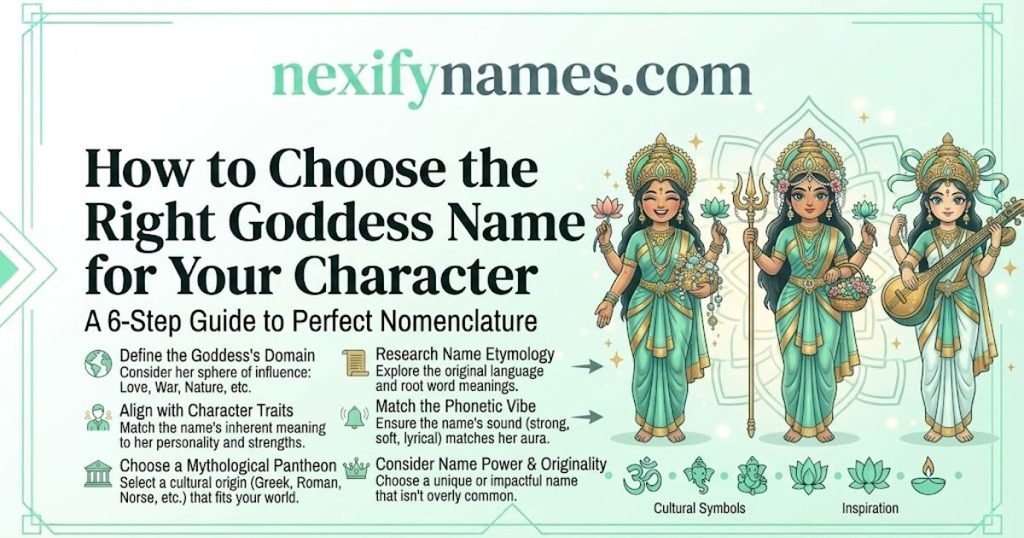
The best goddess name depends on your character’s personality, background, and role. A gentle healer might suit a name connected with nature or protection, while a battle-hardened queen may need something more commanding.
Before settling on a name, think about how it sounds, what it represents, and whether it fits the world you’re creating. A name with a strong mythological connection can add depth, but an original fantasy name gives you more creative freedom.
Consider these questions before making your choice:
- Is your character heroic, mysterious, dark, romantic, or playful?
- Does she represent an element, such as fire, water, earth, or air?
- Is she associated with wisdom, love, war, nature, or magic?
- Would a name from a particular mythology fit the setting?
- Do you prefer a historically inspired name or an original creation?
- Is the name easy for readers or players to pronounce?
- Does its traditional meaning or cultural significance suit the character?
- Will the name remain memorable throughout the story?
For example, Selene can create a celestial atmosphere, while Athena suggests strategy and wisdom. A nature-inspired name such as Gaia may suit an earth guardian, and Hecate may work for a character connected with magic and crossroads.
Goddess Name Ideas Based on Personality and Traits
A character’s personality can be one of the easiest ways to narrow down your options. Rather than choosing a name simply because it sounds beautiful, match it to the qualities you want readers to notice.
The table below connects common character traits with goddess names and their traditional associations.
| Personality | Name Inspiration | Examples |
| Wise | Knowledge and strategy | Athena, Saraswati, Seshat |
| Fierce | War and protection | Sekhmet, Durga, Bellona |
| Romantic | Love and beauty | Aphrodite, Venus, Oshun |
| Mysterious | Night and magic | Nyx, Hecate, Ereshkigal |
| Nature-loving | Earth and fertility | Gaia, Demeter, Danu |
| Regal | Queenship and sovereignty | Hera, Isis, Juno |
| Celestial | Moon and stars | Selene, Luna, Asteria |
| Adventurous | Hunting and wilderness | Artemis, Skadi, Diana |
| Magical | Enchantment and witchcraft | Hecate, Cerridwen, Circe |
| Protective | Motherhood and guardianship | Isis, Hathor, Frigg |
| Peaceful | Harmony and tranquility | Pax, Harmonia, Eir |
| Determined | Courage and resilience | Durga, Morrigan, Athena |
| Playful | Joy and youthful energy | Hebe, Flora, Euphrosyne |
| Independent | Wilderness and freedom | Artemis, Skadi, Diana |
| Mysterious ruler | Underworld and transformation | Persephone, Hel, Ereshkigal |
Goddess Names That Mean Light, Fire, and Rebirth
Light and fire can symbolize hope, passion, renewal, destruction, or divine energy. Names connected with these themes work especially well for characters who bring change to a kingdom or rise from difficult circumstances.
Some figures are directly connected with the sun or dawn, while others represent fire, renewal, or seasonal change. These distinctions can help you choose a name that fits your story.
- Amaterasu — Japanese sun goddess
- Eos — Greek goddess of dawn
- Aurora — Roman dawn goddess
- Sol — Roman personification of the sun
- Brigid — Irish goddess associated with poetry, healing, and smithcraft
- Pele — Hawaiian deity associated with volcanoes and fire
- Sekhmet — Egyptian goddess associated with fierce solar power
- Hestia — Greek goddess of the hearth
- Vesta — Roman goddess of the hearth
- Agni’s feminine counterparts in later traditions
- Tefnut — Egyptian goddess associated with moisture and cosmic order
- Hathor — Egyptian goddess with solar associations
- Bastet — Egyptian goddess with protective and solar connections
- Ushas — Vedic goddess of dawn
- Savitr — Vedic solar deity
- Gayatri — revered feminine figure and sacred mantra tradition
- Aditi — Vedic mother of the gods
- Sita — Hindu figure associated with resilience and renewal
- Persephone — Greek goddess linked with seasonal return
- Demeter — Greek goddess of agriculture
- Eos — dawn goddess in Greek mythology
- Theia — Greek Titaness associated with brightness
- Hemera — Greek personification of day
- Phoebe — Greek Titaness associated with brightness and prophecy
- Asteria — Greek Titaness associated with stars
- Sól — Norse personification of the sun
- Sunna — Germanic name associated with the sun
- Saule — Baltic solar goddess
- Mawu — West African creator figure in some traditions
- Xihe — Chinese mythological figure associated with the sun
- Shapash — ancient West Semitic solar deity
- Nintinugga — Mesopotamian healing goddess
- Zorya — Slavic dawn-associated figures
- Arinna — Hittite sun goddess
- Wadjet — Egyptian protective goddess
- Neith — Egyptian goddess with multiple roles
- Nut — Egyptian sky goddess
- Aine — Irish figure associated with summer and brightness
- Lucina — Roman goddess associated with childbirth and light
- Feronia — Roman goddess associated with freedom and nature
Beautiful Goddess Names From Different Cultures and Traditions
Goddess names from different cultures offer a wide range of sounds, stories, and symbolic associations. Exploring more than one tradition can help you find a name that feels distinctive while giving your character a richer background.
When choosing a name from a living religious or cultural tradition, learn about its significance rather than treating it as decoration. For fictional characters, respectful research can make your worldbuilding more thoughtful and believable.
- Athena — Greek
- Aphrodite — Greek
- Hera — Greek
- Diana — Roman
- Venus — Roman
- Juno — Roman
- Freya — Norse
- Frigg — Norse
- Skadi — Norse
- Isis — Egyptian
- Bastet — Egyptian
- Hathor — Egyptian
- Brigid — Celtic
- Rhiannon — Welsh tradition
- Danu — Irish tradition
- Lakshmi — Hindu
- Saraswati — Hindu
- Durga — Hindu
- Parvati — Hindu
- Kali — Hindu
- Amaterasu — Japanese
- Izanami — Japanese
- Benzaiten — Japanese Buddhist tradition
- Chang’e — Chinese
- Nuwa — Chinese
- Mazu — Chinese
- Guanyin — East Asian Buddhist tradition
- Inanna — Mesopotamian
- Ishtar — Mesopotamian
- Ereshkigal — Mesopotamian
- Tiamat — Mesopotamian
- Oshun — Yoruba
- Yemaya — Yoruba
- Oya — Yoruba
- Ala — Igbo
- Asase Yaa — Akan
- Pachamama — Andean traditions
- Mama Quilla — Inca
- Ixchel — Maya
- Coatlicue — Aztec
- Xochiquetzal — Aztec
- Coyolxauhqui — Aztec
- Sedna — Inuit traditions
- Atabey — Taíno
- Pele — Hawaiian
- Hina — Polynesian traditions
- Saule — Baltic
- Mokosh — Slavic
- Marzanna — Slavic folklore
- Bendis — Thracian
Rare Goddess Names With Unique Origins and Hidden Meanings
Rare goddess names are ideal if you want something less familiar than Athena, Freya, or Aphrodite. Many come from regional myths, ancient inscriptions, or stories that receive less attention in modern popular culture.
Some names have well-established associations, while others are known through limited or debated sources. Check the origin and meaning before using a name to represent a specific quality.
- Asteria
- Adrasteia
- Ananke
- Alecto
- Coventina
- Nehalennia
- Nantosuelta
- Renenutet
- Meretseger
- Taweret
- Satet
- Menhit
- Pakhet
- Seshat
- Iusaaset
- Kebechet
- Meskhenet
- Weret-Hekau
- Gefjon
- Gna
- Snotra
- Sjofn
- Lofn
- Syn
- Vor
- Nanna
- Gullveig
- Arianrhod
- Blodeuwedd
- Modron
- Tailtiu
- Boann
- Cliodhna
- Flidais
- Airmid
- Andraste
- Nantosuelta
- Neith
- Nisaba
- Nanaya
- Gula
- Nungal
- Bau
- Tashmetum
- Nikkal
- Atargatis
- Derceto
- Anumati
- Raka
- Rohini
- Bendis
- Saule
- Mokosh
- Zorya
- Mawu
- Nana Buluku
- Sukunahikona
- Konohanasakuya-hime
- Ame-no-Uzume
- Marici
Frequently Asked Questions About Goddess Names
What are the most popular goddess names?
Popular goddess names include Athena, Aphrodite, Artemis, Freya, Hera, Isis, Diana, Persephone, Gaia, and Hecate, each with distinctive mythological associations.
What is a good powerful goddess name?
Sekhmet, Durga, Kali, Athena, and Morrigan are strong choices for characters associated with courage, battle, leadership, or protection.
What are good goddess names for fantasy characters?
Hecate, Morrigan, Asteria, Cerridwen, and Rhiannon suit myth-inspired characters, while Lunara and Elyndra offer original fantasy-style alternatives.
Which goddess names are associated with the moon?
Selene, Luna, Chang’e, Ixchel, and Mama Quilla have lunar associations, although their traditional roles differ across mythologies and cultures.
What are some dark goddess names?
Nyx, Hecate, Hel, Ereshkigal, and Persephone can suit mysterious characters connected with night, magic, death, or the underworld.
Which goddess names are associated with love and beauty?
Aphrodite, Venus, Freya, Hathor, and Oshun are associated with love, beauty, fertility, or relationships in their respective traditions.
Which goddess names are associated with wisdom?
Athena, Saraswati, Minerva, Seshat, and Metis are useful choices for characters connected with knowledge, learning, strategy, or intellectual skill.
Final Thoughts
The right goddess name can communicate a character’s personality, history, and powers before the story even begins. From Athena’s wisdom to Selene’s lunar associations, mythology offers countless ways to make a name feel meaningful.
Start by deciding what your character represents. You might want a name associated with love, strength, nature, magic, or the mysteries of the night. Then explore names from different traditions and consider their pronunciation, history, and cultural significance.
If you’re building an original fantasy world, you can also use these ideas as inspiration for a completely new name. Combine celestial imagery, natural elements, and imaginative sounds to create something distinctive.
Ultimately, the best choice is the one that fits your vision. Whether you prefer a famous mythological figure, a rare divine name, or an original fantasy creation, choose something that makes your character memorable.