
Dragons are some of the most unforgettable creatures in Game of Thrones. From terrifying beasts to loyal companions, each dragon has a name and story worth remembering. If you’ve ever wondered what makes these creatures so special, you’re in the right place. This guide to game of thrones dragon names will help you learn about their identities, colors, and meanings.
Whether you’re a longtime fan or new to Westeros, finding the right dragon can be exciting. We’ll cover popular dragon names game of thrones fans recognize, along with lesser-known dragons from the Targaryen family history. You’ll also learn which characters rode these powerful creatures.
Looking for got dragon names for a story, username, or fantasy character? You’ll find plenty of inspiration here. We’ll explore dragons names game of thrones fans love and explain what makes each one memorable. By the end, you’ll know the dragons and their fascinating stories.
What Are Game of Thrones Dragon Names?
Game of Thrones dragon names belong to the fictional world created by George R. R. Martin. Many are associated with ancient Valyria, the ancestral home of House Targaryen, where dragons and their riders formed a powerful bond.
Names such as Balerion, Vhagar, and Caraxes have become memorable because of their dragons’ histories. Some are connected to ancient traditions, while others reflect a creature’s appearance or behavior. However, not every name has a confirmed translation in the Valyrian language.
Dragon names also help distinguish different periods in Westerosi history. Aegon the Conqueror’s dragons represent the Targaryens’ rise to power, while the dragons of the Dance of the Dragons are tied to a devastating civil war.
Complete List of Game of Thrones Dragon Names
The world of Westeros features dragons from several generations. Some helped conquer the Seven Kingdoms, others fought in the Targaryen civil war, and three became central to Daenerys’s journey.
Here are 25 notable dragon names to know:
- Balerion
- Meraxes
- Vhagar
- Quicksilver
- Dreamfyre
- Vermithor
- Silverwing
- Caraxes
- Syrax
- Meleys
- Sunfyre
- Tessarion
- Seasmoke
- Grey Ghost
- Sheepstealer
- The Cannibal
- Morning
- Drogon
- Rhaegal
- Viserion
- Arrax
- Tyraxes
- Vermax
- Stormcloud
- Moondancer
Not every dragon appears in the main Game of Thrones television series. Many are known through House of the Dragon or Martin’s books, which provide a much broader view of Targaryen history.
Daenerys Targaryen’s Dragons: Names, Meanings, and Stories
Daenerys Targaryen’s three dragons are Drogon, Rhaegal, and Viserion. They hatch from fossilized dragon eggs and mark the return of dragons after a long period without them.
Each dragon’s name honors someone important in Daenerys’s life. Drogon commemorates Khal Drogo, her husband. Rhaegal honors her brother Rhaegar Targaryen, while Viserion is named after her brother Viserys.
Their personalities and fates differ. Drogon becomes Daenerys’s primary mount and the largest of her three dragons in the show. Rhaegal briefly carries Jon Snow, while Viserion falls under the Night King’s control after his death in the television adaptation.
Related dragon names:
- Drogon
- Rhaegal
- Viserion
- Balerion
- Meraxes
- Vhagar
- Dreamfyre
- Syrax
What Is Jon Snow’s Dragon Name in Game of Thrones?
Jon Snow rides Rhaegal, one of Daenerys Targaryen’s three dragons. Rhaegal’s name honors Rhaegar Targaryen, Jon’s biological father, creating a meaningful connection between the dragon and Jon’s true heritage.
Jon’s flight on Rhaegal becomes an important moment in the series. It hints at Jon’s Targaryen ancestry and shows that he can form a bond with a dragon despite not growing up knowing his real family background.
Other dragons connected to the Targaryen family include:
- Drogon
- Viserion
- Balerion
- Vhagar
- Meraxes
- Caraxes
- Syrax
Daemon Targaryen’s Dragon Name in House of the Dragon
Daemon Targaryen rides Caraxes, a fierce red dragon also known as the Blood Wyrm. Caraxes is recognizable for his long neck, distinctive appearance, and aggressive temperament.
Caraxes plays a major role in the Dance of the Dragons. His final confrontation with Vhagar becomes one of the most memorable dragon battles in Targaryen history. Although Caraxes fatally wounds Vhagar, he also suffers mortal injuries.
Other dragons associated with the same era include:
- Vhagar
- Syrax
- Meleys
- Sunfyre
- Tessarion
- Vermithor
- Silverwing
- Seasmoke
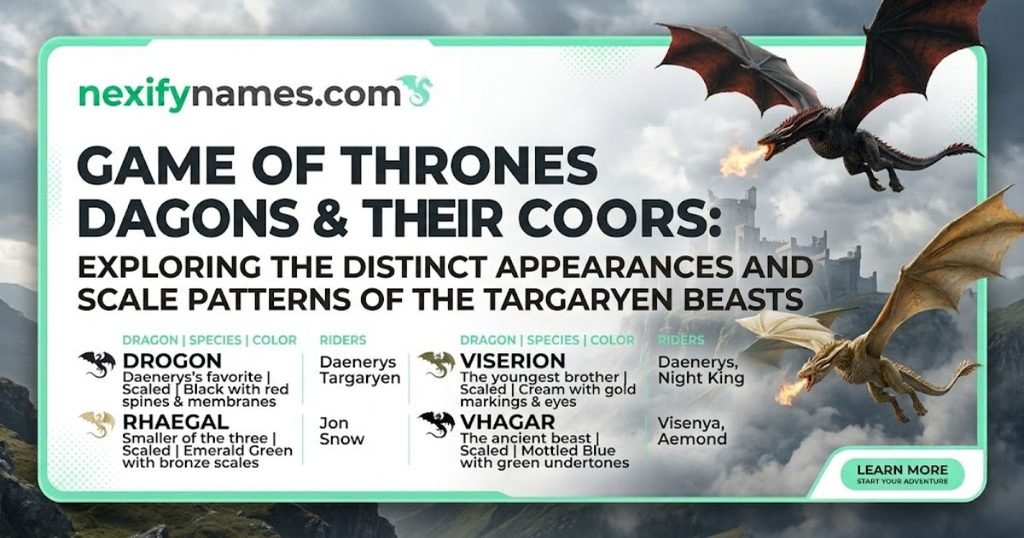
Game of Thrones Dragons and Their Colors
Dragon colors help fans recognize individual creatures. They also make the dragons easier to distinguish in battles, family histories, and scenes from different periods.
The following list summarizes the main colors associated with several famous dragons. Descriptions can vary between the books and television adaptations.
| Dragon name | Recognizable colors | Notable rider or connection |
| Balerion | Black | Aegon the Conqueror |
| Meraxes | Silver | Rhaenys Targaryen |
| Vhagar | Bronze and greenish-blue | Visenya, later Aemond |
| Drogon | Black and red | Daenerys Targaryen |
| Rhaegal | Green and bronze | Daenerys and Jon Snow |
| Viserion | Cream and gold | Daenerys Targaryen |
| Caraxes | Red | Daemon Targaryen |
| Syrax | Yellow | Rhaenyra Targaryen |
| Meleys | Scarlet red | Rhaenys Targaryen |
| Sunfyre | Gold and pale pink | Aegon II Targaryen |
| Tessarion | Blue and copper | Daeron Targaryen |
| Vermithor | Bronze | Jaehaerys I, later Hugh Hammer |
| Silverwing | Silver | Alysanne Targaryen |
| Dreamfyre | Blue and silver | Rhaena and Helaena Targaryen |
| Seasmoke | Pale silver | Laenor Velaryon, later Addam of Hull |
| Grey Ghost | Pale gray | Wild dragon |
| Sheepstealer | Brown | Nettles |
| The Cannibal | Black with green eyes | Wild dragon |
| Morning | Pink and black | Rhaena Targaryen |
These colors offer an easy way to remember each creature. For example, Sunfyre’s golden appearance contrasts with Balerion’s dark scales, while Caraxes stands out because of his red coloring.
Famous GOT Dragon Names Every Fan Should Know
Some GOT dragon names stand out because their dragons changed the course of Westerosi history. Others became fan favorites because of their riders, unusual appearances, or unforgettable battles.
If you’re just starting to learn the dragon names, begin with these:
- Balerion: The Black Dread, ridden by Aegon the Conqueror.
- Vhagar: A legendary dragon that survived for generations.
- Meraxes: Ridden by Rhaenys Targaryen during the Conquest.
- Caraxes: Daemon Targaryen’s fearsome Blood Wyrm.
- Syrax: Rhaenyra Targaryen’s dragon.
- Drogon: Daenerys’s largest dragon in the television series.
- Rhaegal: The dragon named after Rhaegar Targaryen.
- Viserion: The dragon named after Viserys Targaryen.
- Sunfyre: A striking golden dragon associated with Aegon II.
- Dreamfyre: A dragon connected to several generations of Targaryens.
These names cover different eras and personalities. Together, they show why dragons are so important to the history of House Targaryen.
Game of Thrones Dragon Names and Their Meanings Explained
Not every dragon name has a confirmed literal meaning. Some are associated with Valyrian traditions, while others are descriptive nicknames based on a dragon’s habits or appearance.
Drogon, Rhaegal, and Viserion have particularly clear personal connections because Daenerys named them after people who shaped her life. Balerion, meanwhile, was named after an ancient Valyrian god. Names such as Grey Ghost and Sheepstealer describe the dragons more directly.
Here are several well-known names and the stories behind them:
- Drogon: Named after Khal Drogo.
- Rhaegal: Named after Rhaegar Targaryen.
- Viserion: Named after Viserys Targaryen.
- Balerion: Named after a Valyrian deity.
- Sheepstealer: Named for his habit of eating sheep.
- Grey Ghost: Named for his pale color and elusive behavior.
- The Cannibal: Named for eating dragon eggs and other dragons.
- Sunfyre: Associated with a bright, golden appearance.
- Caraxes: Known by the descriptive title Blood Wyrm.
- Meleys: Known as the Red Queen.
The key difference is that a name’s story doesn’t always reveal its literal translation. It’s best to separate established lore from fan theories.
Game of Thrones Dragons by Historical Era
The easiest way to understand the dragons of Westeros is to group them by the period in which they lived. The Targaryen dynasty lasted for generations, and different dragons became famous during its rise, civil wars, and decline.
Dragons During Aegon’s Conquest
Aegon the Conqueror and his sisters used three powerful dragons to help unite much of Westeros under Targaryen rule. Their dragons became symbols of the family’s military strength.
- Balerion: Aegon’s massive black dragon.
- Vhagar: Visenya Targaryen’s formidable mount.
- Meraxes: Rhaenys Targaryen’s silver dragon.
- Quicksilver: A dragon later associated with Aenys I and Aegon the Uncrowned.
- Dreamfyre: A dragon from the early Targaryen period.
- Vermithor: A dragon who later served King Jaehaerys I.
- Silverwing: Queen Alysanne’s dragon.
Balerion, Vhagar, and Meraxes were the three dragons most closely associated with the original Conquest. Their stories also illustrate how dragons could influence battles, royal succession, and the balance of power.
Dragons During the Dance of the Dragons
The Dance of the Dragons was a Targaryen civil war fought over the Iron Throne. Both sides had dragonriders, turning the conflict into one of the most destructive periods in the dynasty’s history.
- Caraxes: Daemon Targaryen’s red dragon.
- Syrax: Rhaenyra Targaryen’s dragon.
- Vhagar: Aemond Targaryen’s powerful mount.
- Meleys: Rhaenys Targaryen’s Red Queen.
- Sunfyre: Aegon II’s golden dragon.
- Tessarion: Daeron Targaryen’s Blue Queen.
- Vermithor: The Bronze Fury.
- Silverwing: The silver dragon once ridden by Alysanne.
- Seasmoke: First associated with Laenor Velaryon.
- Sheepstealer: A wild dragon claimed by Nettles.
- Grey Ghost: A shy dragon that avoided people.
- The Cannibal: A dangerous wild dragon.
- Dreamfyre: Later ridden by Helaena Targaryen.
- Morning: A young dragon that hatched during the war.
- Vermax: Jacaerys Velaryon’s dragon.
- Arrax: Lucerys Velaryon’s dragon.
- Tyraxes: A dragon associated with Joffrey Velaryon.
- Stormcloud: A young dragon connected to Aegon the Younger.
- Moondancer: Baela Targaryen’s dragon.
The conflict cost many dragons their lives. It also weakened the Targaryens, making it harder for the family to maintain its historic control over these creatures.
Daenerys Targaryen’s Three Dragons
Daenerys’s dragons appear much later, after dragons have largely disappeared from the world. Their hatching changes the balance of power and becomes central to her campaign to reclaim the Iron Throne.
- Drogon: The largest of Daenerys’s dragons in the show.
- Rhaegal: Named in honor of Rhaegar Targaryen.
- Viserion: Named in honor of Viserys Targaryen.
- Balerion: The legendary dragon whose name provides historical context for Drogon’s fearsome reputation.
- Dreamfyre: Connected to the long history of Targaryen dragon eggs.
Drogon, Rhaegal, and Viserion aren’t simply weapons. Their relationship with Daenerys reflects her identity, her family history, and the return of an ancient Targaryen tradition.
Dragon Names From the History of Westeros
The dragons of Westeros are closely connected to the Targaryen dynasty. Their names appear throughout accounts of royal marriages, military campaigns, rival claimants, and family tragedies.
Some dragons became famous through conquest. Others earned their reputations during the Dance of the Dragons, when rival branches of the family fought for control of the throne.
Notable names from Westerosi history include:
- Balerion
- Meraxes
- Vhagar
- Quicksilver
- Dreamfyre
- Vermithor
- Silverwing
- Caraxes
- Syrax
- Meleys
- Sunfyre
- Tessarion
- Seasmoke
- Grey Ghost
- Sheepstealer
- The Cannibal
- Morning
- Drogon
- Rhaegal
- Viserion
- Arrax
- Vermax
- Tyraxes
- Stormcloud
- Moondancer
Reading about these dragons in historical order makes their relationships easier to understand. It also reveals how the family’s power changed as dragons were born, claimed, lost, and eventually disappeared.
Most Popular Game of Thrones Dragon Names Among Fans
Certain dragon names remain especially recognizable because they belong to important characters or appear in major scenes. Others are popular among fantasy fans because they sound dramatic and distinctive.
Here are some strong choices for anyone researching famous dragon names:
- Drogon: A bold name associated with Daenerys.
- Balerion: A legendary name that suggests immense power.
- Vhagar: A memorable name tied to an ancient dragon.
- Caraxes: A distinctive choice for fans of Daemon.
- Rhaegal: A name connected to Targaryen family history.
- Viserion: A recognizable name with a royal association.
- Sunfyre: An excellent example of a name linked to appearance.
- Syrax: Short, unusual, and closely tied to Rhaenyra.
- Meraxes: A historic name from Aegon’s Conquest.
- Vermithor: A powerful-sounding name associated with bronze scales.
For a story or game character, consider why a particular name appeals to you. You might prefer Drogon’s strong association with fire, Vhagar’s ancient reputation, or Sunfyre’s bright and elegant image.
Male Dragon Names in Game of Thrones
Fans often search for male dragon names when researching the Targaryen family or choosing names for fantasy characters. However, not every dragon’s sex is explicitly established in the same way across the books and television adaptations.
The following names are associated with dragons commonly identified as male or discussed in that context:
- Drogon
- Rhaegal
- Viserion
- Balerion
- Caraxes
- Vermithor
- Sunfyre
- Seasmoke
- Arrax
- Vermax
- Tyraxes
- Stormcloud
When using these names for an original character, think about the personality you want to convey. Balerion suits an imposing creature, while Seasmoke might inspire a more mysterious or graceful character.
Female Dragon Names in Game of Thrones
Female dragons are equally important to Targaryen history. Several became legendary because of their size, their riders, or their roles in major battles.
- Vhagar
- Meraxes
- Syrax
- Meleys
- Tessarion
- Silverwing
- Dreamfyre
- Morning
- Moondancer
- Quicksilver
These names can be useful inspiration for fantasy characters, especially if you’re looking for something with a regal or ancient sound. Keep in mind that dragon sex, naming conventions, and descriptions may differ between adaptations and the source books.
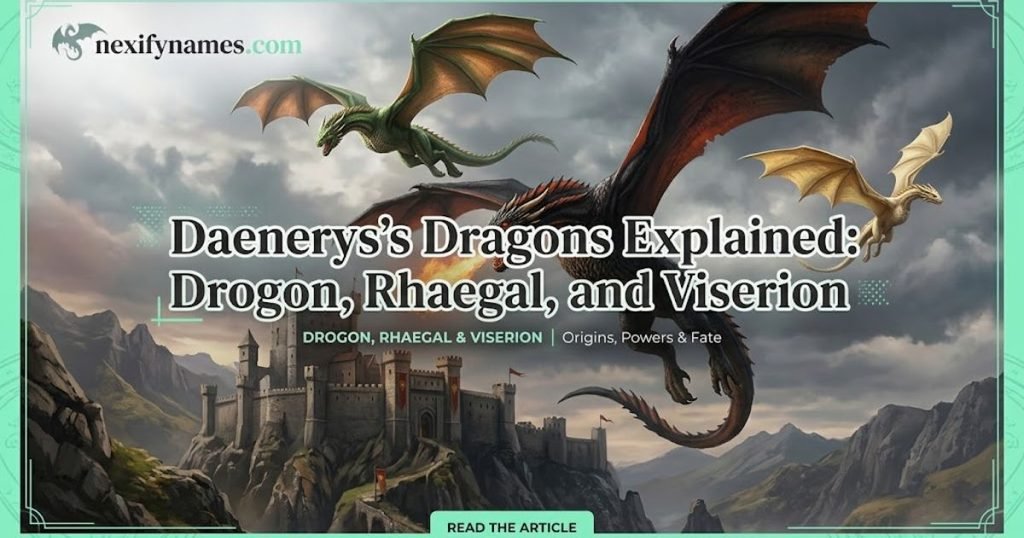
Daenerys’s Dragons Explained: Drogon, Rhaegal, and Viserion
The three dragons raised by Daenerys have distinct appearances and storylines. Their names also reflect the people who influenced her life before she became a powerful ruler.
Drogon is black with red markings and serves as Daenerys’s main mount. After her death in the television series, he carries her body away and melts the Iron Throne with dragonfire.
Rhaegal has green scales with bronze markings. Jon Snow briefly rides him, but Euron Greyjoy kills him in the television adaptation.
Viserion has cream and gold coloring. In the show, the Night King kills him and raises him as an undead dragon. These events differ from the published novels, which have not followed the same storyline to completion.
Other names worth knowing when exploring their family history include:
- Khal Drogo
- Rhaegar Targaryen
- Viserys Targaryen
- Balerion
- Dreamfyre
- Vhagar
- Meraxes
The three dragons remain central to Daenerys’s identity. Their names connect her personal losses with the return of dragons to the world.
Does Sheepstealer Have a Valyrian Name?
No confirmed Valyrian name for Sheepstealer is established in the source material summarized here. The dragon is known by a descriptive nickname based on his habit of hunting and eating sheep.
Unlike some dragons whose names are linked to Valyrian traditions, Sheepstealer lived wild on Dragonstone. Nettles eventually claimed him by bringing him sheep regularly rather than relying solely on her ancestry.
Other dragons with distinctive names include:
- Grey Ghost
- The Cannibal
- Seasmoke
- Silverwing
- Dreamfyre
- Moondancer
- Stormcloud
Sheepstealer’s story is a reminder that not every dragon followed the same path. Some were raised by royal families, while others remained wild until a determined rider earned their trust.
Balerion the Black Dread: Aegon the Conqueror’s Dragon
Balerion is one of the most famous dragons in Targaryen history. Known as the Black Dread, he carried Aegon the Conqueror during the campaign that brought much of Westeros under Targaryen rule.
His enormous size and devastating fire made him a symbol of the family’s power. Balerion also lived long enough to become a legendary figure for later generations. He eventually died of old age during King Jaehaerys I’s reign.
Key facts:
- Rider: Aegon the Conqueror; later ridden briefly by Viserys I.
- Color: Black.
- Fate: Died of old age.
- Nickname: The Black Dread.
- Legacy: One of the largest and most feared dragons in Targaryen history.
Other major dragons from the dynasty’s history include:
- Vhagar
- Meraxes
- Quicksilver
- Dreamfyre
- Vermithor
- Silverwing
Balerion’s reputation continues to influence how fans view dragons in the franchise. His name represents the height of Targaryen military power.
Meraxes: The Mighty Dragon of Rhaenys Targaryen
Meraxes was ridden by Queen Rhaenys Targaryen during Aegon’s Conquest. The dragon played an important role in the Targaryens’ campaign to bring the Seven Kingdoms under their rule.
Meraxes died during the First Dornish War after a scorpion bolt struck the dragon in the eye. The crash also killed Rhaenys, making the loss a major tragedy for House Targaryen.
Key facts:
- Rider: Rhaenys Targaryen.
- Color: Commonly described as silver.
- Fate: Killed during the Dornish conflict.
- Historical era: Aegon’s Conquest and its aftermath.
Related dragon names include:
- Balerion
- Vhagar
- Quicksilver
- Dreamfyre
- Silverwing
- Syrax
Meraxes is remembered not only for her power but also for the reminder that even a formidable dragon could be vulnerable in battle.
Vhagar: The Legendary Dragon of Westeros
Vhagar survived for generations and became one of the largest dragons in the Targaryen dynasty. She was originally ridden by Visenya Targaryen and later became the mount of Aemond Targaryen.
During the Dance of the Dragons, Vhagar’s size and battle experience made her a major threat. She killed Lucerys Velaryon and his dragon Arrax, escalating the conflict between the rival Targaryen factions.
Vhagar eventually fought Caraxes above the Gods Eye. Both dragons died in the confrontation, ending the lives of two of the war’s most formidable creatures.
Key facts:
- Riders: Visenya Targaryen and later Aemond Targaryen.
- Appearance: Bronze with greenish-blue features.
- Fate: Died after fighting Caraxes.
- Legacy: One of the largest dragons during the Dance of the Dragons.
Other dragons associated with major battles include:
- Caraxes
- Meleys
- Sunfyre
- Syrax
- Tessarion
- Vermithor
Vhagar’s story shows how age and experience could make a dragon a decisive force in a war.
Syrax: The Dragon of Queen Rhaenyra
Syrax was the dragon of Rhaenyra Targaryen, one of the central figures in the Dance of the Dragons. Her name became closely associated with Rhaenyra’s claim to the Iron Throne.
Syrax was generally kept in King’s Landing rather than living as a wild dragon. During the Storming of the Dragonpit, she flew into danger and was killed by the mob, marking another devastating loss for the Targaryen family.
Key facts:
- Rider: Rhaenyra Targaryen.
- Color: Yellow or golden.
- Fate: Killed during the Storming of the Dragonpit.
- Historical importance: Rhaenyra’s personal dragon.
Other dragons connected to the royal family include:
- Caraxes
- Meleys
- Vhagar
- Sunfyre
- Dreamfyre
- Seasmoke
Syrax’s story is closely tied to Rhaenyra’s struggle for power and the destruction caused by the civil war.
Caraxes: The Fearsome Blood Wyrm
Caraxes was Daemon Targaryen’s dragon and one of the most recognizable creatures in the Dance of the Dragons. His red coloring, long neck, and aggressive temperament earned him the nickname Blood Wyrm.
Caraxes fought Vhagar above the Gods Eye in a final confrontation that killed both dragons. Although Caraxes suffered fatal injuries, he also brought down one of the most formidable dragons of the era.
Key facts:
- Rider: Daemon Targaryen.
- Color: Red.
- Nickname: The Blood Wyrm.
- Fate: Died after the battle with Vhagar.
Other memorable dragons from the same era include:
- Vhagar
- Syrax
- Meleys
- Sunfyre
- Tessarion
- Vermithor
- Silverwing
Caraxes stands out because his story combines a striking design with one of the most consequential dragon battles in Westerosi history.
Meleys: The Powerful Red Queen
Meleys was ridden by Princess Rhaenys Targaryen, often called the Queen Who Never Was. Known as the Red Queen, Meleys had scarlet scales and a reputation for speed.
At the Battle of Rook’s Rest, Meleys faced both Sunfyre and Vhagar. She badly wounded Sunfyre but was ultimately killed by Vhagar. Rhaenys died alongside her dragon.
Key facts:
- Rider: Rhaenys Targaryen.
- Color: Scarlet red.
- Nickname: The Red Queen.
- Fate: Killed at Rook’s Rest.
Other dragon names associated with the conflict include:
- Vhagar
- Sunfyre
- Caraxes
- Syrax
- Tessarion
- Seasmoke
Meleys’s final battle illustrates the danger of fighting multiple dragons and the enormous cost of the Dance of the Dragons.
Sunfyre: The Golden Dragon of Aegon II
Sunfyre was the dragon of King Aegon II Targaryen. His brilliant golden scales and pale pink wings made him one of the most visually striking dragons in the franchise.
Although Sunfyre suffered severe injuries during the Battle of Rook’s Rest, he survived long enough to play another role in the war. He later killed Grey Ghost and eventually died from the injuries and hardships he endured.
Key facts:
- Rider: Aegon II Targaryen.
- Color: Gold with pale pink wings.
- Fate: Died after suffering severe wounds.
- Distinctive trait: Known for his exceptional beauty.
Related dragons include:
- Vhagar
- Meleys
- Caraxes
- Tessarion
- Vermithor
- Seasmoke
Sunfyre’s story is a reminder that a dragon’s appearance doesn’t determine its fate. Even a magnificent creature could suffer greatly during a brutal civil war.
Tessarion: The Blue Queen of the Dance of the Dragons
Tessarion was ridden by Prince Daeron Targaryen and became known as the Blue Queen. Her cobalt-blue scales and copper-colored wings made her easy to distinguish from other dragons.
During the Second Battle of Tumbleton, Tessarion fought Seasmoke. Both dragons suffered fatal injuries during the battle, and Daeron also died amid the conflict.
Key facts:
- Rider: Daeron Targaryen.
- Color: Cobalt blue with copper wings.
- Nickname: The Blue Queen.
- Fate: Died after fighting Seasmoke.
Other dragons from this period include:
- Sunfyre
- Vermithor
- Silverwing
- Caraxes
- Vhagar
- Meleys
Tessarion’s distinctive appearance and tragic ending make her an important part of the Dance of the Dragons story.
Vermithor: The Bronze Fury of Westeros
Vermithor was originally ridden by King Jaehaerys I Targaryen. His bronze scales and immense size earned him the nickname Bronze Fury.
After Jaehaerys died, Vermithor remained without a rider for many years. During the Dance of the Dragons, Hugh Hammer claimed him. Their alliance eventually ended in betrayal and war, and Vermithor died during the Second Battle of Tumbleton.
Key facts:
- Riders: Jaehaerys I Targaryen, later Hugh Hammer.
- Color: Bronze.
- Nickname: The Bronze Fury.
- Fate: Killed during the Second Battle of Tumbleton.
Other powerful dragons include:
- Balerion
- Vhagar
- Caraxes
- Silverwing
- Dreamfyre
- Meleys
Vermithor’s history demonstrates how a dragon’s allegiance could change as political conflicts divided House Targaryen.
Silverwing: The Silver Dragon of the Targaryens
Silverwing was the dragon of Queen Alysanne Targaryen, the wife of King Jaehaerys I. Her silver scales gave her an elegant appearance, and she was often described as gentler than many other dragons.
Silverwing survived the Dance of the Dragons. After the war, she eventually disappeared into the wild and was never reliably seen again.
Key facts:
- Riders: Alysanne Targaryen, later Ulf the White.
- Color: Silver.
- Fate: Disappeared after the Dance of the Dragons.
- Notable trait: Survived the civil war.
Related dragon names include:
- Vermithor
- Dreamfyre
- Seasmoke
- Grey Ghost
- Sheepstealer
- Morning
Silverwing’s disappearance leaves room for speculation, but the available history doesn’t confirm what happened to her afterward.
Dreamfyre: The Mysterious Dragon of Westeros
Dreamfyre was an old dragon associated with Rhaena Targaryen and later Helaena Targaryen. She also had an important connection to dragon eggs and the continuation of the Targaryen dragon line.
During the Dance of the Dragons, Dreamfyre died in the Storming of the Dragonpit. Her death formed part of the wider collapse of the dragons’ presence in Westeros.
Key facts:
- Riders: Rhaena Targaryen and Helaena Targaryen.
- Appearance: Blue and silver.
- Fate: Killed during the Storming of the Dragonpit.
- Historical importance: Connected to the dynasty’s dragon-egg history.
Other dragons to know include:
- Syrax
- Silverwing
- Vermithor
- Vhagar
- Meleys
- Seasmoke
Dreamfyre’s history helps connect different generations of Targaryen riders and the gradual decline of dragons.
Seasmoke: The Pale Gray Dragon
Seasmoke was first ridden by Laenor Velaryon. After Laenor’s disappearance, the dragon remained without a rider for a time before Addam of Hull claimed him during the Dance of the Dragons.
Seasmoke eventually fought Tessarion during the Second Battle of Tumbleton. Both dragons died in the fighting, adding to the enormous losses suffered during the civil war.
Key facts:
- Riders: Laenor Velaryon and later Addam of Hull.
- Color: Pale silver or gray.
- Fate: Died during the Second Battle of Tumbleton.
- Notable trait: Had two riders during the Dance of the Dragons.
Other dragons with interesting rider histories include:
- Silverwing
- Vermithor
- Caraxes
- Syrax
- Meleys
- Sheepstealer
Seasmoke’s story shows that a dragon’s bond with one rider didn’t necessarily end its role in Targaryen history.
Grey Ghost: The Elusive Wild Dragon
Grey Ghost was a wild dragon that lived around Dragonstone. Unlike dragons that accepted riders, Grey Ghost avoided humans and was rarely seen clearly.
His pale gray coloring helped him blend into fog and rocky surroundings. During the Dance of the Dragons, Sunfyre found and killed him.
Key facts:
- Rider: None.
- Color: Pale gray.
- Fate: Killed by Sunfyre.
- Distinctive trait: Avoided people and remained elusive.
Other wild or unusual dragons include:
- Sheepstealer
- The Cannibal
- Silverwing
- Seasmoke
- Morning
- Vhagar
Grey Ghost is an excellent example of how a descriptive nickname can become a dragon’s lasting identity.
Sheepstealer: The Wild Dragon That Hunted Sheep
Sheepstealer lived wild on Dragonstone and became known for his preference for sheep. Unlike many dragons connected to royal riders, he survived without a formal Targaryen owner for much of his life.
Nettles eventually gained his trust by bringing him sheep regularly. After the Dance of the Dragons, she and Sheepstealer disappeared into the Mountains of the Moon, leaving their final fate uncertain.
Key facts:
- Rider: Nettles.
- Color: Brown.
- Fate: Disappeared with Nettles.
- Name origin: His habit of stealing and eating sheep.
- Valyrian name: No confirmed alternative is established in the source material summarized here.
Other dragons with distinctive histories include:
- Grey Ghost
- The Cannibal
- Seasmoke
- Silverwing
- Dreamfyre
- Morning
Sheepstealer’s story is particularly interesting because Nettles used patience and food to build a bond with a wild dragon.
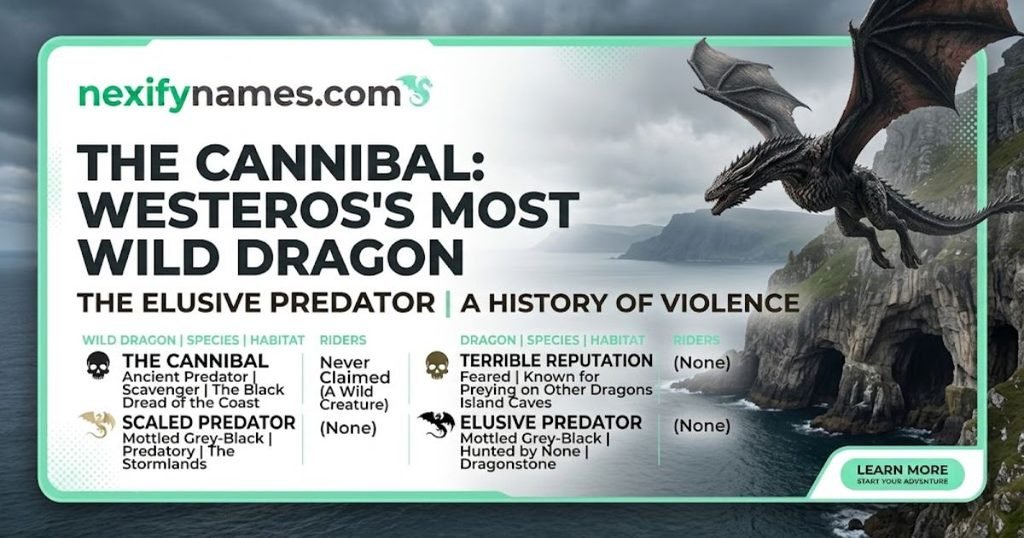
The Cannibal: Westeros’s Most Feared Wild Dragon
The Cannibal was one of the most dangerous wild dragons associated with Dragonstone. He was known for eating dead dragons, young dragons, and dragon eggs, behavior that made him especially feared.
No rider ever successfully claimed him. He survived the Dance of the Dragons and later disappeared, leaving his eventual fate unknown.
Key facts:
- Rider: None.
- Color: Black, with green eyes.
- Fate: Disappeared after the Dance of the Dragons.
- Nickname origin: His habit of eating other dragons and their eggs.
Other notable dragons include:
- Grey Ghost
- Sheepstealer
- Vhagar
- Balerion
- Caraxes
- Vermithor
The Cannibal’s story makes him one of the most unsettling creatures in Targaryen lore. His behavior also shows why not every dragon could be controlled by a rider.
Morning: The Young Pink Dragon
Morning was a young dragon associated with Rhaena Targaryen, the daughter of Daemon Targaryen. She hatched during the period of the Dance of the Dragons and survived the conflict.
Morning’s pink-and-black appearance made her unusual among the better-known dragons. She represented a brief continuation of the Targaryen dragon line after many older dragons had died.
Key facts:
- Rider: Rhaena Targaryen, daughter of Daemon.
- Color: Pink and black.
- Fate: Died sometime after the Dance of the Dragons; the exact cause is uncertain.
- Distinctive trait: One of the last dragons born during the dynasty’s decline.
Other dragons linked to the family’s later history include:
- Silverwing
- Dreamfyre
- Sheepstealer
- The Cannibal
- Seasmoke
- Quicksilver
Morning is especially memorable because her story represents both hope for the dragons’ survival and the uncertainty surrounding their eventual disappearance.
The Last Dragon: The Unnamed Dragon of Westeros
After the Dance of the Dragons, the Targaryens struggled to keep their dragons alive. New eggs became increasingly difficult to hatch, and the dragons that survived were often smaller or weaker than their predecessors.
The final dragon remembered in the dynasty’s history was a small, sickly creature. It eventually died, and its passing marked the end of the dragons that had once helped secure Targaryen rule.
Key facts:
- Rider: None.
- Color: Unknown.
- Fate: Died after becoming weak and sickly.
- Historical importance: Represents the decline of dragons in Westeros.
Related dragon names from earlier generations include:
- Balerion
- Vhagar
- Meraxes
- Dreamfyre
- Silverwing
- Morning
The unnamed dragon is an important part of the larger story because its death helps explain why Daenerys’s dragons were so extraordinary.
Drogon: Daenerys Targaryen’s Black Dragon
Drogon is the largest of Daenerys’s three dragons in the television series. She names him after Khal Drogo, the man she married during her journey across Essos.
His black scales and red markings make him visually distinctive. Drogon also develops the closest relationship with Daenerys and becomes her primary mount during important moments in her campaign.
In the show’s finale, Drogon melts the Iron Throne after Daenerys’s death and carries her body away. His ultimate destination remains unknown.
Key facts:
- Rider: Daenerys Targaryen.
- Color: Black with red markings.
- Name origin: Khal Drogo.
- Fate: Flies away with Daenerys’s body in the television series.
Other dragon names connected to Daenerys’s story include:
- Rhaegal
- Viserion
- Balerion
- Meraxes
- Vhagar
- Dreamfyre
Drogon’s role makes him one of the most recognizable dragons in modern fantasy television.
Rhaegal: Daenerys’s Green Dragon
Rhaegal is named after Rhaegar Targaryen, Daenerys’s older brother and Jon Snow’s biological father. His green scales and bronze markings distinguish him from Drogon and Viserion.
Jon Snow briefly rides Rhaegal in the television series. This moment reinforces the revelation of Jon’s Targaryen ancestry and adds another layer to the dragon’s name.
In the show, Rhaegal is killed by Euron Greyjoy’s scorpion weapons. The published novels have not reached the same outcome, so his book fate remains unresolved in the available material.
Key facts:
- Riders: Daenerys Targaryen and Jon Snow in the television series.
- Color: Green with bronze markings.
- Name origin: Rhaegar Targaryen.
- Fate: Killed in the show; still alive in the latest published novel covered by the source.
Other dragons to know include:
- Drogon
- Viserion
- Balerion
- Caraxes
- Syrax
- Seasmoke
Rhaegal’s story connects Daenerys’s dragons to the hidden family history that changes Jon’s life.
Viserion: Daenerys’s Cream and Gold Dragon
Viserion is named after Daenerys’s brother Viserys Targaryen. His cream and gold coloring makes him easy to distinguish from the darker Drogon and green Rhaegal.
In the television series, the Night King kills Viserion and raises him as an undead dragon. The creature then helps destroy part of the Wall, allowing the army of the dead to move south.
The books have not followed this exact storyline to completion, so the television adaptation’s events should not be treated as the confirmed book fate.
Key facts:
- Rider: Daenerys Targaryen; later controlled by the Night King in the show.
- Color: Cream and gold before his death.
- Name origin: Viserys Targaryen.
- Fate: Killed and reanimated in the television series.
Other dragons connected to the Targaryen story include:
- Drogon
- Rhaegal
- Dreamfyre
- Balerion
- Vhagar
- Meraxes
Viserion’s transformation is one of the show’s most dramatic examples of how dragonfire and dragon power can be used against Westeros itself.
Complete List of All Game of Thrones Dragon Names
If you want a quick reference, this list brings together 25 named dragons from the broader Westeros universe. It includes famous dragons from the Conquest, the Dance of the Dragons, and Daenerys’s story.
| Dragon name | Known rider or connection |
| Balerion | Aegon the Conqueror |
| Meraxes | Rhaenys Targaryen |
| Vhagar | Visenya Targaryen, later Aemond |
| Quicksilver | Aenys I and Aegon the Uncrowned |
| Dreamfyre | Rhaena and Helaena Targaryen |
| Vermithor | Jaehaerys I, later Hugh Hammer |
| Silverwing | Alysanne Targaryen, later Ulf |
| Caraxes | Daemon Targaryen |
| Syrax | Rhaenyra Targaryen |
| Meleys | Rhaenys Targaryen |
| Sunfyre | Aegon II Targaryen |
| Tessarion | Daeron Targaryen |
| Seasmoke | Laenor Velaryon, later Addam |
| Grey Ghost | Wild dragon |
| Sheepstealer | Nettles |
| The Cannibal | Wild dragon |
| Morning | Rhaena Targaryen |
| Drogon | Daenerys Targaryen |
| Rhaegal | Daenerys Targaryen, later Jon Snow |
| Viserion | Daenerys Targaryen |
| Arrax | Lucerys Velaryon |
| Vermax | Jacaerys Velaryon |
| Tyraxes | Joffrey Velaryon |
| Stormcloud | Aegon the Younger |
| Moondancer | Baela Targaryen |
This is a useful starting list, rather than a claim that every dragon ever mentioned in the books and adaptations appears here. The wider lore contains additional historical references, and some details differ between the novels and television shows.
Game of Thrones Dragon Names Every Fantasy Fan Should Know
Some dragon names are instantly recognizable, even to people who haven’t watched every episode. They’re memorable because they combine distinctive sounds with powerful stories.
Here are ten names worth remembering:
- Balerion: Ideal for understanding the legacy of the Targaryen Conquest.
- Vhagar: Famous for her size and long history.
- Meraxes: A key dragon from Aegon’s Conquest.
- Caraxes: Known for his red appearance and fierce nature.
- Syrax: Closely linked to Rhaenyra Targaryen.
- Meleys: The Red Queen.
- Sunfyre: The striking golden dragon.
- Drogon: Daenerys’s most prominent dragon.
- Rhaegal: Named after Rhaegar Targaryen.
- Viserion: Named after Viserys Targaryen.
These examples cover several eras and show how a dragon’s name can become part of a character’s legacy. If you’re writing fantasy, pay attention to the way each name sounds and the story attached to it.
How to Choose a Game of Thrones Dragon Name
Choosing a dragon name for a story, game, or role-playing character starts with the personality you want to convey. A fierce dragon might need a sharp, commanding name, while an elegant creature could suit something smoother.
Try these steps to develop a name that feels right:
- Choose a personality. Decide whether your dragon is fierce, loyal, mysterious, or wise.
- Consider its appearance. Scales, wings, and fire color can inspire a name.
- Think about its history. A dragon raised by a royal family might have a formal name.
- Keep it memorable. Avoid names that are difficult to pronounce or spell.
- Give it a story. Connect the name to an event, place, family, or personal trait.
- Check for originality. Make sure your invented name isn’t simply an existing dragon’s name with one letter changed.
For example, a silver dragon that guards an ancient mountain could have a name inspired by moonlight or stone. You don’t need to copy Valyrian names to create a fantasy name with a similar sense of history.
What Makes a Good Game of Thrones-Inspired Dragon Name?
The strongest dragon names are distinctive, easy to remember, and suited to their creatures. They often feel as though they belong to an established culture rather than appearing randomly.
Names such as Balerion and Caraxes have unusual sounds and recognizable identities. Meanwhile, Grey Ghost and Sheepstealer show that descriptive names can work just as well when they reflect a dragon’s behavior or appearance.
Consider these qualities when developing a name:
- Distinctive sound: Make it different from other names in your story.
- Suitable length: A short or medium-length name is often easier to remember.
- Clear pronunciation: Readers should be able to say it comfortably.
- Meaningful background: Give the name a connection to the dragon’s story.
- Consistent style: Use similar naming patterns for dragons from the same culture.
- Strong identity: Make sure the name fits the creature rather than simply sounding dramatic.
A good name doesn’t need a complicated meaning. Sometimes, a simple name connected to a memorable event creates the strongest impression.
Common Mistakes to Avoid When Creating Dragon Names
Creating fantasy names is fun, but a few common mistakes can make them feel less convincing. The goal is to produce a name that sounds natural in your fictional world.
Avoid these problems:
- Copying existing names: Changing one letter in Balerion or Vhagar rarely creates a truly original identity.
- Making names too complicated: Excessive syllables and unusual letter combinations can frustrate readers.
- Ignoring pronunciation: A name should look interesting and sound natural when spoken.
- Using the same pattern repeatedly: Every dragon shouldn’t end with the same suffix.
- Forgetting the dragon’s personality: A playful creature may need a different name from a terrifying war dragon.
- Inventing unsupported meanings: Don’t present a fan-created translation as official Valyrian lore.
- Ignoring your world’s history: Names can feel more authentic when they reflect a culture, family, or tradition.
A little planning goes a long way. Read your names aloud, compare them with other characters, and choose the ones that fit your world best.
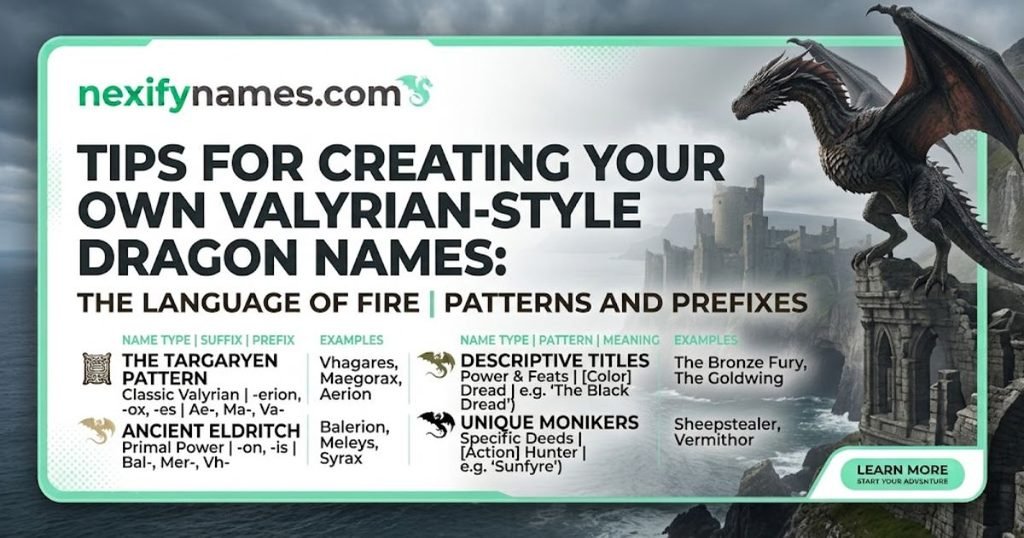
Tips for Creating Your Own Valyrian-Style Dragon Names
Valyrian-inspired names can be a fun starting point for original fantasy writing. The important thing is to treat your creations as inventions inspired by the franchise, rather than claiming they’re authentic translations.
You can experiment with different sounds, syllable patterns, and fictional naming traditions.
- Start with a short sound, such as Va, Rha, Mer, or Car.
- Add a second element that gives the name a distinct rhythm.
- Experiment with endings such as -ion, -ax, or -or.
- Read the result aloud to check pronunciation.
- Create a meaning for the name within your own fictional language.
- Give dragons from the same family a few shared naming patterns.
- Keep a list so your characters’ names remain distinct.
For example, Vaerion, Meralys, Dravora, Rhaevor, and Zeraxis are invented fantasy names, not confirmed dragon names from official Westerosi lore.
The best approach is to create your own naming rules and apply them consistently. That way, your dragons can feel as though they belong to a rich fantasy world without copying existing characters.
Who Rides Each Dragon in Game of Thrones and House of the Dragon?
Dragonriders play a major role in the history of Westeros. Many are members of House Targaryen, although the wider lore also includes riders from other backgrounds.
Here are several well-known dragon-and-rider pairings:
- Balerion — Aegon the Conqueror: Helped establish Targaryen rule.
- Meraxes — Rhaenys Targaryen: Took part in the Conquest.
- Vhagar — Visenya Targaryen and Aemond Targaryen: Served riders from different generations.
- Caraxes — Daemon Targaryen: Became famous during the Dance of the Dragons.
- Syrax — Rhaenyra Targaryen: Closely associated with her claim to the throne.
- Meleys — Rhaenys Targaryen: Fought at Rook’s Rest.
- Sunfyre — Aegon II Targaryen: Became a key dragon in the civil war.
- Seasmoke — Laenor Velaryon and Addam of Hull: Had two riders in the historical account.
- Sheepstealer — Nettles: Was claimed through repeated feeding.
- Drogon — Daenerys Targaryen: Became her primary mount.
- Rhaegal — Daenerys Targaryen and Jon Snow: Jon rode him in the television series.
- Viserion — Daenerys Targaryen: Later became an undead dragon in the show.
These pairings help explain why dragon names matter. They’re not just labels; they’re connected to political alliances, family relationships, and some of the most consequential events in Westeros.
Which Game of Thrones Dragon Is the Biggest and Strongest?
Balerion the Black Dread is widely remembered as the largest dragon in Targaryen history. His size, destructive fire, and role in Aegon the Conqueror’s campaign established his legendary reputation.
Vhagar also deserves special attention. By the Dance of the Dragons, she had grown into one of the largest living dragons, with centuries of experience behind her.
Other formidable dragons include:
- Vhagar: Enormous and battle-tested.
- Vermithor: One of the largest dragons of the Dance era.
- Caraxes: A dangerous fighter with a distinctive build.
- Meleys: Known for her speed and fighting ability.
- Drogon: Daenerys’s largest dragon in the television series.
- Balerion: The legendary Black Dread.
Size doesn’t automatically determine the outcome of a battle. Rider experience, circumstances, injuries, and the abilities of an opponent can all affect the result. That’s one reason dragon battles remain such a compelling part of the franchise.
Valyrian Dragon Names and Their Meanings: Inspiration for Fantasy Characters
Valyrian-inspired names often appeal to fantasy writers because they sound ancient and carry associations with fire, power, and royal history. However, not every name has an officially established literal meaning.
Rather than assigning unverified translations to existing names, you can create your own naming system. Decide what certain sounds represent in your fictional language, then use those elements consistently.
Here are some original names you could use for fantasy characters:
- Vaerion
- Rhaevor
- Meraxis
- Zorvane
- Dravion
- Velmora
- Kaerax
- Sylvaron
- Theryx
- Maerith
- Vaelora
- Orvaxis
- Rhaemora
- Zerynth
- Daevorin
These are creative suggestions, not official names from Game of Thrones. You can adjust their spelling, pronunciation, or fictional meanings to match your setting.
Dragons Bonded With Targaryen Queens and Princesses
Several Targaryen women became closely associated with dragons. Their stories reveal how dragonriding could strengthen a royal identity and influence the family’s political history.
- Meraxes: Ridden by Rhaenys Targaryen.
- Vhagar: Ridden by Visenya Targaryen.
- Dreamfyre: Associated with Rhaena and Helaena Targaryen.
- Syrax: Rhaenyra Targaryen’s dragon.
- Meleys: Ridden by Rhaenys Targaryen, the Queen Who Never Was.
- Silverwing: Associated with Queen Alysanne.
- Morning: Ridden by the younger Rhaena Targaryen.
- Moondancer: Baela Targaryen’s dragon.
These relationships show that dragonriding wasn’t limited to kings or male heirs. Dragons were part of the wider Targaryen family identity, and their riders could play decisive roles in succession struggles and wars.
Wild Dragons vs. Tamed Dragons: Names, Traits, and Differences
Not every dragon in Westeros lived with a rider. Some remained wild, avoided humans, or resisted attempts to claim them.
Ridden dragons developed bonds with individual people. Their histories are often tied to royal families, military campaigns, and the lives of their riders.
Wild dragons, on the other hand, survived without a regular rider. Their behavior could make them unpredictable and difficult to approach.
Examples of wild dragons include:
- Grey Ghost: Avoided humans.
- Sheepstealer: Known for eating sheep before Nettles claimed him.
- The Cannibal: Feared for eating other dragons and their eggs.
- Silverwing: Disappeared into the wild after the Dance of the Dragons.
Dragons such as Caraxes, Syrax, and Drogon are more closely associated with particular riders. Comparing the two groups helps explain why claiming a dragon was a significant achievement in Targaryen culture.
How to Create Unique Dragon Names Inspired by Valyrian Lore
You can create original dragon names by borrowing broad stylistic ideas from fantasy naming conventions without copying existing names.
Start by deciding what makes your dragon different. A fire-breathing war dragon may need a harsher sound, while a graceful sky-dweller might suit a smoother name.
Try this process:
- Choose two or three sounds that fit the dragon’s personality.
- Combine them into a name that is easy to pronounce.
- Decide what the name means in your fictional culture.
- Check that it doesn’t closely resemble a major existing dragon name.
- Create related names for dragons from the same region or family.
Here are five more original ideas:
- Vaezor
- Rhavaryn
- Maelthar
- Zoralyx
- Velrion
These invented names can help you build a consistent fantasy setting. Give each dragon its own history, appearance, and personality so the name feels meaningful rather than decorative.
Frequently Asked Questions About Game of Thrones Dragon Names
1. What are the most famous Game of Thrones dragon names?
The most famous Game of Thrones dragon names include Drogon, Rhaegal, Viserion, Balerion, Vhagar, Caraxes, Meraxes, Syrax, and Sunfyre.
2. What are Daenerys Targaryen’s three dragon names?
Daenerys Targaryen’s three dragons are Drogon, Rhaegal, and Viserion, named after Khal Drogo and her brothers Rhaegar and Viserys.
3. What is Jon Snow’s dragon name in Game of Thrones?
Jon Snow rides Rhaegal, Daenerys’s green dragon named after Rhaegar Targaryen, Jon’s biological father, during the television series.
4. What is Daemon Targaryen’s dragon called?
Daemon Targaryen rides Caraxes, the red dragon known as the Blood Wyrm, during the Dance of the Dragons.
5. Which dragon is the biggest in Game of Thrones?
Balerion the Black Dread is remembered as the largest dragon in Targaryen history, while Vhagar was enormous during the Dance.
6. Does Sheepstealer have an official Valyrian name?
No confirmed Valyrian name for Sheepstealer is established in the source material summarized here; his nickname reflects his habit of eating sheep.
7. How many named dragons are there in the Game of Thrones universe?
The broader Westeros lore includes many named dragons across different eras; the exact total depends on which books and adaptations you count.
Conclusion
The game of thrones dragon names are memorable because every dragon has a place in the history of Westeros. Balerion represents the Targaryens’ rise, Vhagar embodies the power of an ancient dragon, and Caraxes remains tied to one of the franchise’s most dramatic battles. Meanwhile, Drogon, Rhaegal, and Viserion connect Daenerys’s personal story to the return of dragons.
Whether you’re researching dragon colors and riders or looking for inspiration for your own fantasy characters, these names offer plenty to explore. Remember that some details differ between the books and television adaptations, so the version you’re reading or watching matters.
Which dragon is your favorite? Is it Balerion for his legendary power, Caraxes for his fierce reputation, or Drogon for his bond with Daenerys? Each one has a story worth remembering.
Pingback: 100+ Purple Flower Names: Beautiful Ideas, Meanings & Symbolism