
Purple flowers have a special way of making any garden feel magical. From soft lavender blooms to deep violet petals, these flowers bring beauty, charm, and meaning to every space. If you’re searching for purple flowers names, you’ll find plenty of lovely options to inspire you. Some are perfect for gardens, while others make thoughtful gifts or beautiful bouquets.
There are many different types of purple flowers, each with unique colors, shapes, and growing needs. You might want to learn purple spring flowers names or find a purple plant that looks like lavender for your garden. Whatever your goal, knowing a flower’s name makes it easier to choose the right one.
But what does purple flowers represent in different settings? Purple blooms often symbolize royalty, admiration, peace, and creativity. In this guide, you’ll find beautiful purple flowers names, learn about popular varieties, and discover what makes each purple flower special. You’ll also find answers to what flowers are purple and tips for choosing blooms you’ll love.
Purple Flower Names for Girls
Many flower names have a gentle, graceful sound that works beautifully for girls. Some feel timeless, like Violet and Iris, while others, such as Wisteria and Lavender, offer something more distinctive. These names can suit babies, fictional characters, pets, or anyone looking for inspiration from nature.
When choosing a flower-inspired name, consider its meaning, pronunciation, and overall feel. You might prefer a short name that’s easy to spell, or a longer name with a romantic sound. Here are some lovely options to consider.
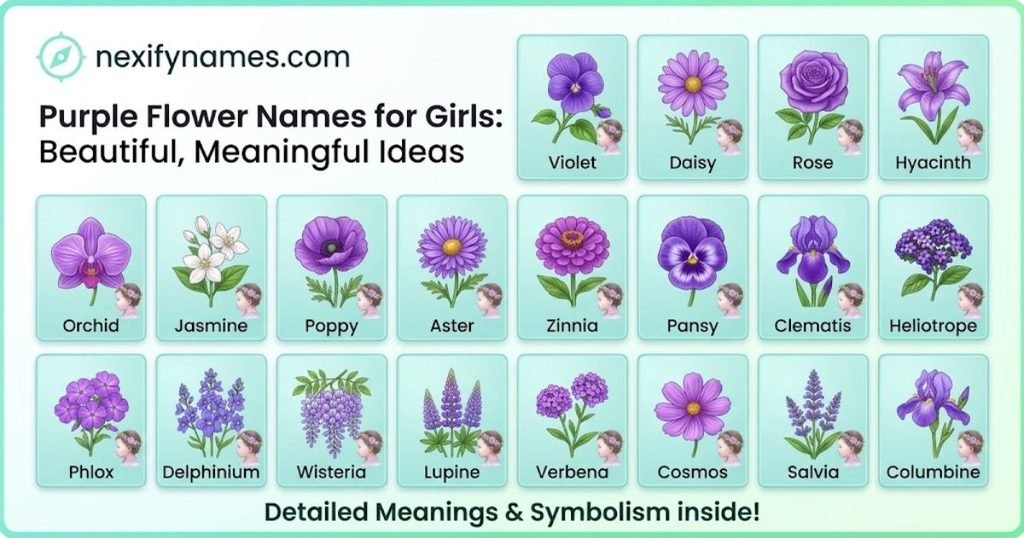
Violet
Violet is a classic name inspired by a small flower that often blooms in purple shades. The name comes from the Latin word viola and is associated with modesty, faithfulness, and delicate beauty. It’s an excellent choice if you want something familiar yet connected to nature.
Lavender
Lavender brings to mind fragrant fields, soft colors, and peaceful summer days. The name feels gentle and artistic, making it a lovely choice for a baby, character, or pet. Lavender plants also produce small purple flowers that attract pollinators in many gardens.
Lilac
Lilac is a fresh, romantic name inspired by clusters of fragrant spring blossoms. Its soft purple color gives it a dreamy feel, while its simple spelling makes it easy to remember. It works especially well for characters with cheerful, creative, or gentle personalities.
Ione
Ione is a rare Greek name traditionally associated with the violet flower. Its unusual sound gives it a poetic quality without making it excessively long. If you enjoy uncommon names with a floral connection, Ione is worth considering.
Bellflower
Bellflower refers to plants in the Campanula group, known for their bell-shaped blooms. Many varieties produce purple or blue-purple flowers. Although it’s less common as a personal name, Bellflower could be a charming choice for a fantasy character or a whimsical pet.
Petunia
Petunia is a playful, colorful name inspired by a popular garden flower. Petunias come in purple, pink, white, red, and many patterned varieties. Their bright appearance makes the name a fun fit for an energetic character or a beloved pet.
Iris
Iris is a short, elegant name with roots in Greek mythology. It refers to the Greek goddess associated with the rainbow and also names a flower available in several purple shades. Its combination of history and natural beauty makes it a versatile choice.
Dahlia
Dahlia is a stylish floral name associated with striking blooms and rich colors. Purple dahlias can look especially dramatic, thanks to their layered petals. This name suits someone who likes a sophisticated sound with a strong connection to the garden.
Wisteria
Wisteria is known for long, cascading clusters of purple flowers. As a name, it sounds dreamy and distinctive, making it particularly appealing for fantasy stories or artistic characters. It’s a beautiful option if you want something more unusual than Violet or Lilac.
Zinnia
Zinnia is a lively name inspired by a flower known for its bright, cheerful blooms. Some varieties come in purple or magenta shades, although many are available in other colors. The name feels modern, energetic, and easy to say.
More Purple Flower Names for Girls
- Calla — Inspired by the elegant calla lily, including purple-toned varieties.
- Flora — A classic name associated with flowers and springtime.
- Primrose — A soft, vintage-inspired floral name.
- Roselle — A distinctive botanical name with a gentle sound.
- Aster — A star-inspired flower name with purple varieties.
- Bluebell — A whimsical name for a woodland-inspired character.
- Celandine — A botanical choice with an old-fashioned charm.
- Linnea — A delicate name connected to the twinflower plant.
- Marigold — A cheerful floral name with a sunny personality.
- Camellia — An elegant name inspired by a flowering shrub.
Purple Flower Names for Boys
Flower-inspired names aren’t limited to girls. Several botanical names have a strong, modern, or gender-neutral feel that can work well for boys. Others have connections to mythology, gemstones, colors, or nature.
If you’re looking for a name with character, consider options that balance a memorable sound with an interesting background. Remember that some choices below refer directly to flowers, while others are inspired by floral colors or plant features.
Hyacinth
Hyacinth is a traditional flower name with connections to Greek mythology. The hyacinth flower grows in dense clusters and comes in purple, blue, pink, and white varieties. Its distinctive sound makes it an interesting choice for a literary character or someone who appreciates unusual botanical names.
Aster
Aster comes from the Greek word for “star,” reflecting the flower’s star-like shape. Purple asters are popular garden plants, and many varieties bloom later in the growing season. The name is short, memorable, and naturally connected to the outdoors.
Thorn
Thorn isn’t a flower name itself, but it refers to the sharp growth found on certain plants. It creates a rugged, nature-inspired feeling and works well for adventurous or mysterious characters. Pair it with a softer floral name to create an interesting contrast.
Indigo
Indigo refers to a deep blue-purple color rather than a particular flower. However, its rich botanical and artistic associations make it a popular nature-inspired name. It suits someone who wants a distinctive choice that feels modern and creative.
Jacinth
Jacinth is an uncommon name associated with a reddish-orange or reddish-purple gemstone. It shares a historical naming connection with hyacinth, giving it a floral and jewel-like quality. Its rarity makes it appealing for fictional characters or parents seeking an unusual name.
Rowan
Rowan is a nature-inspired name associated with a tree that produces clusters of berries. It doesn’t specifically mean a purple flower, but it fits well alongside botanical names. Its familiar sound gives it a grounded, outdoorsy character.
Basil
Basil is an herb name that also works as a personal name. Some basil varieties produce small purple flowers, adding to its botanical appeal. It’s a simple, distinctive choice for someone who enjoys names drawn from plants.
Florian
Florian comes from a Latin root associated with flowering or blooming. It doesn’t refer to one specific purple flower, but it carries a clear connection to floral beauty. Its classic sound makes it suitable for both modern and historical characters.
Heath
Heath refers to open, uncultivated land and is also associated with heathland plants. Some heathers produce purple or violet flowers. As a name, Heath feels understated and outdoorsy rather than overtly floral.
Oleander
Oleander is an evergreen shrub known for its attractive flowers, including some purple-pink cultivars and related color varieties. The name has a dramatic, distinctive sound. However, oleander is highly toxic, so it’s best appreciated as a botanical reference rather than a plant to handle casually.
More Purple Flower Names for Boys
- Ash — A short nature-inspired name connected to the ash tree.
- Reed — A simple name drawn from wetland plants.
- Florianus — A historical-style name related to flowering.
- Indigo — A color name with a creative, artistic feel.
- Ari — A short name that pairs well with botanical themes.
- Briar — A plant-inspired name with a rugged sound.
- Cypress — A tree name suited to nature-loving characters.
- Linden — A tree-inspired name with a calm, classic feel.
- Sorrel — An herb name with botanical character.
- Yarrow — A plant name associated with clusters of small flowers.
Unisex Purple Flower Names
Unisex names offer flexibility, especially if you want something modern and nature-inspired. Some are directly connected to plants, while others reflect a color, feeling, or style associated with purple flowers.
These choices can work for babies, pets, usernames, and fictional characters. You don’t need to follow traditional naming rules; choose a name that sounds right and has the meaning or mood you want.
Sage
Sage is both an herb and a name associated with wisdom. Some sage plants produce purple or violet flower spikes, making the connection especially fitting. It’s a short, relaxed choice that works well for someone who appreciates nature and simplicity.
Wisteria
Wisteria works as a unisex-inspired name because of its flowing sound and strong visual identity. Its hanging purple blossoms make it memorable. It can suit a gentle character, an artistic persona, or a username with a dreamy style.
Clover
Clover is associated with luck, greenery, and small clustered flowers. Some clover species produce reddish-purple blooms. As a name, it feels friendly and cheerful, making it a natural fit for pets or playful fictional characters.
Zen
Zen isn’t a flower name, but it suggests calm and mindfulness. It fits a purple-flower theme when you want a name inspired by peaceful gardens or relaxing spaces. Its short form also makes it easy to remember.
Pansy
Pansies are colorful flowers with distinctive faces and rounded petals. Purple varieties are common, often with contrasting yellow or white markings. The name has a playful, vintage feel that can work for a character, pet, or creative project.
Aster
Aster is a compact botanical name with a star-shaped flower behind it. Purple asters make the name especially relevant to this theme. Its straightforward spelling and sound give it a balanced, versatile feel.
Indigo
Indigo describes a deep blue-purple shade and works well as a gender-neutral name. It can evoke colorful gardens, creative expression, and individuality. If you want a name that feels bold without being complicated, Indigo is a strong option.
Briar
Briar refers to a thorny shrub or tangled growth. While it isn’t a purple flower itself, it carries a wild, natural quality that pairs well with botanical names. It’s especially suitable for fairy-tale characters or woodland-inspired stories.
Robin
Robin is commonly associated with the bird, but it also has a gentle, nature-oriented feel. It pairs well with flower names when you’re building a list inspired by gardens and wildlife. Its familiar sound makes it easy to use in everyday life.
River
River evokes flowing water, wild landscapes, and natural beauty. Although it isn’t a flower name, it fits a broader nature-inspired naming style. It can complement names like Sage, Aster, or Indigo.
More Unisex Purple Flower Names
- Lupine — Inspired by flowering plants with tall, colorful spikes.
- Clematis — A climbing plant known for its showy blooms.
- Phlox — A flower name with a short, distinctive sound.
- Sorrel — A botanical name linked to an edible herb.
- Basil — An herb name with flowering varieties.
- Florian — A name associated with flowering and blooming.
- Ash — A concise tree-inspired name.
- Vale — A landscape name with a gentle, poetic feel.
- Lark — A nature-inspired name associated with birdsong.
- Sunny — A cheerful name that contrasts beautifully with purple’s rich shades.
Unique Purple Flower Names
If common floral names feel too familiar, unusual flower names can offer something memorable. Many rare-sounding names come from botanical terms, climbing vines, wildflowers, or plants with unusual shapes. They’re especially useful for fantasy characters, usernames, and creative projects.
Keep in mind that a plant’s color can vary by species and cultivar. Some flowers have purple varieties, while others are more commonly blue, pink, or white. The following names are worth exploring if you want something distinctive.
Monkshood
Monkshood is a striking plant named for the hood-like shape of its flowers. Many varieties produce deep blue-purple blooms. It has a mysterious sound that suits gothic stories and fantasy gardens, but the plant is highly poisonous and should be handled with great care.
Sea Holly
Sea holly is known for spiky flower heads and silvery-blue or purple tones. Despite its name, it’s not a true holly. Its unusual appearance makes it a memorable option for coastal gardens and characters with a bold personality.
Pasque Flower
Pasque flowers are early-blooming perennials with silky petals and attractive, feathery seed heads. Some varieties produce purple or violet flowers. The name is connected to Easter-season blooming in parts of its native range, making it a lovely symbol of spring.
Lungwort
Lungwort is a shade-loving plant valued for its spotted leaves and clusters of blue, pink, or purple flowers. Its unusual name makes it stand out on any list. It can be a fun choice for a woodland-themed character, though it isn’t a conventional personal name.
Cobaea
Cobaea, often called cup-and-saucer vine, is a climbing plant with large, bell-shaped flowers. The blooms may begin greenish and develop purple tones as they mature. Its uncommon botanical name makes it especially interesting for plant lovers and fantasy naming.
Phlox
Phlox produces clusters of small flowers in several colors, including purple, pink, and white. The name comes from a Greek word meaning “flame.” It’s short, unusual, and easy to remember, which makes it suitable for a creative character or a garden label.
Scilla
Scilla is a botanical name for a group of bulbous plants, some of which produce blue-purple flowers. Their small, star-shaped blooms can brighten spring gardens. The name is brief and distinctive, with a subtle mythological feel.
Larkspur
Larkspur is known for tall flower spikes and delicate blooms in purple, blue, pink, and white. The name has a whimsical quality and suits cottage gardens. It also works well for stories featuring magical meadows or woodland settings.
Verbascum
Some verbascum species have purple-toned flowers, although many are yellow or other colors. The name is uncommon and botanical, making it suitable for plant enthusiasts or fictional characters. Check the particular species before describing its flower color.
Scaevola
Scaevola, sometimes called fan flower, produces fan-shaped blooms in purple, blue, white, and pink. It’s often grown in containers and hanging baskets. Its unusual name gives it a distinctive sound, while the flower itself adds texture to garden displays.
More Unique Purple Flower Names
- Allium — Known for rounded flower heads, including purple varieties.
- Salvia — A plant group with many purple-flowering cultivars.
- Verbena — A popular garden flower with clusters of small blooms.
- Delphinium — Known for tall spikes in blue and purple shades.
- Campanula — The botanical name for many bellflowers.
- Muscari — Grape hyacinths with compact blue-purple flower clusters.
- Catananche — A distinctive flowering plant with blue-purple blooms in some varieties.
- Torenia — A flowering plant with some purple and violet cultivars.
- Nemesia — A garden flower available in several purple shades.
- Baptisia — A perennial group that includes purple-flowering species.
Funny Purple Flower Names
Some flower names sound so unusual that they’re memorable before you even see the plant. These quirky choices can bring humor to a garden, pet name, character, or online username.
A funny botanical name doesn’t always mean the flower looks strange. Sometimes the name comes from the plant’s shape, scent, or history. Use these ideas when you want something playful rather than elegant.
Stinky Bob
Stinky Bob is a common nickname for herb Robert, a type of wild geranium. Its leaves can produce a noticeable odor when crushed. The name sounds like a cartoon character, making it a funny option for a mischievous pet or fictional sidekick.
Spiderwort
Spiderwort plants produce three-petaled flowers in shades that can include purple, blue, and pink. Their narrow leaves and unusual common name give them a slightly quirky personality. Spiderwort works well for a humorous garden label or a character with a curious streak.
Toadflax
Toadflax plants have flowers with distinctive shapes, and some species produce purple blooms. The name sounds like something from a fantasy tale. It could suit a goblin, an eccentric wizard, or a pet with a playful personality.
Pickleweed
Pickleweed is a common name used for certain salt-tolerant plants, especially those with fleshy, jointed stems. It isn’t a standard name for a purple flower, so its color and appearance depend on the plant being discussed. Still, the word itself makes a funny, memorable name.
Dead Nettle
Dead nettle refers to plants in the Lamium group. Some varieties produce purple or pink-purple flowers, and their leaves resemble those of stinging nettles without the same stinging hairs. The name sounds dramatic, making it a humorous choice for a fantasy character.
Purple Puff
Purple Puff isn’t a formal botanical name, but it works as a playful nickname for a round, fluffy-looking purple bloom. It suits a plush toy, pet, or colorful character. You can also use it for a flower arrangement with rounded blossoms.
Sir Blooms-a-Lot
This made-up name is ideal for a garden character or a plant that seems to produce flowers constantly. It adds a little personality to gardening projects, especially those designed for children.
Petal Paws
Petal Paws combines a floral word with a cute animal reference. It’s an easy choice for a purple-themed pet name, social account, or fictional character who loves gardens.
Grape Giggles
Grape Giggles brings together the color of purple grapes and a playful mood. It isn’t a real flower name, but it works for a whimsical label or a fun name for a purple plant.
Bloomzilla
Bloomzilla suits an oversized flower or a plant that spreads enthusiastically across a garden bed. It’s a humorous choice for a fictional monster, a giant floral arrangement, or a gardening project with a playful tone.
More Funny Purple Flower Names
- Professor Petal — A scholarly name for a plant-loving character.
- Count Clusters — A dramatic name for flowers that grow in bunches.
- Purple Pickles — A silly name for a colorful garden character.
- Bloom Boom — A playful name for a plant with abundant flowers.
- Petal Poppins — A cheerful, whimsical name.
- Violet Voltage — A bold name for a bright purple bloom.
- Captain Clover — A fun choice for a garden mascot.
- Lord Lavender — A dramatic name with a soft floral connection.
- Puff Blossom — A cute name for a fluffy-looking flower.
- Sir Stemington — A lighthearted name for a plant character.
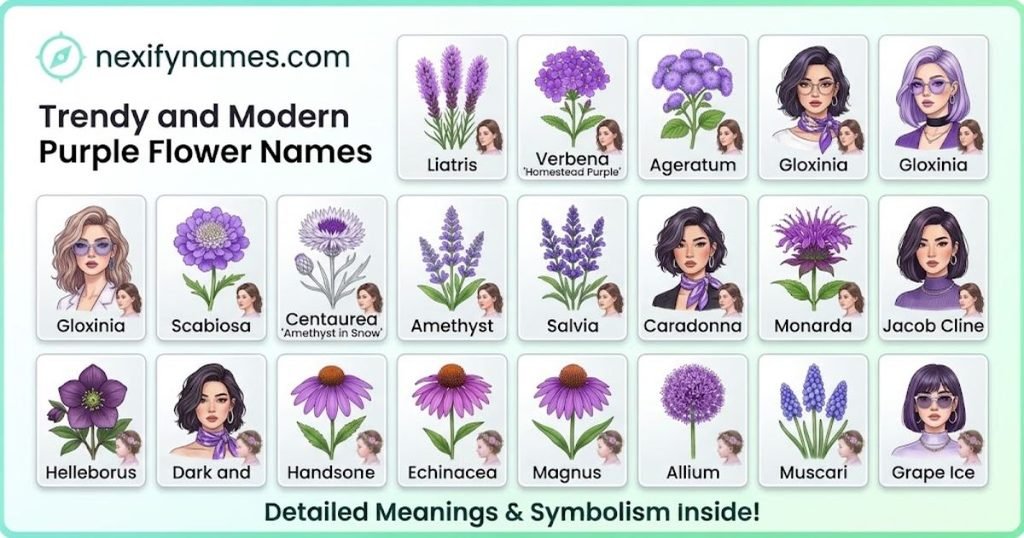
Trendy and Modern Purple Flower Names
Modern flower names often combine familiar sounds with distinctive botanical roots. They’re popular choices for baby-name inspiration, social media profiles, and fictional characters. Some feel elegant, while others have a bold, contemporary edge.
If you’re drawn to current naming styles, look for names that are easy to pronounce but still feel distinctive. The following flowers offer a range of sounds, colors, and personalities.
Zinnia
Zinnia is a bright, upbeat name inspired by a flower known for its bold colors. Purple and magenta cultivars are available, though many zinnias grow in other shades. Its short, lively sound makes it a modern floral choice.
Dahlia
Dahlia is a graceful name associated with full, layered blooms. Purple dahlias can look rich and dramatic, while paler varieties feel softer. The name has a polished sound and works well for characters or anyone drawn to elegant flower names.
Clematis
Clematis is a climbing plant with large, showy blooms in several colors, including purple. Its name feels artistic and slightly unusual. It’s a good option for a garden enthusiast or a character with an independent, creative personality.
Lisianthus
Lisianthus flowers can resemble roses, with delicate layered petals and a graceful shape. Purple varieties are popular in bouquets and floral arrangements. The name sounds refined, making it particularly appealing for romantic stories or elegant garden themes.
Scabiosa
Scabiosa, also called pincushion flower, has a distinctive flower head with a soft, textured appearance. Purple varieties are common in gardens and bouquets. Its unusual sound makes it memorable, especially for people who enjoy botanical names.
Salvia
Salvia includes many species and cultivars with purple or violet flower spikes. Some are valued for ornamental gardens, while others are culinary herbs. As a name, Salvia feels fresh and botanical without being overly complicated.
Verbena
Verbena produces clusters of small flowers, and purple varieties work well in borders, containers, and hanging baskets. The name has a smooth, contemporary sound. It’s a lovely option for someone who wants a floral name that feels light and approachable.
Allium
Alliums are known for their rounded flower heads, often made up of many tiny purple blossoms. Their sculptural shape adds interest to garden beds. Allium is a distinctive choice for a character or a person who appreciates unusual plant names.
Purple Orchid
Orchids are admired for their striking shapes and long-lasting blooms. Purple varieties range from soft lavender to deep violet. Although Purple Orchid is more descriptive than a conventional personal name, it makes an elegant theme for a username, garden collection, or creative project.
Purple Hydrangea
Hydrangeas produce large clusters of flowers, and some varieties can bloom in purple depending on cultivar and growing conditions. Certain bigleaf hydrangeas change color with soil chemistry. The name suggests abundance, softness, and a lush garden atmosphere.
More Trendy Purple Flower Names
- Iris — A timeless floral name with a clean, modern feel.
- Lilac — A soft, stylish name inspired by fragrant spring blooms.
- Indigo — A bold color name with creative appeal.
- Aster — A short botanical name meaning “star.”
- Violet — A classic name that remains easy to recognize.
- Lavender — A gentle name associated with fragrance and calm.
- Petunia — A colorful name with a playful sound.
- Wisteria — A dramatic name inspired by cascading blossoms.
- Calla — A concise name linked to the calla lily.
- Clover — A friendly botanical name with a lucky association.
Fantasy and Magical Purple Flower Names
Purple flowers often appear in fantasy stories because their colors can suggest mystery, enchantment, and hidden power. Deep violet petals, unusual shapes, and nighttime blooms can make a garden feel like something from another world.
Some plants in this category are also poisonous, so their beauty shouldn’t be confused with safety. If you’re choosing a name for a fictional witch, magical forest, or mysterious character, these botanical references can provide plenty of inspiration.
Belladonna
Belladonna is another name for deadly nightshade, a poisonous plant with bell-shaped flowers and dark berries. Its name comes from Italian words meaning “beautiful woman.” It has a dramatic, mysterious sound that fits gothic fiction, but the plant itself is highly toxic.
Mandrake
Mandrake refers to plants in the Mandragora group, which have long featured in folklore and magical stories. Their flowers can appear greenish or purple-tinged, depending on the species. The name works especially well for enchanted forests, potion-making characters, and dark fantasy settings.
Foxglove
Foxglove produces tall spikes of bell-shaped flowers, often in purple, pink, or white. Its distinctive blooms have inspired many garden and folklore associations. However, foxglove is poisonous, so it’s best treated with caution around children and pets.
Vervain
Vervain refers to flowering plants in the Verbena group and related botanical classifications. Some varieties produce small purple or violet flowers. The name also appears in folklore and traditional plant lore, making it a natural fit for magical stories.
Nightshade
Nightshade is a name used for plants in the Solanum group and related species. Some have purple flowers, while others are known for colorful fruit. The word has a mysterious tone, but remember that certain nightshade plants are highly poisonous.
Moonflower
Moonflower is a common name used for several plants whose blooms open at night. Some species produce white flowers rather than purple ones, so the exact plant matters. As a fantasy name, Moonflower suggests moonlit gardens and quiet magic.
Purple Passionflower
Passionflowers have unusual structures that look almost otherworldly. Purple passionflower varieties may feature intricate petals and prominent central filaments. The name suits magical gardens and fantasy settings, especially when you want a flower that looks genuinely unusual.
Dragon Flower
Dragon Flower is a descriptive, imaginative name rather than one specific botanical species. It can suit a fictional plant with dramatic purple petals or a fantasy character connected to fire and magic. For real gardening, identify the actual species before choosing plants based on this nickname.
Fairy Bell
Fairy Bell is a creative name inspired by bell-shaped flowers and woodland folklore. It isn’t a single standardized botanical name, but it works well for an enchanted garden or a delicate fantasy character.
Witch Hazel
Witch hazel is a real flowering shrub known for its unusual, ribbon-like petals. Many varieties bloom in yellow or orange rather than purple. Despite that color difference, its name has a mysterious quality that fits folklore-inspired naming lists.
More Fantasy-Inspired Purple Flower Names
- Amethyst Bloom — A magical name inspired by the purple gemstone.
- Violet Moon — A dreamy name for a moonlit garden character.
- Shadow Petal — A mysterious name for a dark fantasy setting.
- Star Blossom — A celestial name for a delicate magical flower.
- Lavender Spell — A whimsical name for a character who uses garden magic.
- Midnight Iris — A dramatic name inspired by dark purple blooms.
- Wisteria Mist — A soft name for an enchanted woodland.
- Gloomflower — A fictional name for a mysterious, shadowy bloom.
- Crystal Clover — A sparkling name for a lucky magical plant.
- Violet Ember — A bold name that combines floral color with fire imagery.
Mythical and Historical Purple Flower Names
Flowers have appeared in myths, legends, art, and historical traditions for centuries. Some names connect directly to ancient stories, while others come from old languages or have symbolic associations that developed over time.
These names can add depth to a character or a garden. However, individual meanings aren’t always universal, so it’s worth distinguishing documented botanical origins from folklore and modern interpretations.
Crocus
Crocus is a flower name associated with small, cup-shaped blooms that often appear in early spring or fall, depending on the species. Purple crocuses are popular garden plants. In Greek mythology, Crocus is also the name of a figure associated with a flower in later retellings.
Adonis
Adonis comes from Greek mythology and is associated with beauty and desire. The name is also used for plants in the Adonis genus, some of which produce red or yellow flowers rather than purple ones. It suits historical or mythological themes, although its flower-color connection needs context.
Anemone
Anemone comes from a Greek word associated with the wind. Purple anemones have delicate petals and dark central markings in some varieties. Their appearance and mythological associations make them popular in gardens and floral arrangements.
Iris
Iris was the Greek goddess associated with the rainbow and also gives its name to a diverse flower group. Purple irises are admired for their elegant shape and striking petals. The flower is often associated with wisdom, hope, and admiration, although meanings vary by tradition.
Veronica
Veronica is a familiar personal name that also belongs to a large group of flowering plants. Some veronica varieties produce blue-purple or violet blooms. It offers a useful connection between traditional names and botanical history.
Hyacinth
Hyacinth is linked to Greek mythology and a flower that comes in rich purple, blue, pink, and white shades. Its fragrant clusters make it a favorite spring bulb. The name has a long history in literature and botanical naming.
Narcissus
Narcissus is a flower name associated with Greek mythology and the story of a figure who became captivated by his own reflection. Most familiar narcissus flowers are yellow or white, rather than purple. Still, the name has a strong historical and literary identity.
Daphne
Daphne is a name from Greek mythology, associated with a nymph transformed into a laurel tree. It isn’t specifically a purple flower name, but it has a strong botanical connection and a graceful sound.
Flora
Flora is the Roman goddess of flowers and spring. Although it’s not the name of one particular purple flower, it represents flowering plants more broadly. Its simple sound and historical background make it a timeless choice.
Calypso
Calypso is associated with Greek mythology and also appears in botanical naming, including the calypso orchid. The orchid’s delicate appearance gives the name a mysterious, lyrical quality. It’s a distinctive option for a character inspired by mythology and nature.
More Mythical and Historical Flower Names
- Persephone — A Greek mythological name linked to seasonal change.
- Demeter — A Greek goddess associated with agriculture and harvest.
- Florian — A name connected to flowering and blooming.
- Ceres — A Roman goddess associated with agriculture.
- Juno — A Roman goddess’s name with a strong historical feel.
- Daphne — A botanical and mythological name.
- Clio — A Greek muse’s name suited to a literary character.
- Ianthe — A Greek name traditionally associated with violet flowers.
- Anthea — A Greek-derived name connected with flowers.
- Chloris — A Greek figure associated with flowers and spring.
Meaningful Purple Flower Names and Their Symbolism
Purple flowers are often linked with royalty, admiration, spirituality, creativity, and mystery. Their meanings can change depending on the flower, culture, and occasion. A purple bouquet for a celebration, for example, may communicate something different from flowers chosen for remembrance.
If symbolism matters to you, consider the flower itself rather than relying on color alone. Flower-language traditions aren’t universal, but they can provide a thoughtful starting point for choosing a meaningful name or gift.
Amethyst
Amethyst is a purple gemstone rather than a flower, but its color makes it a natural fit for purple-inspired naming. The stone has historical associations with protection and clear-mindedness. As a name, Amethyst feels distinctive and elegant.
Lavender: A Symbol of Loyalty
Lavender is often associated with calm, devotion, and serenity. Its fragrance and soft purple color make it a popular choice for gardens, sachets, and bouquets. Symbolic meanings vary, but lavender is an appealing option when you want a peaceful, gentle floral reference.
Purple Rose: A Symbol of Royalty
Purple roses often represent enchantment, admiration, and a sense of wonder. Their rich colors can also suggest elegance and luxury. They’re a striking choice for romantic arrangements, celebrations, or gifts meant to feel distinctive.
Purple Tulip: A Symbol of Respect
Purple tulips can convey admiration, elegance, and appreciation. They’re suitable for many occasions, including congratulations and thoughtful gifts. Since flower meanings differ across traditions, the message also depends on the relationship and the occasion.
Pasque Flower: A Symbol of Hope
Pasque flowers often bloom early in the season, sometimes appearing while the weather is still cold. That timing makes them an appealing symbol of renewal and resilience. Their purple petals and delicate appearance also make them attractive additions to suitable gardens.
Purple Iris: Wisdom and Admiration
Purple irises are often associated with wisdom, hope, and respect. Their upright petals and bold markings create a distinctive appearance. They can be a thoughtful choice when you want flowers that feel elegant without looking overly formal.
Purple Hyacinth: Beauty and Sincerity
Purple hyacinths are known for fragrant, tightly packed flower clusters. Depending on the tradition, hyacinths may symbolize sincerity, playfulness, or sorrow. Their strong scent and rich color make them popular for spring displays and garden borders.
Purple Orchid: Elegance and Admiration
Purple orchids are frequently used to express admiration, refinement, and beauty. Their unusual shapes make them stand out in arrangements. They can work well as gifts for milestones, celebrations, or occasions that call for something a little more distinctive.
Purple Aster: Patience and Wisdom
Asters have star-shaped flowers and often bloom toward the end of summer or in fall. They can be associated with patience and wisdom in flower symbolism. Their seasonal timing makes them a useful choice for autumn gardens.
Purple Lilac: Renewal and First Love
Lilacs bloom in fragrant clusters, often in spring. Purple lilacs are commonly linked with early love, renewal, and youthful memories. Their scent and soft color make them especially popular in spring gardens and nostalgic floral arrangements.
More Purple Flowers and Their Symbolic Meanings
- Purple petunia — Often chosen for colorful, cheerful displays.
- Purple pansy — Associated with thoughtfulness and remembrance in some traditions.
- Purple delphinium — Can represent dignity and positivity.
- Purple allium — Adds a bold, sculptural look to garden beds.
- Purple clematis — Often appreciated for beauty and ingenuity.
- Purple verbena — A useful choice for long-lasting garden color.
- Purple phlox — Brings a soft, clustered appearance to borders.
- Purple passionflower — Often associated with spiritual symbolism in Christian traditions.
- Purple dahlia — Can suggest dignity, elegance, and inner strength.
- Purple bellflower — A delicate option associated with charm and grace.
Purple Flowers for Gardens by Blooming Season
A garden can feature purple flowers across much of the year if you choose plants with different blooming periods. Climate, sunlight, soil, and the specific cultivar all influence when a flower opens. In colder regions, winter choices may be limited, while mild climates can support more blooms.
Instead of planting everything at once, combine early bulbs, summer perennials, and late-season flowers. This approach gives your garden changing color and texture while helping you plan around local growing conditions.
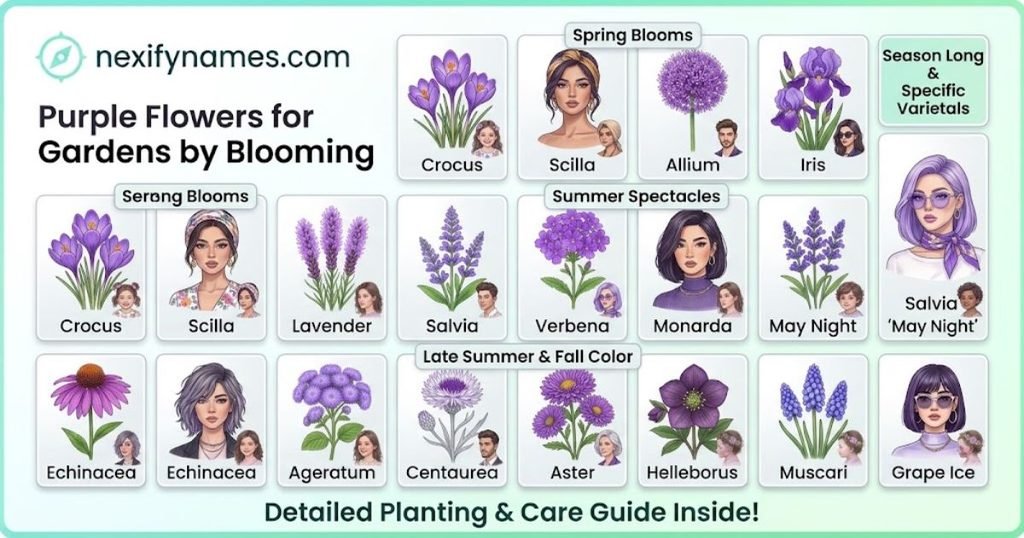
Spring-Blooming Purple Flowers
Spring flowers bring color back after winter, and many purple varieties bloom early. Crocuses can appear near the end of winter, while lilacs and irises often flower later in spring. Exact timing depends on your climate and variety.
- Crocus — A small bulb flower that can bloom early in spring.
- Grape hyacinth — Produces compact clusters of blue-purple flowers.
- Lilac — Offers fragrant clusters in spring.
- Purple iris — Adds tall, elegant blooms to garden beds.
- Pasque flower — A low-growing perennial known for early flowers.
- Purple anemone — Adds color to borders and spring displays.
- Bluebell — Creates woodland carpets in suitable climates.
- Lungwort — Useful for shaded areas and early-season color.
Summer-Blooming Purple Flowers
Summer offers a wider range of purple flowers, from fragrant herbs to colorful annuals. Choose varieties suited to your sunlight and watering conditions. Some bloom continuously when you remove spent flowers, while others have a shorter flowering period.
- Lavender — A fragrant plant that prefers sunny, well-drained conditions.
- Purple petunia — A popular option for containers and hanging baskets.
- Purple coneflower — A sturdy perennial that attracts pollinators.
- Wisteria — A climbing vine with hanging flower clusters, depending on variety and climate.
- Purple salvia — Offers upright flower spikes.
- Purple verbena — Works well in borders and containers.
- Purple phlox — Creates colorful clusters in garden beds.
- Purple clematis — Adds vertical color to fences and trellises.
Fall-Blooming Purple Flowers
Fall flowers can keep a garden colorful as summer plants begin to fade. Asters are especially useful because many varieties bloom late in the season. Combine them with ornamental grasses or plants with attractive foliage for more texture.
- Purple aster — A late-season favorite for borders.
- Ironweed — Produces clusters of purple flowers in suitable climates.
- Purple chrysanthemum — Offers bold seasonal color.
- Purple salvia — Some varieties continue flowering into fall.
- Purple verbena — Can keep blooming in favorable conditions.
- Purple sedum — Certain cultivars combine colorful foliage with late flowers.
- Purple Japanese anemone — Adds graceful flowers to fall gardens.
- Purple pansy — Can bloom in cool weather, depending on the climate.
Winter-Blooming Purple Flowers
Winter flowers depend heavily on your local climate. In mild regions, some plants continue blooming through cooler months, while colder areas may need hardy plants that tolerate frost or containers that can be protected.
- Purple hellebore — Some varieties bloom during winter or very early spring.
- Purple winter pansy — Often provides color in cool weather.
- Winter heather — Certain cultivars produce purple or pink-purple flowers.
- Cyclamen — Some types flower in cool seasons and include purple shades.
- Purple crocus — Early varieties may bloom near the end of winter.
- Heather — Offers small flowers and evergreen foliage in suitable conditions.
- Ornamental cabbage — Provides purple foliage rather than purple flowers.
- Winter-flowering orchid — Some cultivated orchids bloom indoors during winter.
Not every plant will bloom in every region or season. Check your local growing zone and the flowering calendar for the exact cultivar before planting.
Rare Purple Flowers You May Not Know About
Some purple flowers are less familiar than lavender, iris, or petunia. Their unusual shapes, growing habits, and distinctive names make them appealing to collectors and curious gardeners. A few are suited to specialized conditions, so check their growing requirements before adding them to your garden.
Rare doesn’t always mean difficult to grow. Some plants are simply less common in local nurseries, while others need particular temperatures, soil conditions, or growing spaces.
Himalayan Blue Poppy
The Himalayan blue poppy is famous for its striking blue petals, sometimes with violet tones. Despite its name, it isn’t typically a true purple flower. It generally prefers cool conditions and can be challenging to grow in hot climates.
Chocolate Cosmos
Chocolate cosmos is known for deep reddish-brown to maroon petals and a scent often described as chocolate-like. It’s not usually a true purple flower, but its dark coloring makes it interesting for dramatic garden displays and unusual flower collections.
Purple Passionflower
Purple passionflower has intricate blooms with layered filaments and a distinctive central structure. Some species are climbing vines that need support and suitable growing conditions. Their unusual appearance makes them memorable in gardens where the climate allows them to thrive.
Purple Bat Flower
The bat flower is famous for its unusual, bat-like shape and long whisker-like structures. Some forms have dark purple or nearly black flowers. It generally needs warm, humid conditions, making it more suitable for specialized cultivation than ordinary garden beds.
Purple Shooting Star
Shooting star is a common name for certain North American wildflowers in the Dodecatheon group, now often classified within Primula. Their flowers bend backward around a central structure, creating a distinctive shape. Depending on the species, their colors may range from pink to purple.
Purple Prairie Clover
Purple prairie clover produces rounded flower heads with many small blossoms arranged around the stem. It’s a native North American plant in suitable regions and can support pollinators. Its distinctive flower shape makes it an interesting alternative to more familiar garden blooms.
Purple Prairie Gentian
Purple prairie gentian is another name sometimes used for lisianthus, a flower valued for its rose-like appearance. It grows in several colors, including purple. Its elegant blooms are popular with florists and gardeners who enjoy refined, layered petals.
Purple Trillium
Some trillium species produce flowers in reddish-purple or maroon shades. These woodland perennials are valued for their unusual three-part structure. They typically need suitable shade and soil conditions, so they’re best selected for gardens that match their natural habitat.
Purple Prairie Verbena
Purple prairie verbena produces clusters of small purple flowers and can work well in sunny, dry garden spaces. It may be suitable for naturalistic planting in the right region. Check the species and local climate before growing it.
Purple Globe Thistle
Globe thistle produces round, spiky flower heads in blue-purple shades. It adds striking texture to perennial borders and can attract pollinators. Its unusual shape makes it a strong choice when you want a garden that looks different from traditional flower beds.
More Unusual Purple Flower Names
- Purple allium — A sculptural flower with rounded heads.
- Purple sea holly — A spiky plant with striking bracts.
- Purple scabiosa — A textured flower suited to borders and bouquets.
- Purple verbascum — An unusual botanical choice, depending on species.
- Purple lisianthus — A refined flower popular with florists.
- Purple delphinium — A tall flower with dramatic spikes.
- Purple salpiglossis — A colorful annual with patterned petals.
- Purple astrantia — A delicate flower with star-like bracts.
- Purple monkshood — A striking but highly toxic ornamental plant.
- Purple fritillary — A bulb flower with distinctive shapes and patterns.
Popular Purple Flowers for Bouquets and Floral Arrangements
Purple flowers can make bouquets feel romantic, sophisticated, cheerful, or dramatic. Their effect depends on the shade and the flowers you combine. Pale lavender tones work beautifully with white and cream, while deep purple blooms create contrast with greenery and lighter petals.
When choosing cut flowers, consider how long they’ll last, how easily they travel, and whether the recipient has pets that might chew them. Some popular ornamental flowers are toxic, so safe handling matters as much as appearance.
Purple Flowers for Wedding Bouquets
Wedding bouquets often combine purple flowers with white blooms, greenery, and soft neutral colors. The result can look traditional or modern, depending on the flowers and arrangement style.
- Purple lisianthus — Elegant petals that resemble roses.
- Purple roses — A romantic choice for a rich color palette.
- Purple sweet peas — Delicate flowers with a soft, romantic look.
- Purple orchids — Add a refined, modern touch.
- Purple hydrangeas — Create volume and texture.
- Purple delphiniums — Add height to larger arrangements.
- Purple stock — Provides clustered blooms and fragrance.
- Purple scabiosa — Adds texture and a distinctive flower shape.
Purple Flowers for Birthday and Anniversary Gifts
Purple flowers can make thoughtful gifts because they combine color with symbolic meaning. Choose a familiar flower for someone who enjoys classic arrangements, or select an unusual variety for a person who loves gardening.
- Purple tulips — A graceful option for thoughtful gifts.
- Lavender — A fragrant choice for someone who enjoys gardening.
- Purple roses — Often used for admiration and romantic gestures.
- Purple irises — A distinctive choice for someone who appreciates elegant flowers.
- Purple orchids — Suitable for milestone celebrations.
- Purple asters — A lovely seasonal gift.
- Purple hyacinths — Fragrant flowers that brighten spring displays.
- Purple dahlias — Dramatic blooms for someone who loves bold colors.
Purple Flowers That Last Long After Cutting
Some flowers generally hold up well in arrangements, although vase life depends on the cultivar, freshness, temperature, and care. Trim the stems, remove leaves below the waterline, and change the water regularly to help cut flowers last longer.
- Purple chrysanthemums — Often have a relatively long vase life.
- Purple orchids — Certain cut varieties can last well with proper care.
- Purple lisianthus — Popular for its attractive, layered petals.
- Purple alstroemeria — Known for long-lasting cut stems in many colors.
- Purple carnations — Often stay fresh for an extended period.
- Purple statice — Useful fresh or dried in arrangements.
- Purple gladiolus — Adds height and structure to bouquets.
- Purple asters — A seasonal option for mixed arrangements.
Always check the specific flower’s care requirements. Some varieties last longer than others, even within the same flower group.
How to Choose the Best Purple Flower Name
The right name depends on what you’re naming and why you like it. A name for a baby may need to sound natural in everyday conversation, while a fantasy character can carry something more dramatic. If you’re naming a garden plant, the actual botanical identity matters more than the name’s style.
Use these simple questions to narrow your options:
- Who or what is the name for? A baby, pet, fictional character, username, or real flower?
- What feeling do you want? Romantic, peaceful, mysterious, cheerful, or bold?
- Does the meaning matter? Choose a name with symbolism that fits your intention.
- Is it easy to say and spell? A simple name can be easier to remember.
- Does the flower grow where you live? Check its light, soil, water, and temperature needs.
For example, Violet and Iris are familiar choices, while Wisteria and Ione feel more unusual. Indigo works well for a color-inspired name, and Lavender suggests fragrance and calm. For gardens, choose a plant that suits your climate rather than relying on flower color alone.
One final tip: check a flower’s botanical name if accuracy matters. Common names can refer to several plants, and not every variety blooms purple. Also, avoid handling poisonous plants such as monkshood, foxglove, and deadly nightshade without appropriate knowledge and precautions.
Frequently Asked Questions About Purple Flowers Names
What are the most popular purple flowers?
Lavender, violet, lilac, iris, petunia, and purple tulip are popular choices for gardens, bouquets, and floral arrangements because of their beautiful colors.
Which purple flower names work well for girls?
Violet, Lavender, Lilac, Iris, Dahlia, and Zinnia are lovely flower-inspired names for girls, each offering a distinctive sound and natural charm.
Are there purple flower names suitable for boys?
Yes, Aster, Hyacinth, Indigo, Jacinth, and Florian offer botanical or flower-related inspiration for boys, characters, and distinctive naming ideas.
What do purple flowers represent?
Purple flowers commonly symbolize admiration, royalty, creativity, and elegance, although meanings vary by flower, culture, and occasion.
Which purple flowers bloom in spring?
Crocus, lilac, grape hyacinth, purple iris, and pasque flower can bloom in spring, depending on the variety, climate, and local growing conditions.
What purple flowers grow well in gardens?
Lavender, purple salvia, asters, petunias, and purple coneflowers are popular garden options, provided their sunlight, soil, and watering needs are met.
Are any purple flowers poisonous to people or pets?
Yes. Monkshood, foxglove, and deadly nightshade are toxic plants. Identify flowers carefully and keep potentially poisonous varieties away from children and pets.
Conclusion
Choosing the right purple flowers names can make your garden, bouquet, or creative project feel more special. From delicate violets to elegant irises, purple blooms offer plenty of beautiful options. Each flower has its own color, shape, and charm. Some feel romantic, while others bring a bold, magical touch.
If you want to learn about different types of purple flowers, consider their meanings, growing seasons, and appearance. You might also enjoy finding purple spring flowers names or identifying a purple plant that looks like lavender. These details can help you choose flowers that suit your style and space.
So, what does purple flowers represent? They often symbolize admiration, elegance, creativity, and royalty. However, meanings can vary across cultures and occasions. Whether you’re planting purple flowers, choosing a gift, or searching for name inspiration, let your personal taste guide you.